
Top 7 Real Estate Crowdfunding Platforms for Investors
Disclosure: This post may receive compensation from partners listed through affiliate partnerships, at no cost to you. This doesn’t influence our ratings, and the opinions are our own. Learn more here.
Investing in real estate is key to building wealth and diversifying your portfolio.
In fact, real estate investing has created 90% of the world’s millionaires.
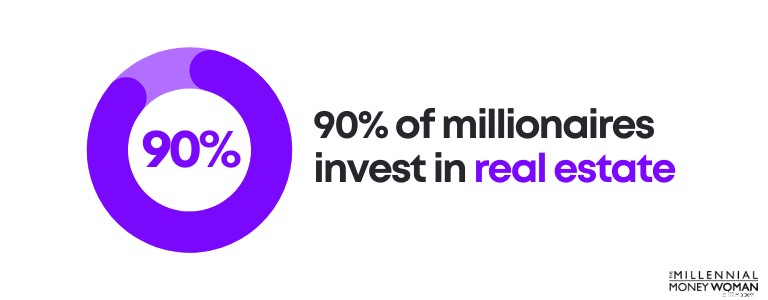
If you want to build wealth, why not follow in the footsteps of the wealthiest?
And that’s where real estate crowdfunding platforms come into play.
- Best for New Investors: Groundfloor
- Best for Non-Accredited Investors: Fundrise
- Best for Accredited Investors: EquityMultiple
- Best for Private Real Estate Loans: PeerStreet
- Best Researched & Vetted Property: RealtyMogul
- Best Overall Real Estate Crowdfunding Platform: CrowdStreet
- Best for Institutional-Quality Commercial Real Estate Investors: FNRP
Groundfloor is a fractional real estate investing platform for non-accredited and accredited investors who want to start slow when it comes to investing in real estate, with as little as $10 (though most investors start with $100).
Personally, I’m a very big fan of having the option to invest as little as $10 – especially when it comes to investing in real estate where everything seems to be so overpriced.
If you’ve never invested with a real estate investing platform before and are a bit unsure of what to expect, Groundfloor may be a good way for you to get your feet wet.
As of fall 2023, they offer a new experience for investors, automatically investing and diversifying your deposits into dozens or even hundreds of projects at once, so no prior investing knowledge is needed.
Groundfloor claims that investments typically return over 10% annually on average.
Check out what Groundfloor can offer you below 👇
Founded
2013
Average Return
10% (between 6 to 18 months)
Default Rate for Borrowers
2.75% to 4%
Average Fee
None
Account Minimum
$10
Accredited Investors Only
No
Real Estate Types
– New construction projects
– Renovation or “flipping” projects
Other Notes
Not very liquid and risky
Below are some pros and cons I thought you may want to review before investing with Groundfloor.
No fees for investors
High-risk investments
Anyone can invest
Lack of true ownership
Portfolio diversification
Short lock-up periods (for real estate standards)
Low minimum investment of $10
Groundfloor has a mobile-first approach, though you can still open and access your account through desktop or your mobile browser. The app is available via the Apple App Store and the Google Play Store.
Groundfloor also offers automatic investing with the Auto Investor account. As soon as your funds transfer and reach your account, they’re automatically invested across various loans on the platform. This instant diversification can help you see repayments in as little as seven days.
Groundfloor is one of the few fractional real estate investing platforms that offer short-term investment opportunities (aka your money isn’t tied up for 5+ years).
The best thing about Groundfloor is that it has an extremely low minimum of $10 and no fees, so virtually anyone can invest with Groundfloor.
Once the property is completed, it would then have to be sold or rented so you’ll receive your original loan plus profit.

The Bottom Line:
Groundfloor is arguably the best real estate crowdfunding platform for beginner real estate investors. All you need is $10 to start and your money is typically only locked up for 12 to 18 months, which is relatively short for real estate deals. The downside is that real estate investing is risky and loans may default. However, with Groundfloor, the average return rate of defaulted loans is 6%, so investors have a lower risk of losing their principal investments. This is because Groundfloor puts itself in a first lien position to mitigate that risk. It only forecloses on a defaulted loan as a last resort.
Best Real Estate Crowdfunding for Non Accredited Investors: Fundrise

Fundrise is a great real estate crowdfunding platform for non-accredited and accredited investors.
Fundrise lets you invest in real estate with just $500 (which is a minimal amount of money, considering most private real estate deals start at a minimum of $5,000 to $100,000+).
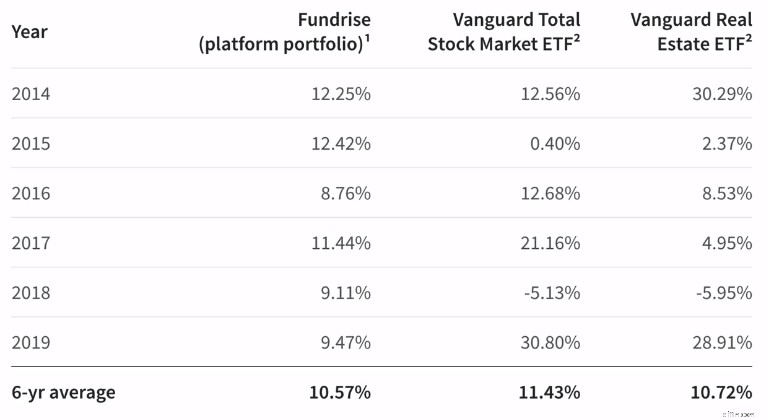
I like that anyone can invest $500 and still see potential returns between roughly 7% and 12%.
Take a look at the Fundrise performance numbers over the past few years, when compared with pretty standard benchmarks from Vanguard’s Total Stock Market ETF and Vanguard’s Real Estate ETF:
Check out what Fundrise can offer you below 👇
Founded
2010
Average Return
7% to 12.42% (assuming you reinvest)
Average Fee
1%
Account Minimum
$500
Accredited Investors Only
No
Real Estate Types
– Residential
– Private commercial
Other Notes
Highly illiquid and long-term investment
Below are some pros and cons I thought you may want to review before investing with Fundrise.
Low fees
Risky
Anyone can invest
May be difficult to understand
Portfolio diversification
Long lock-up periods (5+ years)
Income-producing real estate
Low minimum investment of $500
Plus, it doesn’t take long to install Fundrise on your phone or computer.
In fact, Fundrise is one of the very few real estate crowdfunding platforms that actually offers an app (which makes it pretty easy to invest).
Recommended Reading: Fundrise Review
The Bottom Line:
Fundrise gives you the chance to diversify your portfolio into real estate for a very small price (as low as $500). With Fundrise, anyone can invest in what they call eREITs (aka diversified real estate investment trusts) that offer you a passive stream of income across a diverse type of real estate properties (residential and commercial). The investment is risky and illiquid by nature, but the returns are high.

If you’re an accredited investor and are looking for investment opportunities in institutional commercial real estate, then you may want to consider investing through EquityMultiple.
EquityMultiple is a real estate crowdfunding application that offers investors access to:
- Equity investments
- Senior debt investments
- Preferred equity investments
- Institutional commercial real estate
To break these terms into plain English for you, check out the chart I made below:
Equity Investments
You invest your money in a company by buying shares. The company is normally traded on the stock exchange. If the company goes bankrupt, you lose your money.
Senior Debt Investments
You invest in a company’s first tier of debt (which is often more secure than any other type of debt). In other words, you’re investing in a debt that’s relatively stable and a low chance of you losing money.
Preferred Equity Investments
You invest in a company that’s typically traded on a stock exchange. Unlike equity investments, where you lose your money if the company goes bankrupt, you have a much higher likelihood of getting your money back if you invest in preferred equity.
Institutional Commercial Real Estate
Type of real estate property that is often used by special institutions including universities, hospitals, government agencies, etc.
As a quick reminder, the only time you should consider investing in commercial real estate is if you are:
- A long term investor
- An accredited investor
- Comfortable investing in real estate
- Comfortable having your money locked up for a long time
I’d also recommend against investing the majority of your net worth in real estate.
That would mean you are cash-poor and asset-rich.
In other words, you have a bunch of money tied up in your property investments but you have no – or very little – money in your savings and investment accounts (aka you can’t withdraw money easily).
With EquityMultiple, specifically, your money may be tied up between 1 to 10 years.
There are a few things to keep in mind before investing with EquityMultiple, take a look below.
Founded
2015
Average Return
Total average of 14.5% (for 2020)– Senior debt = 7% to 12%
– Preferred equity = 7% to 12%
– Common equity = 14% +
Average Fee
– Debt & preferred equity investments = 1%
– Ongoing fee = 0.5% to 1.5%
– Common equity investments = 10% on all profits
Account Minimum
$5,000 to $10,000
Accredited Investors Only
Yes
Real Estate Types
Institutional investment opportunities:– Hotels
– Offices
– Condos
– Industrial
– Mixed-use buildings
– Multifamily properties
Other Notes
Highly illiquid, risky, and long-term investment.
Offers tax-advantaged investment opportunities in:– 1031 exchange properties
– Qualified opportunity zones
According to EquityMultiple, its deal screening process is very rigorous.
Below are some pros and cons I thought you may want to review before investing with EquityMultiple as an accredited investor.
Diverse investment options
Only accredited investors
Portfolio diversification
High minimum investment
Relatively low minimum investments
High illiquidity (up to 10 years)
Offers tax-advantaged investments
Investors (you) have to pay fees
If you are a very tax-conscious (and accredited) investor who is looking to minimize tax consequences as much as possible, then I would suggest looking more into EquityMultiple, because you do have the ability to invest in tax-advantaged properties, such as:
- 1031 exchange properties
- Qualified opportunity zone properties
I would mention that EquityMultiple does not offer a mobile device app – however its website is optimized for mobile use.
The Bottom Line:
EquityMultiple is a unique crowdfunding platform in that it offers 3 different types of capital structures including senior debt, preferred equity and equity investments. EquityMultiple focuses its investments on commercial real estate investing and institutional real estate investing. The investment minimums are still relatively high, but lower than other accredited investor crowdfunding platforms. If you’re tax-conscious, don’t mind your money to be locked up for potentially 10 years, and want to invest in tax-advantaged properties, then EquityMultiple may be the right option for you.
Best for Private Real Estate Loans: PeerStreet
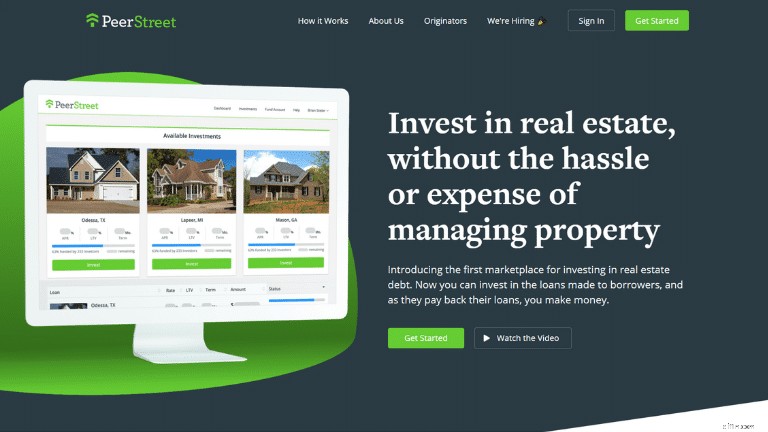
PeerStreet is a debt-only online platform for accredited investors to invest in high-quality private real estate loans.
PeerStreet is similar to a peer-to-peer lending platform. However, the difference is that the loans through PeerStreet are backed by actual assets (aka real estate).
The real estate property loans offered through PeerStreet typically only pertain to:
- Residential properties
- Single-family properties
PeerStreet would be an optimal platform for you if you are:
- A real estate investor
- A long-term investor
- A high-risk investor
Essentially, you would be investing in private real estate loans and generate a passive income stream.
And although the real estate loans are structured to decrease risks, you’re never entirely risk-free.
Below are a few things to keep in mind before investing with PeerStreet.
Founded
2013
Average Return
6% to 8%
Average Fee
0.25% to 1%
Account Minimum
$1,000
Accredited Investors Only
Yes
Real Estate Types
Only real estate debt investments:– Refinancing
– Industrial loans
– Multi-family loans
– Rental investments
– Residential acquisitions
– Commercial real estate loans
Other Notes
Illiquid investments and risky
Below are some pros and cons I thought you may want to review before investing with PeerStreet as an accredited investor.
Diverse investment options
Debt only (loan investments)
Portfolio diversification
Only accredited investors
Ability to automate investments
High minimum investment
Earn interest on cash that’s not invested through PeerStreet Pocket
Transparency
Although I’m not entirely a fan of investing in debt – I do want to point out that PeerStreet is considered one of the safer platforms.
In fact, 96%+ of PeerStreet loans were paid off to investors, making PeerStreet a relatively safe platform to use.
I would mention that PeerStreet does not offer a mobile device app – however its website is optimized for mobile use.
The Bottom Line:
PeerStreet approaches crowdfunding differently since it’s a little more like a peer-to-peer lending platform in that you can only invest in debt and not in actual properties. The good news is that the debt loans are backed by real estate properties. As with any investment, you do run the risk of not being paid. However, if there is a risk of you not getting your money back, PeerStreet will step in and work on your behalf to collect the money you are owed.
Best Researched & Vetted Property: RealtyMogul

RealtyMogul offers non-accredited and accredited investors the chance to invest in private (aka non-publicly traded) REITs.
RealtyMogul’s main focus is on lower-risk real estate investments.
Some sectors RealtyMogul invests in, include:
- Hotels
- Multifamily housing
- Apartment buildings
According to RealtyMogul, lower-risk investment opportunities are offered to investors (like you) because of RealtyMogul’s high standards.
Less than 1% of proposed deals meet RealtyMogul’s strict requirements – and that should give you some peace of mind.
The downside?
The minimum investment for a non-accredited investor is very high (in my opinion), at $5,000.
Plus, non-accredited investors can’t participate in RealtyMogul’s crowdfunding activities – non-accredited investors are only limited to investing in private REITs.
Check out what RealtyMogul can offer you below:
Founded
2012
Average Return
Limited data, so no concrete numbers. 2020, a difficult year, saw no losses.
Average Fee
1% to 1.5%
(plus many smaller, additional fees could apply)
Account Minimum
$5,000
Accredited Investors Only
No
Real Estate Types
– Hotels
– Self-storage
– 1031 exchanges
– Office buildings
– Individual properties
– Apartment complexes
Other Notes
Highly illiquid, somewhat risky, and long term investment
Below are some pros and cons I thought you may want to review before investing with RealtyMogul.
Relatively low fees
Could be riskier than publicly-traded REITs
Anyone can invest
High minimum investment
Portfolio diversification
Relatively illiquid
Strict vetting process
Complex fee structure
Returns were good during the COVID-19 pandemic
A downside I would mention is that RealtyMogul does not offer a mobile device app – however its website is optimized for mobile use.
The Bottom Line:
RealtyMogul offers investment opportunities for both accredited and non-accredited investors. If you are a non-accredited investor then you will have access to two private REIT (aka real estate investment trust) options. The downside is that to invest, even as a non-accredited investor, you’ll have to come up with $5,000+.
Best Real Estate Crowdfunding Investment Platform: CrowdStreet
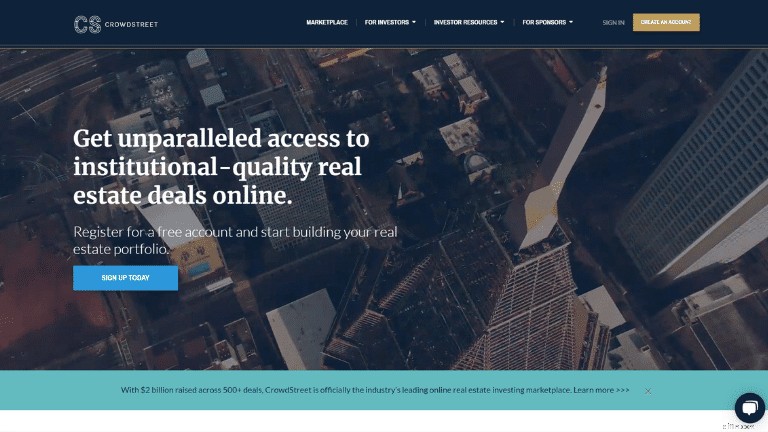
If you’re an accredited investor and want exclusive access to the cool club, then you may want to consider commercial real estate investing (aka CRE).
Keep in mind that commercial real estate investing is only good for you if you are:
- Long-term investor
- A real estate investor
- An accredited investor
Commercial real estate investing platforms like Crowdstreet, have become very popular recently, since CRE investing is a method to diversify your portfolio and reap some potential profits.
I should note that the commercial real estate industry did take a pretty massive hit after the pandemic, but it is expected for the industry to recover.
Check out the definition of commercial real estate investing below.
As I mentioned earlier, commercial real estate investing is pretty exclusive because the minimum investments are typically high, starting at around $25,000.
If you are looking to invest your money into commercial real estate deals, then I would suggest looking for a platform that is 100% dedicated to this type of investing.
And that’s why I would recommend you to look into CrowdStreet.
CrowdStreet is a real estate crowdfunding app that specializes in commercial real estate (CRE) investing.
CrowdStreet is like a matchmaker, matching accredited investors with pre-screened CRE investment opportunities.
Here’s how CrowdStreet can help you:
- Pre-screens CRE investment opportunities
- Helps you connect directly with CRE project sponsors
- Connects you with commercial (not residential investment opportunities)
Since CrowdStreet specializes in commercial real estate investments, you won’t be investing in residential properties, just commercial properties.
There are a few things to keep in mind before investing with CrowdStreet, take a look below.
Founded
2013
Average Return
17.7% (as of February 2021)
Average Fee
Free to create account
0.5% to 1% for the CrowdStreet Blended Portfolio (an investment)
Fees vary based on the deal, and you can find the fees on the real estate offering detail page
Account Minimum
$25,000 to $100,000
Accredited Investors Only
Yes
Real Estate Types
Commercial real estate investments, including:– Data centers
– Charter schools
– Build-to-rent projects
– Multifamily developments
Other Notes
Highly illiquid, risky, and long term investment
(project length typically lasts up to 2 years)
Below are some pros and cons I thought you may want to review before investing with CrowdStreet as an accredited investor.
Diverse investment options
Only accredited investors
Portfolio diversification
High minimum investment
Excellent educational resources for investors
Illiquid projects
Proven company history
User-friendly interface
Rigorous project vetting process
I should note that as of early 2021, only 3 investment projects have resulted in a loss, while 44 investment projects have been profitable.
I would mention that CrowdStreet does not offer a mobile device app – however its website is optimized for mobile use.
Recommended reading: CrowdStreet Review
The Bottom Line:
CrowdStreet offers commercial real estate investment opportunities strictly to accredited investors (although CrowdStreet is exploring ways to offer investment opportunities to non-accredited investors, too). CrowdStreet’s high minimum investment of $25,000 and minimum project length of around 2 years may deter most investors. However, CrowdStreet does rigorously vet its project deals and only accepts about 5% of deals.
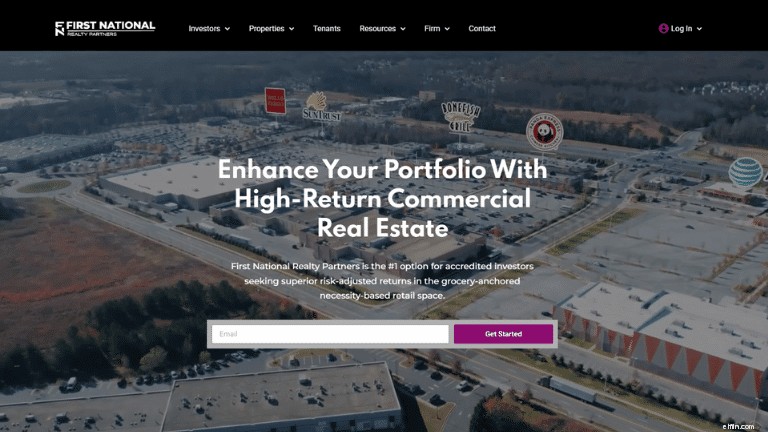
If you are an accredited investor and if you’re looking to invest in high-quality institutional-grade commercial real estate, then you should check out First National Realty Partners.
First National Realty Partners invests in industrial businesses that specialize in:
- Grocery
- Dentistry
- Fast food
- Home goods
In fact, let’s take a look at some of the top tenants in First National Realty Partners’ portfolio:

Since you’ll be investing in daily-use brands, there is a high chance that you’re investing in companies that are:
- High-Quality
- Income producing
- Hedging against inflation
First National Realty Partners listed some additional benefits to investing in daily-use companies, such as:
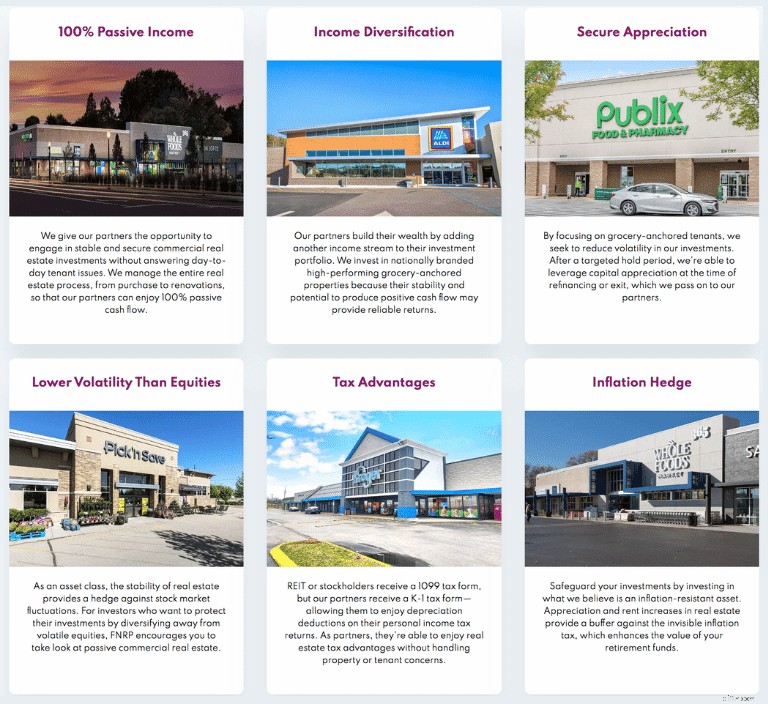
Since you are investing in an asset that generates income, you would receive a quarterly dividend payout and you could also benefit from capital appreciation.

After about 3 to 7 years, First National Realty Partners (FNRP) will either sell or refinance the properties at which point you can receive:
- A return of your capital
- A profit from the property appreciation
Below is a good overview of what FNRP has accomplished to date:
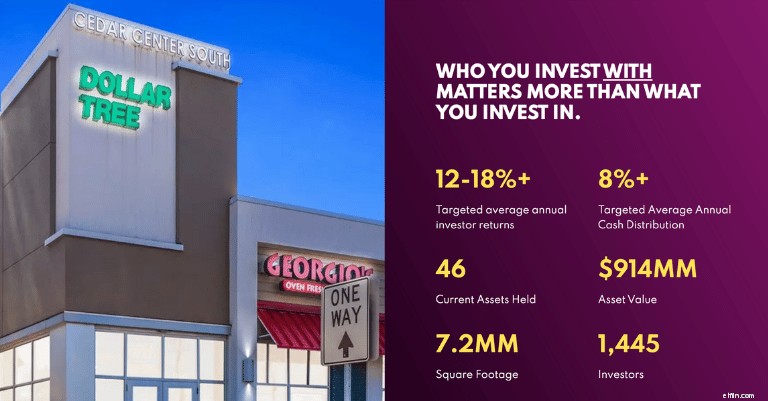
While targeted annual returns range between 12% to 18%, you are taking a considerable risk by locking up your money.
Keep in mind that you really should only consider investing in industry-grade commercial real estate if you’re:
- An accredited investor
- Focused on the long-term
- Are comfortable locking up your money for some time
Of course, always make sure you only invest as much as you are willing to lose.
There are some additional things that you should keep in mind before investing with First National Realty Partners:
Founded
2015
Average Return
12% to 18%
Average Fee
– Acquisition fee – 1% to 2%
– Disposition fee – 3% to 6%
– Management fee – 1% to 2%
– Performance fee – Depends on the offering
Minimum Investment
$50,000
Accredited Investors Only
Yes
Real Estate Types
– Grocery stores
– Daily use stores
– Dentistry offices
– Home good locations
– High-quality institutional-grade
Other Notes
– Long lock-up periods (between 3 to 7 years)
– Offers tax-advantaged investment opportunities by investing through a self-directed IRA
According to FNRP, its deal vetting process is very strict, so the chances of you investing in a top-quality company increase.
Below are some additional pros and cons you may want to know before considering investing with FNRP:
High-quality investment options
Only accredited investors
Portfolio diversification
High minimum investment ($50,000)
High targeted annual returns (12% to 18%)
High illiquidity (up to 7 years)
Tax-advantaged investments (if investing in a self-directed IRA)
High fees (typically ranges from 3% to 6% plus performance fees)
Before you commit to any investment financially, always make sure to do your proper research.
The Bottom Line:
First National Realty Partners is a real estate investing platform designed exclusively for accredited investors. The majority of the listed offerings deal with daily-use companies such as dentistry offices, home goods stores, and grocery stores. There is a lot of money to be made (up to 18% annualized returns) but there are also some risks (such as locking up your money for up to 7 years).
Real Estate Crowdfunding Pros and Cons
As you can imagine, there are some pros and cons when it comes to investing with the best real estate crowdfunding sites.
Let’s take a look.
Allows everyday people to invest in real estate projects
Your money may be locked up for a long time (6 months to 10+ years)
Affordable investments
No control
Diversifies your portfolio
You may not get your money back
Returns can be high
There could be hidden fees, so make sure you read the fine print
If the pros outweigh the cons for you, and you’re not too worried about the risks, then real estate crowdfunding may actually be the right next step for you.
FAQs
What is the best real estate crowdfunding platform?
There are many good real estate crowdfunding platforms, which include:
- Best for New Investors: GroundFloor
- Best for Non-Accredited Investors: Fundrise
- Best for Accredited Investors: EquityMultiple
- Best for Private Real Estate Loans: PeerStreet
- Best Researched & Vetted Property: RealtyMogul
- Best for Commercial Real Estate Investing: CrowdStreet
The most important thing is that you do your research before financially committing to these investment platforms.
Remember that real estate crowdfunding is risky and you do run the risk of losing your money.
Is real estate crowdfunding a good investment?
There are good deals and you certainly have a chance to make north of 15% on your original investments with real estate crowdfunding. However, as with almost all investment opportunities, real estate crowdfunding does present a risk because your money will be tied up likely for a long time and there’s never a guarantee you’ll get your money back.
Can you make money crowdfunding real estate?
Yes, you certainly can make money with real estate crowdfunding platforms. Some real estate crowdfunding claim you can earn a return on your investment of up to 15% per year, while investing in the stock market would typically yield you a 7% return per year.
Although you may earn more money with real estate crowdfunding, you should remember that this type of investing is much higher risk than investing in the stock market, for instance.
With real estate crowdfunding, there are certain risks, which include:
- Illiquid investment
- Higher risk than the stock market
- Possibility of losing the entire investment
As with all financial commitments, make sure you do your own research before investing your money.
Does real estate crowdfunding work?
Real estate crowdfunding is an investment strategy that allows investors (like you) to diversify their portfolios and earn a higher return on investment than through investing in the stock market. However, real estate crowdfunding can be risky and there is a chance that investors may lose their money.
Best Real Estate Crowdfunding Sites: The Bottom Line
There are so many different opportunities for you when it comes to investing in real estate through crowdfunding websites.
The good news is that you don’t have to be an accredited investor, and you can still invest in many of the same opportunities as the “high rollers” would – and that’s the true beauty of real estate crowdfunding.
Real estate crowdfunding gives everyday investors a piece of the same pie that is commonly used for the millionaire and billionaire investors.
Now I’d like to hear from you:
What are your thoughts on real estate crowdfunding?
Would you consider investing with one of these platforms?
Let me know in the comments section below.
-

Tax Relief for Insolvency: Understanding Debt Forgiveness & Tax Implications
If you are flat broke, you might qualify for tax relief. Whenever a debt is forgiven (which means it has been canceled through a debt settlement), it's possible the debtor will be require
-

Cost Per Wear: Maximize Your Wardrobe Value & Save Money
When it comes to clothing, shoes, and accessory purchases, Im a firm believer in cost per wear, which I also refer to as getting my moneys worth. It doesnt matter if its
Personal finance
- Auto Loan Refinancing: Benefits, Risks & How to Decide
- Child Tax Credit: State-Level Assistance for Families in 11 States
- Maximize Rewards: Best Credit Card Combinations for 2024
- Essential Insurance Types: A Guide to Protecting Your Future
- Financial Planning for Marriage: 5 Essential Money Moves
- Understanding Bounced Paychecks: Causes, Consequences & How to Resolve
- Unlock Your Potential: Focusing on Purpose, Not Just Tools
- Affordable Business Cards: Tips for Small Business Owners
- Unlock a Free Sam's Club Membership: 1-Year Access & Exclusive Savings
-
 Marshawn Lynch's Financial Advice to Young Athletes: Secure Your Future
Seattle Seahawks running back Marshawn Lynch used a press conference after a loss in an NFL divisional playoff game to tell young players to "take care of y'all money." Lynch, 33, ...
-
 Compound Interest Explained: How It Works & Benefits
Compound interest refers to interest payments that are made on the sum of the original principalPrincipalPrincipal in bonds is their par value. It is the initial investment paid for a security or bond...