
Estate Planning: A Guide to Writing a Will with Legal Review
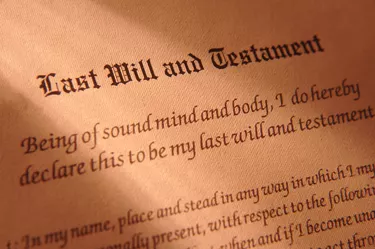
Image Credit: William Whitehurst/The Image Bank/GettyImages
Dying is the last thing most people want to think about, but your loved ones could be in for a world of hurt if you don't do adequate estate planning. Your property will pass to others according to state law if you die intestate, without a will. Without even a simple will, friends and family members who aren't very closely related to you most likely won't receive any of your property.
What to Include in Your Will
Start with a clear understanding of what you own. Create an inventory of your personal property and assets including things that may not be worth a great deal of money but that you would like to go to a certain individual for sentimental reasons. Dig through your paperwork and computer files to make sure you have accurate, up-to-date legal documents for each asset, showing account and policy numbers.
The whole purpose of writing a will is to ensure that your estate is settled as you wish, so you'll want to make very sure that you take care of details that will prevent anyone from challenging or contesting it when it's presented to the court for probate.
Don't include assets that will pass to a living person by operation of law, such as life insurance policies or retirement accounts with named beneficiaries, payable on death bank accounts and real estate that you own with someone else with rights of survivorship. These assets will pass directly to the named individuals outside of the probate process.
Now decide who you would like to receive your probate assets when you're gone. You can create a separate document in some states, called a letter of instruction, to go with your will and match assets to individuals, complete with identifying information for each.
You'll also want to name a guardian for your minor children if you're a parent. The court will decide who they live with if you fail to include this provision in your will. The same goes with naming an executor, someone to guide your estate through the legal probate process. The court will appoint a personal representative to fill the role if you don't name someone. It could be someone you'd rather not have handling your affairs.
Pay Attention to Details
The whole purpose of writing a will is to ensure that your estate is settled as you wish, so you'll want to make very sure that you take care of details that will prevent anyone from challenging or contesting it when it's presented to the court for probate. This begins with making it absolutely clear that you and no one else wrote your own will. It's not required that you include information like your Social Security number, but this information lends authenticity to the document.
Include your date of birth to establish that you're over the age of 18, which most states require. State that you're "of sound mind" as well, and that you intend the document to be your last will and testament.
Don't forget to sign and date your will. It's a worthless piece of paper otherwise. Number the pages, not just "1, 2 and 3" but "page 1 of 3, page 2 of 3 and page 3 of 3." This assures the probate court that it has the full, complete document.
The Importance of an Attorney’s Review
Probate laws in various states can vary a good deal. You'll want to be sure that your will complies with the rules where you live and where you own property, so your best bet is to have a legal professional take a look at it to make sure it will hold up in court.
Whether you prepare an online will or use a template, you'll need witnesses to your will. These are individuals who watch you sign it and can attest that you appeared to be of sound mind when you did so. The number of required witnesses varies by state, as well as whether they must sign the will in your presence. You might even have to arrange to have all this signing take place in the presence of a notary public. Some states don't allow any of your beneficiaries to act as your witnesses.
A local attorney will know where your state stands with these issues and others, and will be able to guide you accordingly. The value of getting a little legal advice can't be overstated.
What to Do With Your Will
Okay, you're done. Or are you? If you're unsure of anything, have an attorney look it over. Be sure to save the finished copy of your will in a safe place where it can be accessed…and let your loved ones know where that place is. A safe deposit box might not be your best option if no one but you has access to the box. Your family members would have to petition the court for an order allowing them to open it.
An attorney might be willing to have their law firm hold on to the document for you. Some states will even let you file your will with the clerk of the probate court before your death so it's readily accessible when the time comes.
-

Understanding Cryptocurrency: A Beginner's Guide to Top 5 Virtual Currencies
In layman terms, a cryptocurrency is best and broadly defined as a form of tokens or “coins” that are distributed and decentralized on a digital ledger. Beyond that, the world of virtual currencies
-

Top 25 Educator Discounts: Save Money as a Teacher
Find out if you're missing out
retirement
- Retirement Savings for Freelancers: A Practical Guide
- Supplemental Security Income (SSI) & Vehicle Ownership: What You Need to Know
- Understanding Medicaid Cancellation: A Comprehensive Guide
- Understanding Present Value: Deferred Annuity Calculations
- Indiana Teacher Retirement: A Comprehensive Calculation Guide
- Union Pension Annuities: A Comprehensive Guide
- New Jersey Unemployment & Social Security: Impact on Benefits
- Letters Testamentary: Understanding the Probate Process
- Executor vs. Personal Representative: Understanding the Terms
-
 Personalized Savings Strategies: Find the Best Approach for Your Goals
div.cust...
-
 Budget-Friendly Cold Lunch Ideas: Save Money & Time
Truth: You live a busy life and dont have time to cook. But did you know that with some quick cold lunch ideas, as small as that may seem, you can still save time but al...