
Understanding P/E Ratios: A Comprehensive Guide
To understand what a P/E ratio represents, consider what it means in terms of how much you would pay for a business you want to purchase. The value of that business would be largely determined by how much income it generates and how long it would take to recover the purchase price with that income. You might be willing to pay four or five times earnings (for a P/E ratio of 4 or 5), realizing it would take that many years to recover the purchase price. However, if you felt earnings had the potential to increase significantly in future years, you might be willing to pay a higher multiple of current-year earnings.
When considering public companies, it seems reasonable that well-established businesses growing in a fairly predictable pattern would command a higher P/E ratio than a small private business. Since you don't have the risks or responsibilities that come with owning a business, you would probably pay a premium. Typically, companies with higher growth rates command higher P/E ratios.
The difficulty is deciding what a reasonable P/E ratio is for a particular company or for the overall stock market. For individual companies, investors' expectations about future earnings affect the P/E ratio. Confidence that a company will improve its profitability or remain profitable generally results in a higher P/E ratio. If profits are threatened or weak, the P/E ratio is likely to drop. P/E ratios for the overall market change based on broad market conditions and investors' views about how desirable stocks are compared to other investments.
There is no absolute measure of what P/E ratio should be paid for a given company with a given growth rate. P/E ratios can fluctuate significantly over time and among companies and industries. It generally helps to follow the P/E ratios of stocks that interest you, along with companies in similar industries, to develop a feel for how the P/E ratios fluctuate. Reviewing a company's P/E ratio for prior years can also be helpful. If a company's growth rate in the past is expected to continue in the future and market conditions are similar, you might not expect much change in P/E ratios. But you also must evaluate whether changes to the company, its industry, or the overall stock market would cause an increase or decrease in the company's P/E ratio.
One way to evaluate P/E ratios is to consider a company's current P/E ratio divided by its historical P/E ratio. If it is much lower than 1, you might want to investigate why. It could mean the business is in decline or having other problems. It may also imply that the stock is reasonably priced now. If the value is much higher than 1, carefully assess whether you want to invest at this time. You may want to wait until the P/E ratio returns to a more historical level.
You can also divide a company's current P/E ratio by the market's overall P/E ratio. If that figure is much higher than 1 (and thus higher than the overall market), you should evaluate whether the company's prospects justify that valuation.
-

Understanding the P/E Ratio: A Comprehensive Guide
The p/e ratio is the price to earnings ratio. As you might imagine, price to earnings ratio is equivalent to the calculation of taking the asset price and dividing that by the earnings per share
-
Understanding the Inverse Relationship Between Inflation and P/E Ratios
Inflation affects equity prices in several ways. Most importantly, investors are willing to pay less for a certain level of earnings when inflation is high and more for a certain level of earni
Stock analysis
- Understanding P/E Ratios: A Guide for New Investors
- Molodovsky Effect: Understanding Market Inverted Cycles
- Understanding & Calculating the Price-to-Earnings (P/E) Ratio
- Understanding the Price-to-Earnings (P/E) Ratio: A Beginner's Guide
- Earnings Yield vs. P/E Ratio: A Comprehensive Comparison
- P/E Ratio vs. PEG Ratio: A Comprehensive Comparison
- Understanding the Price-to-Earnings (P/E) Ratio: A Beginner's Guide
- P/B Ratio vs. P/E Ratio for Banks: Which is More Reliable?
- Understanding the Price-to-Earnings (P/E) Ratio: A Comprehensive Guide
-
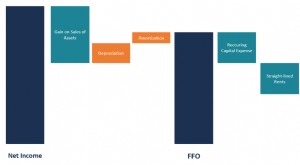 P/AFFO Explained: Understanding REIT Financial Health
The P/AFFO is calculated by adding the P/FFO to any rent increases and subtracting capital expenditures and the routine maintenance costs. The P/AFFO is a measure of the financial performance of a REI...
-
 P/FFO vs. P/AFFO: Understanding REIT Valuation Metrics
P/FFO vs P/AFFO are considered more sophisticated metrics to measure REIT performance. Though earnings per share (EPS)Earnings Per Share (EPS)Earnings per share (EPS) is a key metric used to determine...