
JUSY: The Story of an Indonesian Fashion Startup's Rapid Growth
A year ago, Justin Tianbaoying was a graduate fresh out of university, and he wanted to do something new, something different. With help and support from his girlfriend, and immense interest in fashion, the twenty-four year old opened his first clothing boutique.
JUSY’s Various Sales Channels & How Operations Is Managed
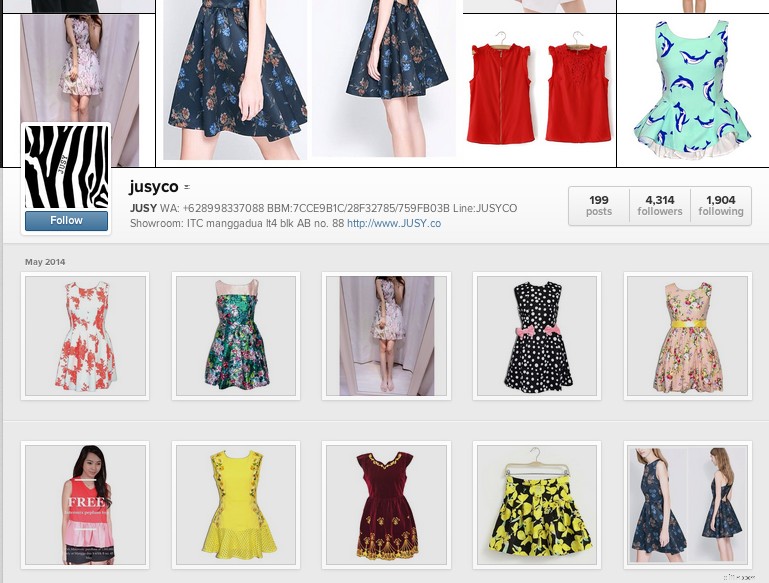
Based in Indonesia, JUSY now has three brick and mortar stores in Jakarta, an online ecommerce site, and drop ships and consigns garments to other fashion retailers via their fashion wholesale inventory. They have also reached a current number of selling 1,000 pieces of clothing per month on average, just after a year of operations.
Of course, Justin didn’t accomplish all this by himself. His main area of responsibility lies in sourcing for reliable manufacturers and factories in both China and Indonesia and attaining product supplies so as to sustain JUSY's fashion wholesale inventory efficiently. On the other hand, his girlfriend looks for designs and communicates with local designers, carries out customer development, and manages operations at retail outlets - overseeing things like shop front display and customer service.

How JUSY Outcompetes Their Competitors
Besides supporting local designs, JUSY also differentiates themselves from the crowd by pushing out designs of international standards such as those similar to Mary Katrantzou and Chanel, but with localised elements like batik prints, a technique of manual wax-resist dyeing applied to cloth. For instance, during the Chinese New Year period, JUSY promotes cheongsams, also known as body hugging one-piece Chinese dresses for women, in their stores.
There are two types of competitors in the Indonesian fashion industry currently. The first being big, fashionable brands putting only self-designed garments on its racks, but way out of budget for the younger consumers, while the second group consists of retailers selling cheap clothing sourced from Bangkok or China, but with extremely common and out-dated designs.
Amidst this competition, JUSY has carved out a niche in the market where they supply unique, trendy, and wearable numbers that are reasonably priced – basically the best of both worlds.
The main reason why Justin is able to keep prices of his items low is because he sends in orders of significant volume and quantity to his manufacturers and suppliers in China. “We have great working relationships with our manufacturers in China and local Indonesian fashion designers, so our products are unique in design and are of good quality,” says Justin.
Overcoming Business & Operational Challenges
Justin also voiced out initial issues with identifying a market for his clothes at the start.
Moving forward, Justin aims to work on strengthening online sales for JUSY. The current payment gateway the company uses is bank transfer (the typical method in Indonesia), resulting in a time consuming and complicated manual process for the sending and verifying of invoices and payments.
Using QuickBooks Commerce To Combat Inventory Woes
Justin initially handled his clothing stock by using Excel spreadsheets but gradually found it harder to keep up with his fashion wholesale inventory. As the business grew, the product range also grew significantly, there was no way spreadsheets could manage over a hundred new products with their different SKUs without any human errors, excessive manual work, or time wastage involved.
He turned his search for a more effective solution to managing his inventory online. With the help of Google search, many inventory management software turned up on his page. After starting different free trials and conducting feature and price comparisons across many systems, Justin finally settled on QuickBooks Commerce.
Justin uses the Multi Location and Stock Transfer functions in the QuickBooks Commerce online inventory software to manage consigned stocks and keep track of inventory movements across his sales channels.
See also:
Are Ecommerce Businesses Turning Into Logistics Companies? - An Interview With RedMart's CEO On The Operations Backend
Work Out Life: Changing The Boring Uniform-like Sports Wear Market With Quality Design & Craftsmanship
I-Drone Takes Off With Perfect Inventory Management
-

Understanding Stock Shorting: A Guide for Investors
Most investors focus their attention on finding stocks that will go up in value. However, it’s just as possible to make money from stocks whose values are declining. In order to profit fr
-
Understanding Common Shares: A Beginner's Guide to Stock Ownership
Common shares or common stock is a class of stock issued by corporations that represent ownership in the corporation for shareholders. The hope is that the company will grow and prosper, driving up th
Stock management
- Fast Fashion vs. Investment Pieces: Unveiling the True Cost
- Understanding Class B Shares: Voting Rights & Investment Implications
- Best Stocks for Beginners: Stable Investments for New Investors
- 8-Figure Private Label Success: 9 Steps from Engineer to Entrepreneur
- Caps & Gowns: From University Struggle to Graduation Supply Leader
- Superlove Merino: The Story of a Mother-Founded Merino Wool Brand
- Mastering Inventory Management: Strategies for Rapid Growth
- Launch Your Clothing Brand: A Comprehensive Guide for 2024
- Launch Your Fashion Brand: A Step-by-Step Guide
-
Understanding Distribution Stock: Gradual Share Sales Explained
Distribution stock is the term used to describe the selling of portions of a group stock shares rather than selling an entire block of shares at once. With distribution stock, the shares are sol...
-
Understanding Class B Shares: Investor Implications
When trading stocks, you will sometimes come across Class B shares. As an investor, you need to understand the difference between Class A and Class B shares and how they can affect you in the lo...