
8-Figure Private Label Success: 9 Steps from Engineer to Entrepreneur
Just five years ago, I was a civil engineer straight out of college struggling in the 9-5 world.
Obsessed with escaping that constricting environment, I started selling products on Amazon.
Today, I run a company that has more than 40 SKUs and a full-time staff managing my private label goods, which earn over 8 figures per year.
This chapter covers how I did it.
First things first…
What Are Private Label Products?
Private label products are goods and services created by one company to be sold and branded by another company.
Popular examples of private label products include Walmart’s Great Value brand, Target’s Mainstays, and Amazon’s Amazon Essentials.
In addition to physical products, intangibles and services such as freelance work, web domains, and insurance products can also be private label products.
How to Find and Sell Private Label Products
If you’re interested in starting your own online business, it doesn’t get much better than selling private label products using Amazon’s Fulfilled-by-Amazon (FBA) program.
It’s pretty easy to do and there are a lot of tools in place to help you succeed. Below, I cover the nine basic steps to success.
1. Brainstorm Product Ideas.
Ideas can come from anywhere.
Over the years, I’ve found a few cool hacks to get killer ideas for private label products.
First, whenever I’m out shopping or rummaging through a store, I keep a look out for hot, new trending products.
This is usually newer stuff; the kind of items that Wal-mart and Target haven’t started stocking.
For example, I was recently in Anthropologie and saw a set of copper measuring cups priced at $25.00. I thought, “Perfect!”
Once I got home, I plugged the idea into my research tools and confirmed that it was an awesome opportunity.
A second place to look for product ideas is Amazon itself.
Dig through the departments and subcategories to look for new products (be sure to pay attention to the “Hot New Releases” columns!).
Look at what other sellers are offering by checking out their Amazon storefronts and product listings.
Finally, I check out the web for cool product ideas, too.
Social media’s always got some wild, new product idea that’s going viral. And check out Kickstarter and IndieGoGo too, where brilliant inventors are finding new, innovative ways to pitch products.
2. Consider Specific Product Attributes.
So what sort of private label products should you try to sell?
If you’re just starting out, I highly recommend starting with products that have the following qualities:
- Small and lightweight. Your product should be able to fit into a small, flat-rate box (8 11/16″ x 5 7/16″ x 1 3/4″) and weigh no more than one or two pounds. This helps you save on shipping both from the manufacturer and later, when it is fulfilled (either by you, or by Amazon FBA).
- Non-seasonal. Your product’s sales should NOT be season-dependent. Examples of seasonal products include: Christmas lights, Valentine’s Day gifts, winter clothing, etc. Avoid these whenever possible.
- Unregulated. Certain products like food, toys, and batteries come with “red tape” that can make selling that product difficult. I recommend that you stick to stuff that’s easy to manufacture and distribute; items that don’t require a lot of legal paperwork and/or certifications.
- Uncomplicated. Electronics can be fun to sell, but they often come with a lot of headaches and customer service issues. The same is true for fashion and clothing products, which may require you to have multiple colors and sizes for a single SKU.
3. Conduct Market Research.
Once you’ve found a few cool products you’d be interested in selling as private label products, you’ll need to do a little market research to determine whether or not it’s worth selling.
Back when I started selling my own private label products on Amazon FBA, you had to do it the hard way: with a spreadsheet, and a lot of time spent staring at product listings.
These days, we have applications like Jungle Scout’s Chrome Extension to help us, which can do product research for us instantly.
Here’s how it works:
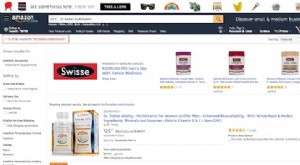
- Perform a search on Amazon.com using your product idea as a search term. For example, I’m going to look up “copper measuring cups.”
- After the search results page loads, click the “JS” button to the right of your browser search/address bar to open the Jungle Scout Chrome Extension (you will need to have purchased and downloaded the extension for it to work).
- Verify the product’s data. The Chrome Extension will show you the average monthly sales, average reviews per product, and more for the search’s results.
And that’s it!
Of course, you’ll need to know what sort of criteria to look for.
Personally, I prefer products that sell an average of 250 – 400 units per month.
Also, I don’t want too much competition when I launch a product, so I make sure that the average number of reviews for a product is less than 100.
4. Research Product Suppliers and Manufacturers.
Now that you have the perfect product idea, and you’ve verified the sales data using the Jungle Scout Chrome Extension, all that’s left to do is to get it made!
Thankfully, in 2020, we have Alibaba to help us get that done.
If you’re not familiar with Alibaba, Alibaba is more-or-less the Amazon of China, allowing us to purchase wholesale and bulk products directly from overseas manufacturers.
And not only is Alibaba easy to use, but it’s safe, too, as they thoroughly vet all of their suppliers.
Here are the basic steps to finding potential suppliers on Alibaba for your private label product:
- Create a buyer account on Alibaba.com.
- Perform a search for your product on Alibaba; Alibaba’s product database works similarly to Amazon’s.
- Find product listings that are similar to the private label product idea you wish to sell.
- Send a message to the product supplier/manufacturer requesting more information about the product. I like to ask the following:
- What is the price per unit for this product when I order 500 units (or however many units need to be ordered)?
- Can I have a sample shipped to my location? If so, what’s the cost?
- What payment terms and methods do you accept?
- How can I customize this product?
Typically, I reach out to 3-5 suppliers for a product.
From each of these suppliers, I order a sample of the product.
-

8-Figure Private Label Success: 9 Steps from Engineer to Entrepreneur
Just five years ago, I was a civil engineer straight out of college struggling in the 9-5 world. Obsessed with escaping that constricting environment, I started selling products on Amazon. Toda
-
Shoppertainment: The Key to Holiday Retail Success | BigCommerce
Customers expect to be delighted when they shop — but are you prepared to entertain? At BigCommerce’s 2021 Make it Big Conference, Retail Minded Founder Nicole Leinbach Reyhle sat down with BigC
Business
- Finding Discontinued Products: Your Options & Resources
- Chapter 13 Bankruptcy: A Step-by-Step Start Guide
- Starting Chapter 7 Bankruptcy: A Step-by-Step Guide
- Find & Vet Manufacturers: Reduce Product Development Costs by 65%
- Amazon Seller Account Setup: A Comprehensive Checklist for Success
- Integrating BigCommerce with Amazon: A Step-by-Step Guide
- Maximize Sales with Google: A Comprehensive Guide for Merchants
- Unlock Social Commerce Success: The Power of a Robust Product Catalog
- Crypto Success Stories: Real Millionaire Journeys in Digital Assets
-
How Rollie Shoes Achieved Amazon Selling Success with a Channel Manager in 7 Months
When Vince Lebon started his career, his dream was to become a web designer. For years, he worked as an independent contractor producing web designs, print media and video for clients; yet, over...
-
 Amazon SEO Mastery: Rank Higher & Boost Sales in 2024
Looking back on the past few years, I’m still amazed at the river of money Amazon has provided for so many people – from stay-at-home moms to major household brands due to Amazon’s growth. And w...