
Negotiable Instruments vs. Cash: Key Differences Explained
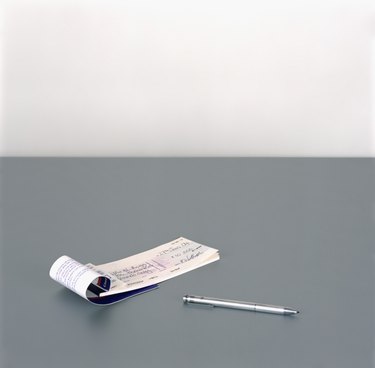
Like cash, negotiable instruments are useful to make payments for goods and services. However, according to Article 4A of the Uniform Commercial Code, which was enacted by the federal government in order to harmonize the law of commercial transactions in all states, negotiable instruments are different from cash. Cash is more liquid than negotiable instruments, as cash makes the transactions instantaneous. Negotiable instruments are transferable documents that guarantee cash payments either on demand or at a future time. There are three types of negotiable instruments: promissory note, bill of exchange and check. Articles 3 and 4 of the UCC govern negotiable instruments. The law explains the requirements for negotiable instruments and their legal implications.
Characteristics of Negotiable Instruments
The person who issues a negotiable instrument is known as the maker, payer or issuer, and the person who receives a negotiable instrument is known as the bearer or payee. Negotiable instruments are freely transferable from person to person. For instance, a payee who receives a check can transfer it to anyone and authorize to cash it. Transferring negotiable instruments does not require formalities such as transfer deed, registration or stamp duty. The negotiable instruments must be in writing that includes handwriting, typing or computer printing. Amount, payment time and payee mentioned on negotiable instruments must be certain and specific. The maker must sign on the negotiable instrument in order to make it valid.
Promissory Note
A promissory note is a written document in which the maker promises to pay a certain amount to the payee either on demand or after a certain time. The maker's promise to pay must be unconditional. Debtors make promissory notes for the money they owe to payees. For example, a certificate of deposit, or CD, is a promissory note in which the financial institution promises to pay a certain amount to the payee at a future date.
Bill of Exchange
A bill of exchange involves three parties: maker, debtor and payee. In a bill of exchange, the maker orders his debtor to pay the indebted amount to a third party, or payee, on demand or at a future date. The maker of a bill of exchange does not promise to pay. Furthermore, both the maker and the payee must accept a bill of exchange in order to make it valid.
Check
A check, like a bill of exchange, involves three parties: maker, bank and payee. The maker of a check instructs the bank to pay a certain amount to a payee. There are three types of checks: open check, non-negotiable check and bearer check. An open check allows the payee to cash it at the bank counter. A non-negotiable check is credited to the bank account of the payee and not transferable. A bearer check is payable to any person who presents it at the bank counter for payment.
-

401(k) Tax Advantages: What's Excluded from Taxes?
What Taxes Are 401(k)s Exempt From? A 401(k) is an employer-sponsored retirement plan that allows pretax contributions, which provide tax savings. To enable the pretax feature, the plan must
-

Negotiating HUD Home Prices: Your Guide to Making an Offer
Your offer may get accepted for a HUD home. Homes that are offered for sale through the U.S. Department of Housing and Urban Development typically display attractive listing prices. Because H
budgeting
- Cash Budget: Benefits & How to Limit Expenses - [Year]
- Cashing a PayPal Check: A Step-by-Step Guide
- High-Yield Savings Accounts vs. Traditional: Which is Best for You?
- Cash Reserves: Definition, Benefits & Short-Term Needs
- Understanding Corporate Liquidity: Sources and Types
- Understanding Trading Instruments: A Comprehensive Guide
- Understanding Accounting Transactions: A Comprehensive Guide
- Mutual Fund C Shares vs. A & B: Understanding the Differences
- Understanding the Difference: Shares Available to Sell vs. Your Holdings
-
 Credit Card Cash Advances: How They Work & Associated Costs
You can pull money from your credit card account at an ATM. You can get cash from a credit card by taking out a cash advance. However, cash advances can be costly. You're charged a higher...
-
 Budgeting Methods: A Comprehensive Guide for Businesses & Individuals
Budgeting can be categorized in a variety of ways. Businesses have different budgets for various departments within the company, and there are different budgeting methods that can be used for each typ...