
Understanding and Mitigating Risks in Commercial Banks

Commercial banks are among the major financial intermediaries in the marketplace. As a result of this role, commercial banks are exposed to the risks that affect both the securities markets and the economic conditions that affect consumers. To understand the risks associated with commercial banks, it is helpful to consider some key areas that affect banking operations.
Interest Rate Risk
Interest rate risk is one of the more prevalent risks for commercial banks. Generally, commercial banks are proficient at mitigating interest rate risk in their investment portfolios. However, interest rates are outside the domain of commercial bank operations. Instead, the Federal Reserve, the central bank of the U.S., exercises considerable influence over interest rates. As a result, commercial banks try to hedge their loans against any changes in the general interest rate level in the economy. For example, if a bank makes a business loan and charges the borrower 5 percent interest with a current interest rate level at 2 percent, the bank will make a profit of 3 percent if the rate remains at 2 percent throughout the life of the loan. However, if the general level of interest rates increases from 2 to 3 percent, the bank's profit will decline to 2 percent.
Default Risk
Commercial banks generally make most of their money on loans. Although banks screen borrowers and analyze their financial position and ability to pay, commercial banks are still susceptible to borrower default. When borrowers are unable to pay, they default on a loan, causing the bank to lose money. Although a general analysis of a bank's loan portfolio will indicate a small margin of default, widespread borrower default may jeopardize the solvency of a commercial bank.
Regulation
Commercial banks are also subject to regulation. Depending on the type of bank, specialization and state in which they operate, commercial banks work within a framework of legal regulation. When regulations change, the bank's operational framework changes, which may impact its ability to generate profits from loans. For example, the Federal Reserve may increase the amount of required reserves, forcing commercial banks to withhold more money to cover customer withdrawals. This decreases the amount of bank capital available to lend, which may reduce bank profits.
Opportunity Cost
Although loans are a significant part of commercial bank operations, banks may quit lending for fear of widespread default. If a bank's financial analysis expects diminished economic activity, a commercial bank may expect diminished capacity of borrower repayment. With a higher default rate, a bank may prefer to invest only a portion of its capital to make money from a few successful loans rather than risk more money with the potential for default.
Deposits
Commercial banks rely partly on attracting deposits from customers to fund banking investments and loans. To do so, many commercial banks offer traditional banking services, including certificates of deposit and checking, savings and money market accounts. In addition, banks may increase the interest rate payments on these accounts to make them more attractive to depositors. Without a consistent flow of deposit funds, commercial banks would be unable to operate at an optimal level.
-

Understanding Health Insurance: A Series by Economics Expert Joanna Lahey
This is a guest post from Joanna Lahey, an associate professor of economics at the George H.W. Bush School of Government and Public Service at Texas A&M University and the National Bureau of Econ
-

Black-Owned Banks in the U.S.: History, Impact & Current Landscape
As with many things within minority communities, black-owned banks were born out of necessity. Primarily, a need for access to capital and banking services made unavail
budgeting
- Commercial Banks vs. Merchant Banks: Key Differences Explained
- Commercial Bank Functions: Services & Lending Explained
- Understanding the Drawbacks of Commercial Banks
- Understanding Portfolio Risk: Factors and Mitigation Strategies
- Commercial Banks: Services, Loans & How They Work
- Investment Banks vs. Commercial Banks: Key Differences Explained
- Commercial Banks: Definition, Services & Bridge Loans
- Understanding Key Risks Facing Banks: A Comprehensive Overview
- Commercial Insurance Policies: Key Provisions & Deductibles
-
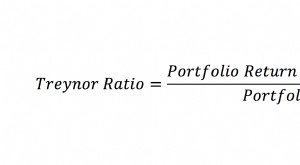 Treynor Ratio: Understanding Risk-Adjusted Portfolio Performance
The Treynor Ratio is a portfolio performance measure that adjusts for systematic riskSystematic RiskSystematic risk is that part of the total risk that is caused by factors beyond the control of a spe...
-
 Interbank Rate Explained: Understanding Foreign Exchange Rates
The interbank rate or interbank exchange rate is a financial concept used to express foreign exchange rates, which are paid by banks when they conduct currency trading with other banks. Interbank, or ...