
Understanding Key Risks Facing Banks: A Comprehensive Overview
Major risks for banks include credit, operational, market, and liquidity risk. Since banksFinancial IntermediaryA financial intermediary refers to an institution that acts as a middleman between two parties in order to facilitate a financial transaction. The institutions that are commonly referred to as financial intermediaries include commercial banks, investment banks, mutual funds, and pension funds. are exposed to a variety of risks, they have well-constructed risk management infrastructures and are required to follow government regulations. Government agencies, such as the Office of Superintendent of Financial Institutions (OSFI) in Canada, set the regulations to counteract risks and protect depositors.

Why Do the Risks for Banks Matter?
Due to the large size of some banks, overexposure to risk can cause bank failure and impact millions of people. By understanding the risks posed to banks, governments can set better regulations to encourage prudent management and decision-making. The ability of a bank to manage risk also affects investors’ decisions. Even if a bank can generate large revenues, lack of risk management can lower profits due to losses on loans. Value investors are more likely to invest in a bank that is able to provide profits and is not at an excessive risk of losing money.
Quick Summary Points
- The major risks faced by banks include credit, operational, market, and liquidity risk.
- Prudent risk management can help banks improve profits as they sustain fewer losses on loans and investments.
- Ways to decrease risks include diversifying assets, using prudent practices when underwriting, and improving operating systems.
Credit Risk
Credit risk is the biggest risk for banks. It occurs when borrowers or counterparties fail to meet contractual obligations. An example is when borrowers default on a principalPrincipal PaymentA principal payment is a payment toward the original amount of a loan that is owed. In other words, a principal payment is a payment made on a loan that reduces the remaining loan amount due, rather than applying to the payment of interest charged on the loan. or interest payment of a loan. Defaults can occur on mortgagesMortgageA mortgage is a loan – provided by a mortgage lender or a bank – that enables an individual to purchase a home. While it’s possible to take out loans to cover the entire cost of a home, it’s more common to secure a loan for about 80% of the home’s value., credit cards, and fixed incomeFixed Income GlossaryThis fixed income glossary covers the most important bond terms and definitions required for financial analysts. These terms are covered in detail in CFI's Fixed Income Fundamentals Course.. Constant Perpetuity, Correlation, Coupon Rate, Covariance, Credit Spread securities. Failure to meet obligational contracts can also occur in areas such as derivativesDerivativesDerivatives are financial contracts whose value is linked to the value of an underlying asset. They are complex financial instruments that are and guaranteesGuaranteeA guarantee is a legal promise made by a third party (guarantor) to cover a borrower’s debt or other types of liability in case of the borrower’s default. Loans guaranteed by a third party are called guaranteed loans. provided.
While banks cannot be fully protected from credit risk due to the nature of their business model, they can lower their exposure in several ways. Since deterioration in an industry or issuer is often unpredictable, banks lower their exposure through diversificationDiversificationDiversification is a technique of allocating portfolio resources or capital to a variety of investments.The goal of diversification is to mitigate losses.
By doing so, during a credit downturn, banks are less likely to be overexposed to a category with large losses. To lower their risk exposure, they can loan money to people with good credit histories, transact with high-quality counterparties, or own collateralCollateralCollateral is an asset or property that an individual or entity offers to a lender as security for a loan. It is used as a way to obtain a loan, acting as a protection against potential loss for the lender should the borrower default in his payments. to back up the loans.
Operational Risk
Operational risk is the risk of loss due to errors, interruptions, or damages caused by people, systems, or processes. The operational type of risk is low for simple business operations such as retail banking and asset management,Asset ManagementAsset management refers to the process of developing, operating, maintaining, and selling assets in a cost-effective manner. and higher for operations such as sales and trading. Losses that occur due to human error include internal fraud or mistakes made during transactions. An example is when a teller accidentally gives an extra $50 bill to a customer.
On a larger scale, fraud can occur through the breaching a bank’s cybersecurity. It allows hackers to steal customer information and money from the bank, and blackmail the institutions for additional money. In such a situation, banks lose capital and trust from customers. Damage to the bank’s reputation can make it more difficult to attract deposits or business in the future.
Market Risk
Market risk mostly occurs from a bank’s activities in capital marketsCapital MarketsCapital markets are the exchange system platform that transfers capital from investors who want to employ their excess capital to businesses. It is due to the unpredictability of equity markets, commodity prices, interest rates, and credit spreads. Banks are more exposed if they are heavily involved in investing in capital markets or sales and tradingSales and TradingSales and Trading (S&T) is a group at an investment bank that consists of salespeople, who call institutional investors with ideas and opportunities, and traders, who execute orders and advise clients on entering and exiting financial positions. Sales and trading is the lifeblood that makes or breaks a securities firm.
Commodity prices also play a role because a bank may be invested in companies that produce commodities. As the value of the commodity changes, so does the value of the company and the value of the investment. Changes in commodity prices are caused by supply and demand shifts that are often hard to predict. So, to decrease market risk, diversification of investments is important. Other ways banks reduce their investment include hedgingHedgingHedging is a financial strategy that should be understood and used by investors because of the advantages it offers. As an investment, it protects an individual’s finances from being exposed to a risky situation that may lead to loss of value. their investments with other, inversely related investments.
Liquidity Risk
LiquidityLiquidityIn financial markets, liquidity refers to how quickly an investment can be sold without negatively impacting its price. The more liquid an investment is, the more quickly it can be sold (and vice versa), and the easier it is to sell it for fair value. All else being equal, more liquid assets trade at a premium and illiquid assets trade at a discount. risk refers to the ability of a bank to access cash to meet funding obligations. Obligations include allowing customers to take out their deposits. The inability to provide cash in a timely manner to customers can result in a snowball effect. If a bank delays providing cash for a few of their customer for a day, other depositors may rush to take out their deposits as they lose confidence in the bank. This further lowers the bank’s ability to provide funds and leads to a bank runBank RunA bank run occurs when customers withdraw all their money simultaneously from their deposit accounts with a banking institution for fear that the bank.
Reasons that banks face liquidity problems include over-reliance on short-term sources of funds, having a balance sheetBalance SheetThe balance sheet is one of the three fundamental financial statements. The financial statements are key to both financial modeling and accounting. concentrated in illiquid assets, and loss of confidence in the bank on the part of customers. Mismanagement of asset-liability duration can also cause funding difficulties. This occurs when a bank has many short term liabilities and not enough short-term assets.
Short-term liabilities are customer deposits or short-term guaranteed investment contracts (GICs) that the bank needs to pay out to customers. If all or most of a bank’s assets are tied up in long-term loans or investments, the bank may face a mismatch in asset-liability duration.
Regulations exist to lessen liquidity problems. They include a requirement for banks to hold enough liquid assets to survive for a period of time even without the inflow of outside funds.
Additional Resources
CFI is the official provider of the global Financial Modeling & Valuation Analyst (FMVA)™Become a Certified Financial Modeling & Valuation Analyst (FMVA)®CFI's Financial Modeling and Valuation Analyst (FMVA)® certification will help you gain the confidence you need in your finance career. Enroll today! certification program, designed to help anyone become a world-class financial analyst. To keep advancing your career, the additional CFI resources below will be useful:
- Risk ManagementRisk ManagementRisk management encompasses the identification, analysis, and response to risk factors that form part of the life of a business. It is usually done with
- Capital Adequacy RatioCapital Adequacy Ratio (CAR)The Capital Adequacy Ratio (CAR) sets the standards for banks by looking at a bank's ability to pay liabilities and respond to credit risks and operational risks.
- Leverage RatiosLeverage RatiosA leverage ratio indicates the level of debt incurred by a business entity against several other accounts in its balance sheet, income statement, or cash flow statement. Excel template
- Basel IIIBasel IIIThe Basel III accord is a set of financial reforms that was developed by the Basel Committee on Banking Supervision (BCBS), with the aim of strengthening
-

Understanding the S&P Sectors: A Comprehensive Guide
The S&PS&P – Standard and PoorsStandard & Poor’s is an American financial intelligence company that operates as a division of S&P Global. S&P is a market leader in the
-
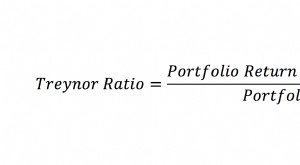
Treynor Ratio: Understanding Risk-Adjusted Portfolio Performance
The Treynor Ratio is a portfolio performance measure that adjusts for systematic riskSystematic RiskSystematic risk is that part of the total risk that is caused by factors beyond the control of a spe
finance
- Essential Budget Components: A Comprehensive Guide
- Commercial Bank Functions: Services & Lending Explained
- Navigating International Banking Risks: A Comprehensive Guide
- Understanding Foreign Exchange Risks: A Comprehensive Guide
- Understanding Derivative Risks: A Comprehensive Overview
- Understanding Business Risk: Threats & Mitigation
- Understanding Fixed Income Risks: A Comprehensive Guide
- Understanding Uniform Rules for Collections (URC): A Comprehensive Guide
- Understanding Mutual Fund Risks: A Comprehensive Guide
-
 Understanding High Street Banks: Your Guide to Retail Banking
High street banks are large retail banks that offer daily banking services (e.g. deposit and checking accountsChecking AccountA checking account is a type of deposit account that individuals open at f...
-
 Risk-Weighted Assets (RWA): A Comprehensive Guide for Finance Professionals
Risk-weighted assets is a banking term that refers to an asset classification system that is used to determine the minimum capital that banks should keep as a reserve to reduce the risk of insolvency....