
Understanding Starter Checks: What You Need to Know
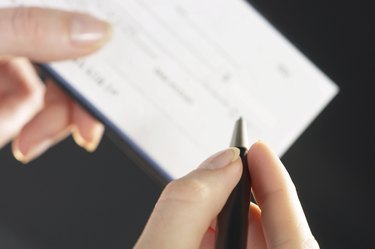
Starter checks work just like the personal checks you'll eventually receive when you open a checking account – they just don't have your personal information printed on them or a fancy design.
You'll usually get starter checks immediately when you open a new account, and you'll be able to order more at that time.
Understanding what you need to put on a starter check in order to cash it will help you use these correctly and avoid any problems.
Read More: What Are Counter Checks at a Bank?
Basics of Starter Checks
When you open an account, you might get 100 or more checks, in several separate booklets, as part of your account benefits. You'll be able to pick the color or background design of the checks. You'll also be able to tell the bank what you want on the checks in terms of your address, phone number, etc.
While you're waiting for your personalized checks, you'll be given starter checks, also known as counter checks, which are checks that contain the basic information for writing, depositing and cashing checks. This includes the bank's routing number and your account number. You might receive 10 or so starter checks unless you request more.
Read More: Check Routing Number Vs. Account Number
Routing and Account Numbers
The numbers at the bottom of a check are the routing and account numbers. On the left-hand side of the check, the first set of numbers are the routing numbers. These tell other banks which bank issued the check. To the right of these numbers appears your account number. This tells the bank which account holder is making a transaction.
After the account number, you will often see a non-numeric symbol, followed by more numbers. These numbers are the check number, which also appears at the top right of the check. In some cases, check numbers appear first, on the bottom right-hand side of the check. They might be preceded by two zeroes.
Many banks have a machine to create starter checks for new account holders. This allows them to give you checks printed with your account number on them as soon as you open your account.
Read More: Different Style Checks
What to Put on Starter Checks
When you write a starter check, the person receiving it will want to know who it's from. When banks receive starter checks with no personal identification on them, they might take extra steps to verify it, delaying the transaction. No personal information on a starter check, along with a low check number, is a combination red flag to banks or businesses to ask extra questions when receiving a check like this.
Even if you're handing a starter check to someone who knows you, you should always put your name and address on the check in case that person loses the check. You might also put your phone number on the check, making it convenient for someone if they have to call you, and helping to speed along the transaction if there's a problem.
In some cases, starter checks don't have a check number on them. For your personal record-keeping, you might want to write check numbers on your starter checks, such as "001," "002," "003" and so on. Just make sure your personalized checks don't have matching numbers. If they do, keep accurate records to avoid problems.
Years ago, checks included your Social Security number because many businesses, including retailers, asked for this. To speed up transactions, banks put Social Security numbers on checks. You don't need to put your Social Security number on a starter check if you want to reduce the chances of identity theft (you might lose the check or it might be stolen). You might also not want to put your Social Security number on your personalized checks.
Another option for including helpful information in the personal information space is adding your driver's license number. This is another case where you're exposing more of your personal information when most people or businesses might not need it.
-

Order Checks Online at Walmart: Save Money & Time
How to Order Checks by Walmart Walmart is one of the most well-known retail stores in the world. It has been stated that consumers can find anything they need at Walmart. If you need to order
-

Comprehensive Guide to Background Checks: A 2024 Essential
It’s the year 2021. The COVID-19 hype is slowly subsiding. Chinese rover Zhurong successfully landed on Mars. And, background checks are nothing peculiar any longer. In fa
budgeting
- Mobile Check Deposit: A Comprehensive Guide & Lender Requirements
- Understanding Check Deposit Hold Policies: A Comprehensive Guide
- Checks as Payment: Are They Considered Cash?
- ATM Check Deposit: A Simple Guide for Convenient Banking
- Track Your Checks: Online Check Imaging & Fraud Prevention
- Understanding Check Countersignatures: What You Need to Know
- Understanding Cashier's Checks: A Comprehensive Guide
- Printing on Blank Bank Checks: A Step-by-Step Guide
- Understanding Checks: Essential Information & Requirements
-
 Cashing Personal Checks: Your Guide to Easy Options
A teller at your bank can cash your endorsed check. The easiest way to cash a personal check is to bring it to your bank, sign the back of it and request the cash. If you don't have a ban...
-
 Cashing a Third-Party Check: What You Need to Know
Woman at ATM Your check is considered a third-party check if the payer wrote it to someone else who subsequently transferred it to you. These checks are not as easy to cash as regular checks,...