
Market Planning: A Comprehensive Guide to Strategy & Tactics
Market planning is the process of organizing and defining the marketing aims of a company and gathering strategies and tactics to achieve them. A solid marketing plan should consist of the company’s value proposition, information regarding its target marketTotal Addressable Market (TAM)Total Addressable Market (TAM), also referred to as total available market, is the overall revenue opportunity that is available to a product or service if or customers, a comparative positioningIndustry AnalysisIndustry analysis is a market assessment tool used by businesses and analysts to understand the complexity of an industry. There are three commonly used and of its competitors in the market, promotion strategies, distribution channels, and budget allocated for the plan. All relevant teams in the organization should refer to the marketing plan.

Market Planning for Small Businesses
Over the last few decades, more individuals have been starting a journey as a small business entrepreneur. Unfortunately, many fail to reflect on their marketing strategy and plan. Like other things in a project, marketing the organization is an essential decision that starts with a plan every time. In order to get noticed in the market with a unique and consistent promotional strategy, becoming knowledgeable about market planning and its facets is crucial.
Stages of Market Planning
The first stage of market planning involves sales projections and evaluations of past promotional activities to assess their effectiveness. The process of analyzing a product enables a company to identify which areas of the plan should carry a heavier focus or which areas should be adjusted. The analysis not only involves evaluating the company’s competitive position in its respective market but also considering how to implement new strategies for its business goals.
The second stage is to organize marketing objectives and strategies. It is crucial here to establish the relationships between the proposed activities so the plan can be carried out efficiently.
Top Market Planning Concepts
Although there are a number of marketing planning concepts to be considered, the following are a few important aspects that should be included:
Market Segmentation and Target Markets
Knowing who makes up the market the product or service plays in is crucial, yet the importance of this aspect is often overlooked. Market segmentation involves assessing the whole population that could be potential customers of your product and then segmenting them based on varying criteria. Some examples of aspects to filter for are purchase behaviorBuyer TypesBuyer types is a set of categories that describe spending habits of consumers. Consumer behavior reveals how to appeal to people with different habits, psychographics, age, and average income.
After the market has been segmented, the company must choose the group that it believes its product can best serve and is within the budget to advertise to. This segment then forms your target market. It is generally recommended for businesses to have one target market and then a few secondary ones if they see fit.
To illustrate, a company that sells colored contacts may have a primary target market of makeup artists in the film and theater industry. However, they may find that there is significant revenue to be found in entering more mainstream channels and marketing to women in their twenties who wish to experiment with new eye colors on special occasions. They would then spend the majority of their resources marketing to their primary target market, but also allocate some marketing budget to the latter segment for additional revenue.
The main reason why market segmentation and targeting is important is that a company should always be focusing its resources on the most profitable group of customers, so knowing which group that is, is a prerequisite.
Budget
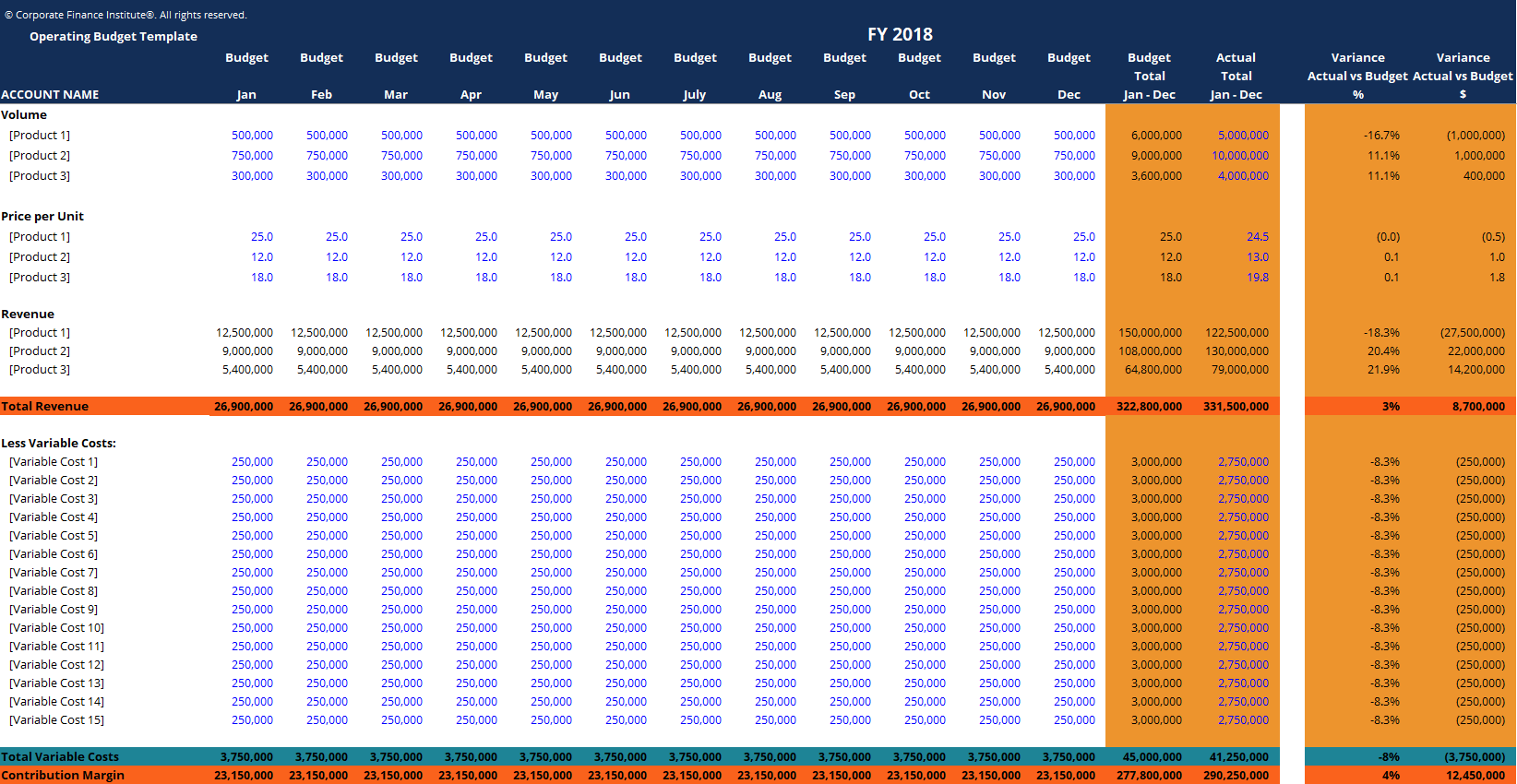
BudgetingBudgetingBudgeting is the tactical implementation of a business plan. To achieve the goals in a business’s strategic plan, we need some type of budget that finances the business plan and sets measures and indicators of performance. may be the most important term in marketing planning when it comes to execution. Often, in order to secure funds from top management or banks, sufficient proof of your advertising plan’s success is needed. It requires accurate forecasting of returns generated by individual advertising expenditures. It is important that returns are not overestimated to avoid spending too much and running out of money early on.
Learn more in CFI’s Budgeting and Forecasting Course.
Marketing Mix
The marketing mixWalmart Marketing MixWalmart is a powerhouse of a business, and one of its key strengths is its marketing mix. Surviving in the retail market requires more than just luck is a combination of elements that influence customers to purchase a product. The marketing mix includes four main factors – Product, Price, Place, and Promotion. Product refers to either the tangible good that your business offers or the intangible good, referring to services. Key decisions made under this umbrella are branding, product design, package and labeling details, warranties, and more.
Price can quite simply be the quantitative price the company’s customers must pay to acquire its product. However, thorough marketing plans will also consider other sacrifices a customer must make, such as travel time, shipping costs, or research time before they find the product. Customer perceived value is also a key consideration when it comes to price. Key decisions under this umbrella include price-setting, pricing strategies, discounts, accepted payment methods, and more.
Place refers to where customers can contact the business and purchase its products. Providing convenience and access to the company’s customers is the goal. Key decisions under this umbrella include distribution, channels, partnerships, locations, transportation, and logistics.
Promotion covers all the marketing communications the company undertakes to make its product known and shape the customers’ image of its product. Key decisions here involve promotional mix, message content, message frequency, media strategies, and more.
Customer Relationship Management (CRM)
Customer relationship management (CRM) is a key factor in maintaining loyalty after a company has achieved a sustainable number of customers. There are numerous software solutions on the market to handle CRM for a company. For small businesses, however, keeping such activities in-house may be recommended to keep the company lean. Things such as offering warranties and return policies can help keep customers satisfied and let them know that the company cares about their use of the product post-purchase.
Key Takeaways
Market planning is a constructive process that facilitates careful consideration of a company’s marketing objectives and product mix so that resources allocated to advertising plans and branding yield optimal returns. While some facets may be unique for each business, key concepts such as market segmentation, target markets, marketing mix, budgeting, and CRM, are applicable in all cases.
Additional Resources
CFI is the official provider of the global Financial Modeling & Valuation Analyst (FMVA)™Become a Certified Financial Modeling & Valuation Analyst (FMVA)®CFI's Financial Modeling and Valuation Analyst (FMVA)® certification will help you gain the confidence you need in your finance career. Enroll today! certification program, designed to help anyone become a world-class financial analyst. To keep learning and advancing your career, the additional CFI resources below will be useful:
- 5 P’s of Marketing5 P's of MarketingThe 5 P's of Marketing – Product, Price, Promotion, Place, and People – are key marketing elements used to position a business strategically. The 5 P's of
- AIDA Model in MarketingAIDA ModelThe AIDA model, which stands for Attention, Interest, Desire, and Action model, is an advertising effect model that identifies the stages that an individual
- Knocking on DoorKnocking on DoorsKnocking on Doors is a lead generation strategy used by banking advisors to secure prospects for business.
- Market PositioningMarket PositioningMarket Positioning refers to the ability to influence consumer perception regarding a brand or product relative to competitors. The objective of market
-

Understanding Market Manipulation: Definition, Tactics & SEC Role
Market manipulation refers to artificial inflation or deflation of the price of a security. Also known as price manipulation or stock manipulation, it involves the literal manipulation of a financial
-

Understanding Market Risk: A Comprehensive Guide
The term market risk, also known as systematic risk, refers to the uncertainty associated with any investment decision. Price volatility often arises due to unanticipated fluctuations in factors that
Business strategy
- Eurodollars: Understanding Foreign Currency Time Deposits
- Understanding Markets: Definition, Types & Examples
- Affiliate Marketing: A Comprehensive Guide for Beginners
- Guerrilla Marketing: Definition, Tactics & Examples | [Your Brand/Site Name]
- Market Neutral Investing: Strategy, Benefits & How It Works
- Market Orientation: Definition & Benefits for Business Success
- Market Planning: A Comprehensive Guide to Strategy & Tactics
- Comprehensive Marketing Plan: Definition, Elements & Strategy
- Succession Planning: A Comprehensive Guide for Business Leaders
-
 Understanding Market Indexes: A Comprehensive Guide
Market index refers to a portfolio of securities that represent a particular section of the stock marketStock MarketThe stock market refers to public markets that exist for issuing, buying and selling...
-
 Understanding Market Makers: How They Fuel Liquidity
Market maker refers to a firm or an individual that engages in two-sided markets of a given security. It means that it provides bids and asks in tandem with the market size of each security. A market ...