
Understanding Market Risk: A Comprehensive Guide
The term market risk, also known as systematic risk, refers to the uncertainty associated with any investment decision. Price volatility often arises due to unanticipated fluctuations in factors that commonly affect the entire financial market.

Systematic risk is not specifically associated with the company or the industry one is invested in; instead, it is dependent on the performance of the entire market. Thus, it is necessary for an investor to keep an eye on various macro variables associated with the financial market, such as inflationInflationInflation is an economic concept that refers to increases in the price level of goods over a set period of time. The rise in the price level signifies that the currency in a given economy loses purchasing power (i.e., less can be bought with the same amount of money)., interest rates, the balance of payments situation, fiscal deficits, geopolitical factors, etc.
Summary
- The term market risk, also known as systematic risk, refers to the uncertainty associated with any investment decision.
- The different types of market risks include interest rate risk, commodity risk, currency risk, country risk.
- Professional analysts use methods like Value at Risk (VaR) modeling, and the beta coefficient to identify potential losses via statistical risk management.
Different Types of Market Risk
1. Interest Rate Risk
Interest rate risk arises from unanticipated fluctuations in the interest rates due to monetary policy measures undertaken by the central bankFederal Reserve (The Fed)The Federal Reserve is the central bank of the United States and is the financial authority behind the world’s largest free market economy.. The yields offered on securities across all markets must get equalized in the long run by adjustment of market demand and supply of the instrument. Hence, an increase in the rates would cause a fall in the security price. It is primarily associated with fixed-income securities.
For example: Consider a situation where a sovereign bond offers a fixed coupon payment of 6% p.a. on the principal value. Now, if the market interest rate rises to 8%, the demand for the 6% bond will decline after a fall in the prices, causing the Yield (Fixed – Coupon Payment / Market Price of Bond) to rise until it is equal to 8%. Similarly, a decline in the market interest rate will lead to an unanticipated gain in the security’s price.
2. Commodity Risk
Certain commodities, such as oil or food grain, are necessities for any economy and compliment the production process of many goods due to their utilization as indirect inputs. Any volatility in the prices of the commodities trickles down to affect the performance of the entire market, often causing a supply-side crisis.
Such shocks result in a decline in not only stock prices and performance-based dividends, but also reduce a company’s ability to honor the value of the principal itself.
3. Currency Risk
Currency risk is also known as exchange rate risk. It refers to the possibility of a decline in the value of the return accruing to an investor owing to the depreciation of the value of the domestic currency. The risk is usually taken into consideration when an international investment is being made.
In order to mitigate the risk of losing out on foreign investment, many emerging market economiesEmerging MarketsEmerging markets is a term that refers to an economy that experiences considerable economic growth and possesses some, but not all, maintain high foreign exchange reserves in order to ensure that any possible depreciation can be negated by selling the reserves.
4. Country Risk
Many macro variables that are outside the control of a financial market can impact the level of return due to an investment. They include the degree of political stability, level of fiscal deficit, proneness to natural disasters, regulatory environment, ease of doing business, etc. The degree of risk associated with such factors must be taken into consideration while making an international investment decision.
How to Mitigate Market Risk
Because the risk affects the entire market, it cannot be diversified in order to be mitigated but can be hedged for minimal exposure. As a result, investors may fail to earn expected returns despite the rigorous application of fundamental and technical analysis on the particular investment option.
Volatility, or the absolute/percentage dispersion in prices, is often considered a good measure for market risk. Professional analysts also tend to use methods like Value at Risk (VaR)Value at Risk (VaR)Value at Risk (VaR) estimates the risk of an investment. VaR measures the potential loss that could happen in an investment portfolio over a period of time. modeling to identify potential losses via statistical risk management.
The VaR method is a standard method for the evaluation of market risk. VaR technique is a risk management method that involves the use of statistics that quantifies a stock or portfolio’s prospective loss, as well as the probability of that loss occurring. Although it is widely utilized, the VaR method requires some assumptions that limit its accuracy.
The beta coefficient enables an investor to measure how volatile the nature or market risk of a portfolio or security is, in comparison to the rest of the market. It also uses the capital asset pricing model (CAPM)Capital Asset Pricing Model (CAPM)The Capital Asset Pricing Model (CAPM) is a model that describes the relationship between expected return and risk of a security. CAPM formula shows the return of a security is equal to the risk-free return plus a risk premium, based on the beta of that security to calculate the anticipated return of an asset.
Additional Resources
CFI is the official provider of the Commercial Banking & Credit Analyst (CBCA)™Program Page - CBCAGet CFI's CBCA™ certification and become a Commercial Banking & Credit Analyst. Enroll and advance your career with our certification programs and courses. certification program, designed to transform anyone into a world-class financial analyst.
In order to help you become a world-class financial analyst and advance your career to your fullest potential, these additional resources will be very helpful:
- Bond PricingBond PricingBond pricing is the science of calculating a bond's issue price based on the coupon, par value, yield and term to maturity. Bond pricing allows investors
- Idiosyncratic RiskIdiosyncratic RiskIdiosyncratic risk, also sometimes referred to as unsystematic risk, is the inherent risk involved in investing in a specific asset – such as a stock – the
- Aggregate Supply and DemandAggregate Supply and DemandAggregate supply and demand refers to the concept of supply and demand but applied at a macroeconomic scale. Aggregate supply and aggregate
- Systemic RiskSystemic RiskSystemic risk can be defined as the risk associated with the collapse or failure of a company, industry, financial institution or an entire economy. It is the risk of a major failure of a financial system, whereby a crisis occurs when providers of capital lose trust in the users of capital
-

Understanding Secular Markets: Long-Term Trends & Investment Strategies
A secular market is predominantly driven and impacted by elements or forces that are likely to be present in the foreseeable future. The forces can impact the price or value of a financial assetFinanc
-
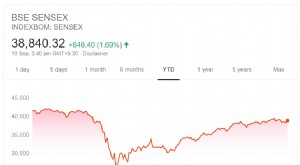
Sensex Explained: Understanding India's Key Stock Market Index
Sensex, also known as the S&P BSE Sensex Index, is the benchmark index that tracks India’s Bombay Stock Exchange (BSE). The Sensex is composed of the 30 largest and most-traded stocks within
invest
- Understanding Systematic Risk: Factors Beyond Your Control
- Understanding Auction Markets: How Prices Are Determined
- Understanding Currency Risk: A Comprehensive Guide
- Doji Candlestick Pattern: Meaning & Trading Signals
- Understanding Downside Risk: Protecting Your Investments
- Understanding Frothy Markets: Risks & Opportunities
- Understanding Inefficient Markets: Causes & Implications
- Understanding Market Cycles: Trends & Economic Environments
- Understanding Market Depth: A Guide for Traders
-
 Understanding Quote-Driven Markets: A Guide for Investors
A quote-driven market is a type of secondary market trading structure where investors trade with dealers. Nearly all bonds, currenciesCurrencyCurrency refers to money, that which is used as a medium o...
-
 Understanding Stock Rallies: Definition & What Causes Them
A rally refers to a period of continuous increase in the prices of stocks, indexes or bondsBondsBonds are fixed-income securities that are issued by corporations and governments to raise capital. The ...