
Debtor vs. Creditor: Understanding the Difference
The key difference between a debtor vs. creditor is that both concepts denote two counterparties in a lending arrangement. The distinction also results in a difference in financial reporting. On the company’s balance sheetBalance SheetThe balance sheet is one of the three fundamental financial statements. The financial statements are key to both financial modeling and accounting., the company’s debtors are recorded as assets while the company’s creditors are recorded as liabilities.

Note that every business entity can be both debtor and creditor at the same time. For example, a company may borrow funds to expand its operations (i.e., be a debtor) while it may also sell its goods to the customers on credit (i.e., be a creditor).
A company must carefully manage its debtors and creditors to monitor the lag between incoming and outgoing payments. The practice ensures that a company receives payments from its debtors and sends payments to its creditors on time. Thus, the company’s liquidity does not deteriorate while the default probabilityProbability of DefaultProbability of Default (PD) is the probability of a borrower defaulting on loan repayments and is used to calculate the expected loss from an investment. does not increase.
What is a Debtor?
A debtor is a person or an organization that agrees to receive money immediately from another party in exchange for a liability to pay back the obtained money in due course of time. In other words, a debtor owes money to another person or organization. The amount owed a debtor repays periodically with or without interest incurred (debt almost always includes interest paymentsInterest ExpenseInterest expense arises out of a company that finances through debt or capital leases. Interest is found in the income statement, but can also).
Depending on the type of undertaking, debt can be referred to in different terms. For example, if a debt is obtained from a financial institution (e.g., bank), the debtor is usually referred to as a borrower. If the debt is issued in the form of financial securities (e.g., bonds), the debtor is referred to as an issuer.
If there is no possibility to meet the financial obligations, a debtor may file for bankruptcy to seek protection from the creditors and relief of some or all debts. Both individuals and companies can file for bankruptcy. Generally, a debtor can initiate the bankruptcy process through a court. Note that only the court can impose the bankruptcy upon a debtor. However, bankruptcy laws and rulesUS Bankruptcy CodeThe US Bankruptcy Code is also referred to as Title 11 of the United States Code, and it governs the procedure that businesses and individuals follow can widely vary among different jurisdictions.
In financial reporting, debtors are generally classified according to the length of debt repayments. For example, short-term debtors are debtors whose outstanding debt is due within one year. The amounts from short-term debtors are recorded as short-term receivables under the company’s current assets. Conversely, long-term debtors owe amounts that are due longer than one year. The amounts are recorded as long-term receivables under the company’s long-term assets.
What is a Creditor?
A creditor is a person or an organization that provides money to another party immediately in exchange for receiving money at some point in the future with or without additional interest. In other words, a creditor provides a loan to another person or entity.
Creditors are generally classified as secured or unsecured. Secured creditors provide loans only if the debtors are able to pledge a specific asset as collateral. In case of a debtor’s bankruptcy, a secured creditor can seize the collateralCollateralCollateral is an asset or property that an individual or entity offers to a lender as security for a loan. It is used as a way to obtain a loan, acting as a protection against potential loss for the lender should the borrower default in his payments. from the debtor to cover the losses from the unpaid debt. The most notable example of a secured loan is a mortgage in which a piece of property is used as collateral.
On the other hand, unsecured creditors do not require any collateral from their debtors. In case of a debtor’s bankruptcy, the unsecured creditors can make a general claim on the debtor’s assets, but commonly, they are only able to seize a small portion of the assets. Due to this reason, unsecured loans are considered to be riskier than secured loans.
In accounting reporting, creditors can be categorized as current and long-term creditors. Debts of current creditors are payable within one year. The debts are reported under current liabilities of the balance sheet. Debts of long-term creditors are due more than one year after and are reported under long-term liabilities.
Additional Resources
CFI offers the Financial Modeling & Valuation Analyst (FMVA)™Become a Certified Financial Modeling & Valuation Analyst (FMVA)®CFI's Financial Modeling and Valuation Analyst (FMVA)® certification will help you gain the confidence you need in your finance career. Enroll today! certification program for those looking to take their careers to the next level. To keep learning and advancing your career, the following resources will be helpful:
- Current AssetsCurrent AssetsCurrent assets are all assets that a company expects to convert to cash within one year. They are commonly used to measure the liquidity of a
- Financial IntermediaryFinancial IntermediaryA financial intermediary refers to an institution that acts as a middleman between two parties in order to facilitate a financial transaction. The institutions that are commonly referred to as financial intermediaries include commercial banks, investment banks, mutual funds, and pension funds.
- Top Banks in the USATop Banks in the USAAccording to the US Federal Deposit Insurance Corporation, there were 6,799 FDIC-insured commercial banks in the USA as of February 2014.
- Who Evaluates Bank Loans?Who Evaluates Bank Loans?The lending process involves a series of activities that lead to the approval or rejection of a bank loan application. The loan department of a bank employs
-

Understanding Appropriation Accounts: Distribution of Funds & Profits
An appropriation account shows how an organization’s funds are distributed among partners, shareholders, and departments. For companies, an appropriation account shows how the company’s pr
-
Understanding Arrears: Definition, Causes & Management
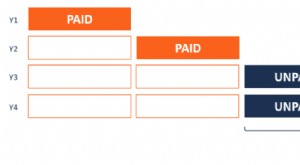
Arrears refers to payments that are overdue and that are supposed to be made at the end of a given period after missing out on the required payments. Total arrears equals the sum of all the payments t
finance
- Understanding Financial Judgments: What You Need to Know
- What Happens to a Judgment After the Debtor Dies? | [Your Company Name]
- Understanding Creditor Statements: A Comprehensive Guide
- Hardship Letter Template: Requesting Assistance from Creditors
- Jumbo CDs: Higher Rates & Deposits Explained
- Understanding Debt Collection: Legal Tactics & Agency Processes
- Facing a Lawsuit from a Creditor? Your Rights & Options
- Understanding Regulation Z: Your Rights as a Borrower
- Annuities Explained: A Simple Guide to Retirement Income
-
 Understanding Alpha: A Guide to Investment Performance
Alpha is a measure of the performance of an investment as compared to a suitable benchmark index, such as the S&P 500S&P – Standard and PoorsStandard & Poor’s is an American fi...
-
 Annuity Due Explained: Payments at the Beginning of Each Period
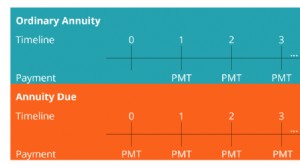
Annuity due refers to a series of equal payments made at the same interval at the beginning of each period. Periods can be monthly, quarterly, semi-annually, annually, or any other defined period. Exa...