
Understanding Float in Banking: Definition & Impact
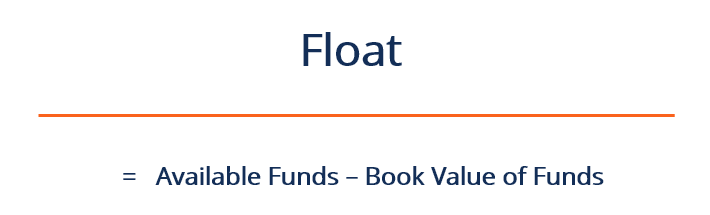
In banking, float refers to the money that is double counted due to delays in the process of deducting funds from the payer and the depositing of the payee. It is most common in paper checksHow to Write a CheckEven though digital payments are continually gaining more market share, it’s still important to know how to write a check. This guide shows you step by step between different banks when the payee’s bank credits the account as soon as the check is deposited, but the payer’s bank has not yet cleared the check (removed the amount from the payer’s account).
Summary
- Float is the money that is double counted due to delays in clearing checks.
- When the payee deposits their check, their bank automatically credits the account before deducting the amount from the payer’s bank. Timing delays can occur due to seasonal fluctuations, holidays, transportation delays, etc.
- Floating checks occur when the payer takes advantage of the float time to replenish insufficient funds.
Taking Advantage of the Float
Floating Checks
Usually, when the payer writes a check, it is assumed that they have that money in their account to cover the payout. Floating checks is a strategy whereby the payer takes advantage of the float by writing a check for an amount they do not currently have but is expected to receive before the check is cleared.
For example, a payer writes a check for $500 today to a payee. She does not currently have $500 in her account, but she knows she will receive a direct deposit of $500 in three days’ time, and she expects that the payer will deposit and clear the check in five days’ time.
Issues with Floating Checks
If the expected direct deposit does not materialize before the check is cleared, the check will be rejected. The payer will be charged with a non-sufficient funds (NSF)Insufficient FundsInsufficient funds is a checking account status where the balance is deficient. It is a banking term that may appear as a notice in bank statements or receipts. fee from the bank and potentially a return check fee from the payee as well. Alternatively, if the payee’s bank clears the check earlier than the direct deposit hits, the payer will run into the same problems. Furthermore, large amounts of NSF checks can lead to criminal charges.
If insufficient funds are imminent, it may be better to apply for overdraft protection instead to avoid complications from floating checks. Overdraft protection is a line of credit offered by banks to continue withdrawing funds when the payee has insufficient funds. While overdraft negatively harms credit, it is a better alternative to unsuccessfully floating checks.
Kiting
Similar to floating checks, kiting involves taking advantage of the float. However, kiting is illegal because the payer, knowing he has insufficient funds, is misusing the float as unauthorized credit.
In such a scenario, the payer keeps two accounts at different banks. He writes a check from Bank A for $5,000 that is not in his account. He then deposits the check into Bank B, which automatically credits the account for $5,000. Immediately, he withdraws the $5,000 from Bank B and eventually deposits the amount into Bank A before Bank B clears the check. In the time it takes for the check to clear, the payer exploits this float time as a short loan with no interest.
Technological Advancements
Better processing capabilities from technological advancements have significantly lowered times to process checks, and therefore reduced the amount of float outstanding. Banks now offer electronic payments, direct deposits, email money transfers, and other forms of payment, which have been adopted quickly in place of paper checks.
Before such advances, checks can range anywhere between 2-5 days to clear. The float time varies depending on anything that can lengthen processing, such as seasonal fluctuations, holidays, transportation delays, and more. Today, it usually takes around 1-2 days to clear, so it is much harder to take advantage of the float.
Besides the inevitable innovation in processing checks, the push for shorter float times was also partially due to central banks. Because the float artificially inflates money supply, it can obscure the actual amount of money in circulation and the implementation of monetary policyMonetary PolicyMonetary policy is an economic policy that manages the size and growth rate of the money supply in an economy. It is a powerful tool to. As a result, the shrinking of the float time has clarified money supply, as well as deterred payers from taking advantage of the float.
More Resources
CFI is the official provider of the global Commercial Banking & Credit Analyst (CBCA)™Program Page - CBCAGet CFI's CBCA™ certification and become a Commercial Banking & Credit Analyst. Enroll and advance your career with our certification programs and courses. certification program, designed to help anyone become a world-class financial analyst. To keep advancing your career, the additional resources below will be useful:
- Bank Account OverdraftBank Account OverdraftA bank account overdraft happens when an individual’s bank account balance goes down to below zero, resulting in a negative balance. It usually happens when there are no more funds in the account in question, but an outstanding transaction is processed through the account, leading to the account holder incurring a debt.
- Checking AccountChecking AccountA checking account is a type of deposit account that individuals open at financial institutions for the purpose of withdrawing and depositing money. Also known as a transactional or demand account, a checking account is very liquid. To put it simply, it provides users a quick way of accessing their money.
- Direct DepositDirect DepositA direct deposit can be defined as a payment made directly into a payee’s account. The payment can be made electronically from one account to another
- Federal ReserveFederal Reserve (The Fed)The Federal Reserve is the central bank of the United States and is the financial authority behind the world’s largest free market economy.
-

Understanding Non-Sufficient Funds (NSF) & Overdraft Fees
Non-sufficient funds, or insufficient funds, is a banking term used to indicate that the checking account does not have sufficient balance to cover a transaction or payment. Colloquially, NSF checks a
-

Free Float Explained: Understanding Publicly Traded Shares
Free float, also known as public float, refers to the shares of a company that can be publicly traded and are not restricted (i.e., held by insidersInsider InformationInsider information, also called
finance
- Check Discounting Explained: Accessing Global Financing for Americans
- Understanding Check Countersignatures: What You Need to Know
- Understanding Dishonored Checks: Causes, Consequences & Prevention
- Understanding Canceled Checks: What They Are & Why They Matter
- Understanding Voucher Checks: Purpose, Use & Benefits
- Stock Float Explained: Understanding Publicly Available Shares
- Check Kiting: Definition, How It Works & Prevention
- Understanding Background Checks: A Comprehensive Guide
- Understanding Voided Checks: What They Are & How to Void One
-
 Understanding Company Float: A Guide for Investors
The term float refers to the regular shares a company has issued to the public that are available for investors to trade. This figure is derived by taking a companys outstanding shares and subtracti...
-
 Depository Transfer Checks (DTC): Definition & Benefits
A depository transfer check (DTC), also known as a depository transfer draft, is used when a third-party service provider collects daily receipts from an organization’s locations and deposits it...