
Understanding Voucher Checks: Purpose, Use & Benefits
A voucher check is a check variant with two vouchers attached to it. The voucher usually explains the purpose and the contents of the check. They are presented on a full sheet of paper with the check on the top and the vouchers on a removable section below.
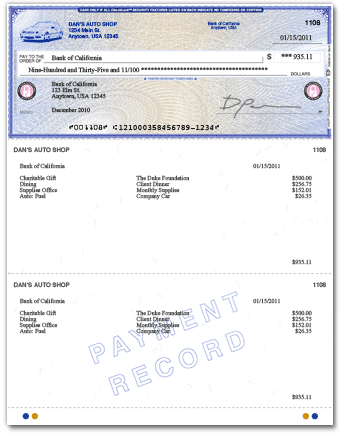
Perforations in the sheet make the sections easy to separate. One voucher is kept by the recipient of the check for better recordkeeping before cashing the check. The bearer of the check keeps the other voucher.
Many companies use the voucher check format for payroll processingPayroll AccountingPayroll accounting is essentially the calculation, managing, recording, and analysis of employees’ compensation. In addition, payroll. It is because the vouchers allow numerous details to be written. An employee who receives a voucher check will also be shown tax deductions and other withholdings.
It gives an employee a better understanding of pre- and post-tax income and is presented in an organized format. Before the voucher check is deposited, the voucher is detached and filed. As it offers a record for both the parties involved in a transaction, it may also help in resolving disputes in the future.
Summary
- A voucher check is a check type that has vouchers attached to it that contain details of the transaction and is used for better recordkeeping.
- Voucher checks are commonly used for payroll processing, as a lot of details can be explained through the voucher system.
- It is time-consuming and tedious to maintain voucher checks, but it also comes with numerous benefits.
Benefits of a Voucher Check
Many people may consider it tedious and time-consuming to maintain a system of check vouchers, but it offers quite a few benefits.
1. Completeness of documents
To maintain a system of check vouchers, all relevant documents, such as invoices, receipts, and ordersPurchase OrderA purchase order is a commercial source document that is issued by a business’ purchasing department when placing an order with the business’ vendors or, must be attached for the processing of payment. Hence, all documents are automatically maintained in case of a check voucher system.
2. Organized filing
As check vouchers are numbered, it makes sure there are no irregularities, all checks are in order and records are maintained in chronological order.
3. Bookkeeping
The process of bookkeepingWhat is Bookkeeping?Bookkeeping involves the recording, on a regular basis, of a company's financial transactions. With proper bookkeeping, companies are able to is simplified when check vouchers are used as documents are readily available, intact, and valid. Moreover, if check vouchers are computerized, an automatic entry is also recorded.
4. Easier internal review and audit
Due to its nature, check vouchers ensure documents are neatly organized. It reduces the number of errors, which, in turn, lessens the need for costly review and audit. Therefore, adopting a check voucher system makes review and audit less necessary.
5. Easy tracking of outstanding and paid checks
Usually, check vouchers that are outstanding (unpaid) are not filed, and only cleared (paid) checks are filed.
How to Use a Voucher Check?
Check vouchers are easy to prepare and use. Some of the fundamental steps are enumerated below:
1. Collecting and analyzing all documents and information
All relevant documents, such as invoicesInvoice Template (Word)This invoice template (word) will act as a guideline for you when creating sales invoices to keep records of transactions., statements of accounts, contracts, purchase orders, etc., must first be collected. Some important document information, such as the name of the vendor, date of the document, payment due date, details of the transaction, amount of the transaction, equivalent taxes, etc., should be provided.
2. Preparing the check and voucher check
Once all the documents have been checked and analyzed, the check may be written. The voucher check is then prepared using the documents and the written check.
Important items written in the voucher check are the date of the voucher, voucher number, check details, bank name, amount of the check, applicable taxes, due date, document reference number, etc.
3. Attaching the check and the documents in the voucher check
The step involves printing the prepared voucher check and grouping it with the documents and the written check.
4. Signing the voucher check
There are usually two cases:
- If the authorized signatory is preparing the voucher check: The check and the voucher must be signed duly.
- If the authorized signatory is not preparing the voucher check: The check, voucher, and the documents must be submitted to the authorized signatory for review and approval. Once approved, it must get signed.
5. Releasing the check voucher
Once all the above steps are completed, the vendor or payee must acknowledge receipt of the check and must also sign the voucher check.
6. Filing the voucher
The last step is to ensure that the voucher is filed with the attached documents provided the payment has been successful.
More Resources
CFI is the official provider of the global Commercial Banking & Credit Analyst (CBCA)™Program Page - CBCAGet CFI's CBCA™ certification and become a Commercial Banking & Credit Analyst. Enroll and advance your career with our certification programs and courses. certification program, designed to help anyone become a world-class financial analyst. To keep advancing your career, the additional CFI resources below will be useful:
- How to Write a CheckHow to Write a CheckEven though digital payments are continually gaining more market share, it’s still important to know how to write a check. This guide shows you step by step
- Checking Accounts vs. Checking Accounts vs Savings AccountsA bank client can choose to open checking accounts vs savings accounts depending on several factors, such as purpose, ease of access, or other attributes. A checking account is a type of bank account that is used for everyday transactions. It is the most basic account that banks, credit unions, and small lenders offer.Savings AccountsChecking Accounts vs Savings AccountsA bank client can choose to open checking accounts vs savings accounts depending on several factors, such as purpose, ease of access, or other attributes. A checking account is a type of bank account that is used for everyday transactions. It is the most basic account that banks, credit unions, and small lenders offer.
- Source DocumentsSource DocumentsThe paper trail of a company's financial transactions are referred to in accounting as source documents. Whether checks are written to be
- Vault ReceiptVault ReceiptA vault receipt is a document used to indicate ownership of commodity stored in a bank, vault, depository, or warehouse and regularly used as a delivery
-

Understanding Check Information: A Complete Guide to Check Details
When you’re writing a check, it’s important to write the check information legibly and accurately. A mistake could cost you money if it causes a bank to reject your check. So much
-

Returned Check: Understanding Fees, Consequences & Resolution
A returned check is the paper equivalent of a declined credit card. But while the worst result of a declined credit card might be a bit of embarrassment, a bounced check can have b
finance
- Check Discounting Explained: Accessing Global Financing for Americans
- Understanding Check Countersignatures: What You Need to Know
- Understanding Dishonored Checks: Causes, Consequences & Prevention
- Understanding Canceled Checks: What They Are & Why They Matter
- Understanding Float in Banking: Definition & Impact
- Understanding Vouchers: A Guide to Accounts Payable Documents
- Check Kiting: Definition, How It Works & Prevention
- Understanding Background Checks: A Comprehensive Guide
- Understanding Voided Checks: What They Are & How to Void One
-
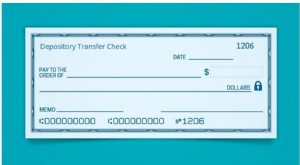 Depository Transfer Checks (DTC): Definition & Benefits
A depository transfer check (DTC), also known as a depository transfer draft, is used when a third-party service provider collects daily receipts from an organization’s locations and deposits it...
-
 Understanding Non-Sufficient Funds (NSF) & Overdraft Fees
Non-sufficient funds, or insufficient funds, is a banking term used to indicate that the checking account does not have sufficient balance to cover a transaction or payment. Colloquially, NSF checks a...