
Understanding the Going Concern Principle: A Comprehensive Guide
The going concern principle assumes that any organizationTypes of OrganizationsThis article on the different types of organizations explores the various categories that organizational structures can fall into. Organizational structures will continue to operate its business for the foreseeable future. The principle purports that every decision in a company is taken with the objective in mind of running the business rather than that of liquidating it.

Breaking Down Going Concern
Going concern is one of the very fundamental principles of accounting. It assumes that the entity will continue to remain in business for the foreseeable future. Conversely, it also means that the entity does not plan to, or expect to be forced to, liquidate its assets. Under this accounting principle, it defers revenueRevenueRevenue is the value of all sales of goods and services recognized by a company in a period. Revenue (also referred to as Sales or Income) and expenses according to other principles of accounting. If the going concern assumption did not hold true, then it would not be possible to record prepaid or accrued expenses as such.
The concept of going concern is relevant not only from an income statementIncome StatementThe Income Statement is one of a company's core financial statements that shows their profit and loss over a period of time. The profit or perspective but also from a balance sheet perspective. All assets are depreciated and amortized as appropriate, with the same idea that the business will continue to operate.
Conditions for Going Concern
The concept is not clearly defined anywhere in the Generally Accepted Accounting Principles (GAAP)GAAPGAAP, Generally Accepted Accounting Principles, is a recognized set of rules and procedures that govern corporate accounting and financial, which leaves a considerable amount of interpretation regarding when an entity should report it. However, Generally Accepted Auditing Standards (GAAS) requires an auditor to verify an entity’s ability to continue as a going concern.
Without any significant information to the contrary, it is always assumed that the entity will be able to meet all its obligation without significant debt restructuring and continue to be a going concern entity.
Red Flags
Once an auditor examines a company’s financial statements to see if the operating conditions of the entity are suitable for the long-term continuity of the business, they will issue a certificate accordingly. Some of the conditions that create substantial doubts for the principle of going concern are defaults on loans, lawsuits, company plans to declare bankruptcy, continued losses year over year, etc.
In case the auditor decides to qualify their audit report, it may raise the issue of whether assets are already impaired, which may highlight the need to write down the value of the assets from their carrying value to liquidation value. However, a company can choose to justify their decisions and attempt to make the auditor believe that poor business operating conditions are only temporary. It can also get a third-party guarantee to mitigate existing risks.
The valuation of an entity, assuming it’s on a going concern basis, will be higher, as it offers the potential to earn higher profits in the future than its liquidation value.
Going Concern vs. Liquidation Value
The value of a going concern is basically the ability of the business to earn future profits. An analyst values the business after looking at the recent trend of the business and the company’s potential to earn profits. A going concern will be valued according to operational efficiency, market share, the ability to influence the market, technology advantages, and so on. It may be valued using the discounted cash flow (DCF) method,Discounted Cash Flow DCF FormulaThis article breaks down the DCF formula into simple terms with examples and a video of the calculation. Learn to determine the value of a business. with the assumption of future profitability.
The valuation of a company is important from the shareholders’ and investors’ perspective. In general, all companies are run with a going concern assumption and, hence, projections and, more importantly, business plans are made considering what should be the next action plan.
Liquidation value, on the other hand, is relevant to a situation where the company becomes insolvent and is unable to pay its bills. An insolvent company may choose to sell its assets one by one or all of its assets together. The value received from the sale is usually the asset’s market value, less sale expenses. Liquidation value is very important for creditors and stakeholders, who would be paid out of this money.
Related Readings
Thank you for reading CFI’s explanation of going concern. CFI is the official provider of the Financial Modeling and Valuation Analyst (FMVA)™Become a Certified Financial Modeling & Valuation Analyst (FMVA)®CFI's Financial Modeling and Valuation Analyst (FMVA)® certification will help you gain the confidence you need in your finance career. Enroll today! certification program, designed to transform anyone into a world-class financial analyst.
To keep learning and developing your knowledge of financial analysis, we highly recommend the additional CFI resources below:
- Accrual PrincipleAccrual PrincipleThe accrual principle is an accounting concept that requires transactions to be recorded in the time period in which they occur, regardless of
- Auditor’s ReportAuditor's ReportAn independent Auditor’s Report is an official opinion issued by an external or internal auditor as to the quality and accuracy of the
- Continuous AccountingContinuous AccountingContinuous accounting is an approach to a company’s accounting cycles management that embraces the advancements in information technology and redefines the operations and role of finances in the corporate structure. The continuous accounting approach is a new alternative to the traditional accounting method
- Three Financial StatementsThree Financial StatementsThe three financial statements are the income statement, the balance sheet, and the statement of cash flows. These three core statements are
-

Understanding Appropriation Accounts: Distribution of Funds & Profits
An appropriation account shows how an organization’s funds are distributed among partners, shareholders, and departments. For companies, an appropriation account shows how the company’s pr
-
Understanding Arrears: Definition, Causes & Management
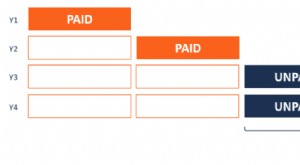
Arrears refers to payments that are overdue and that are supposed to be made at the end of a given period after missing out on the required payments. Total arrears equals the sum of all the payments t
finance
- PC Banking: A Comprehensive Guide to Online Banking Security & Features
- IRA CDs: Secure Retirement Savings with FDIC Insurance
- Understanding the DU: Your Mortgage Approval Explained
- Decentralized Finance (DeFi): A Comprehensive Overview
- Jumbo CDs: Higher Rates & Deposits Explained
- Understanding Cryptocurrency: A Beginner's Guide to Digital Currency
- DB(k) Plans: A Hybrid Retirement Solution for Employers & Employees
- Understanding Regulation Z: Your Rights as a Borrower
- Annuities Explained: A Simple Guide to Retirement Income
-
 Understanding Alpha: A Guide to Investment Performance
Alpha is a measure of the performance of an investment as compared to a suitable benchmark index, such as the S&P 500S&P – Standard and PoorsStandard & Poor’s is an American fi...
-
 Annuity Due Explained: Payments at the Beginning of Each Period
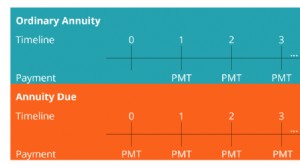
Annuity due refers to a series of equal payments made at the same interval at the beginning of each period. Periods can be monthly, quarterly, semi-annually, annually, or any other defined period. Exa...