
Understanding High Street Banks: Your Guide to Retail Banking
High street banks are large retail banks that offer daily banking services (e.g. deposit and checking accountsChecking AccountA checking account is a type of deposit account that individuals open at financial institutions for the purpose of withdrawing and depositing money. Also known as a transactional or demand account, a checking account is very liquid. To put it simply, it provides users a quick way of accessing their money., cash deposits and withdrawals, and credit facilities) to the public and small to mid-sized businesses. They are banks with many branches spreading into multiple cities and towns.
Summary
- High street banks provide retail banking services to a wide geographic coverage by operating in branches in cities and towns.
- They provide daily banking services, including cash deposits, withdrawals, credit facilities, etc., to individuals and small to mid-sized businesses.
- In the U.S., they are known as “Main Street banks.”
Understanding High Street Banks
The term “high street” originated in the U.K. and rarely used in other areas. In the U.S., they are known as “Main Street banks.” When it comes to investment banks that raise money in the capital market, they are called “Wall Street banks.”
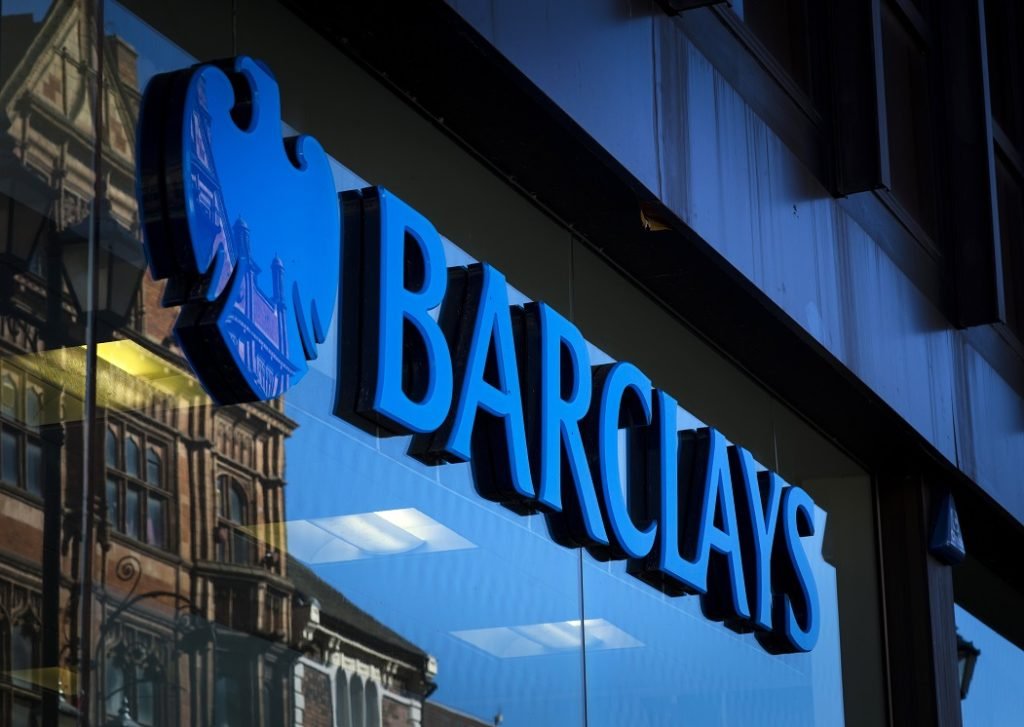
High street banks provide retail banking services to a wide geographic coverage by operating in branches in cities and towns. The British high street banks include HSBC, National Westminster Bank (NatWest), Lloyds Bank, Santander Bank, and Barclays Bank. They are equivalent to the Main Street banks, such as Wells Fargo and JP Morgan ChaseJP Morgan Chase & CoJPMorgan Chase & Co is a multinational bank holding company that is headquartered in New York City. It became one of the top banks in the US after the merger of J.P. Morgan and Chase Manhattan Bank in December 2000. Globally, JPMorgan Chase and Co. is the sixth largest bank by assets in the world, with total assets, in the U.S.
Responding to the COVID-19 pandemic, almost all of the high street banks in the U.K. offer financial support known as the Coronavirus Business Interruption Loan Scheme (CBILS) to their smaller business customers.
For example, NatWest arranged a support package of GBP5 billion for small and medium-sized enterprises (SMEs) suffering from the COVID-19 disruption. Lloyds Bank allocated GBP2 billion to finance its business clients, free of arrangement fees. The packages are typically composed of loans with terms of up to six years and interest-free repayments for the first 12 months.
Market Trends
For the last couple of decades, high street banks have closed many branches following the growing popularity of online and mobile banking. Many of the branches are in poorer areas, where transactions have relatively lower economic values and generate less income. Banking services in such areas can be moved online to release expense savings.
Besides branch closures, another trend of the high street banks market is mergers and takeovers, which leads to market concentration and lack of competition. Thus, the British government has supported challenger banks to compete with the major high street banks.
The technological advancement of online banking is greatly beneficial to the challenger banks via down-cost savings. It helps to lower the barriers of entry, as well as partially offset the competitive disadvantage due to the lack of economies of scaleEconomies of ScaleEconomies of scale refer to the cost advantage experienced by a firm when it increases its level of output.The advantage arises due to the.
Also, high street banks have been experiencing increasing pressures from niche banks. While high street banks cover a wide range of demographics, niche banks have specific market focuses. They are typically smaller in size and target specific demographic groups or industries. It allows them to be experts in such market segments and allot capital for particular groups.
High Street Banks vs. Wall Street Banks
As mentioned above, high street banks (retail banks) and Wall Street banks (investment banks) have different functions and target clients.
Retail banks generate income through fees charged over deposit and checking accounts, credit cards, as well as interest income from loans. Investment banks charge service fees on capital market transactions, such as mergers and acquisitions (M&A), as well as bonds and shares issuing. The fees are pre-determined as a percentage of the transaction value.
Due to the nature of capital market transactions, investment banking activities are significantly riskier than retail banking activities. Thus, retail banking and investment banking are required to be separated. It is to protect the retail banking functions from being endangered by losses from investment banking activities.
The separation can be in the form of a two-tier structure that an institution can only cover one of the businesses instead of both. It can also be a legal ring-fence to separate the retail and investment banking divisions. After the 2008 Global Financial Crisis, the Independent Commission on Banking was established in the U.K. in 2010. Its major proposal is the ring-fence practice in British banks.
More Resources
CFI is the official provider of the global Commercial Banking & Credit Analyst (CBCA)™Program Page - CBCAGet CFI's CBCA™ certification and become a Commercial Banking & Credit Analyst. Enroll and advance your career with our certification programs and courses. certification program, designed to help anyone become a world-class financial analyst. To keep advancing your career, the additional resources below will be useful:
- Banking FundamentalsBanking FundamentalsBanking fundamentals refer to the concepts and principles relating to the practice of banking. Banking is an industry that deals with credit
- Investment BankingInvestment BankingInvestment banking is the division of a bank or financial institution that serves governments, corporations, and institutions by providing underwriting (capital raising) and mergers and acquisitions (M&A) advisory services. Investment banks act as intermediaries
- Main Street vs. Wall StreetMain Street vs. Wall Street“Main Street vs Wall Street” is used to describe the contrast of general consumers, investors, or small local businesses with large investment corporations
- Retail Bank TypesRetail Bank TypesBroadly speaking, there are three main retail bank types. They are commercial banks, credit unions, and certain investment funds that offer retail banking services. All three work toward providing similar banking services. These include checking accounts, savings accounts, mortgages, debit cards, credit cards, and personal loans.
-

What is Main Street vs Wall Street?
“Main Street vs Wall Street” is used to describe the contrast of general consumers, investors, or small local businesses with large investment corporations. Main Street represents the smal
-

MIBOR: Understanding the Mumbai Inter-Bank Offered Rate
The Mumbai Inter-Bank Offered Rate (MIBOR) is the interest rate benchmark at which banks borrow unsecured funds from one another in the Indian interbank market. It is currently used as a reference rat
finance
- Commercial Bank Functions: Services & Lending Explained
- Understanding Agency Costs: Protecting Shareholder Interests
- Understanding Bank Reserves: A Comprehensive Guide
- CCPPO Shares Explained: Understanding Cumulative, Convertible, & Participating Preferred Stock
- Commercial Banks: Definition, Services & Bridge Loans
- Understanding Company Bylaws: A Comprehensive Guide
- Corporate Bonds: A Comprehensive Guide to Investing
- Understanding Earnings: A Guide to Financial Profitability
- Understanding Key Risks Facing Banks: A Comprehensive Overview
-
 Industrial REITs: Investing in the Future of Logistics & Warehousing
Industrial REITs are companies that own and manage real estate properties that are used for manufacturing, production, storage, and distribution of goods. The structure under which industrial REITs op...
-
 Understanding Dividends: A Guide for Investors
There are advantages and disadvantages relative to investing in stocks with dividends vs stocks without dividends. Dividends are periodic payments made by companies to owners of its stock. They are a ...