
Mortgage Banks: Your Guide to Home Loan Financing
A mortgage bank is a bank specializing in mortgage loans. It can be involved in originating or servicing mortgage loans, or both. The banks loan their own capital to borrowers and either collect payments in installments along with a certain rate of interest or sell their loans in the secondary marketSecondary MarketThe secondary market is where investors buy and sell securities from other investors. Examples: New York Stock Exchange (NYSE), London Stock Exchange (LSE)..

The scale of a mortgage bank’s operations varies. Some mortgage banking companies operate nationwide whereas some may originate a larger loan volume as opposed to operating nationwide.
Summary
- A mortgage is a debt instrument specific to the real estate industry. It is secured by the collateral of a real estate property.
- A mortgage bank is a bank specializing in mortgage loans. It can be involved in either originating or servicing mortgage loans, or both.
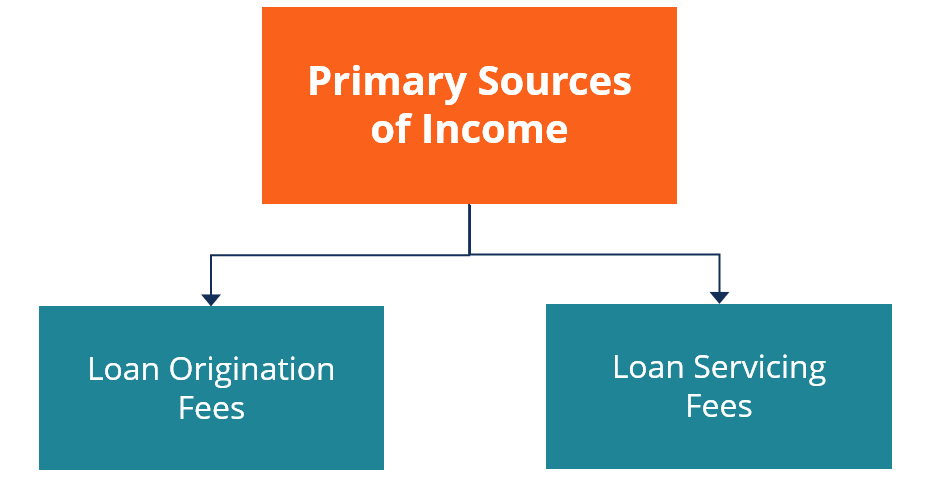
- A mortgage bank’s two primary sources of revenue are loan origination fees and loan servicing fees.
What is a Mortgage?
A mortgage is a debt instrument specific to the real estateReal EstateReal estate is real property that consists of land and improvements, which include buildings, fixtures, roads, structures, and utility systems. Property rights give a title of ownership to the land, improvements, and natural resources such as minerals, plants, animals, water, etc. industry. It is secured by the collateralCollateralCollateral is an asset or property that an individual or entity offers to a lender as security for a loan. It is used as a way to obtain a loan, acting as a protection against potential loss for the lender should the borrower default in his payments. of a real estate property. The borrower is obligated to pay back the loan over time. Mortgages make it easier to purchase large real estate properties without having to pay a large purchase price upfront.
The borrower instead gets the opportunity to repay the loan over time – in periodic installments in addition to interest payments. After paying back the loan, the borrower becomes the owner of the property free and clear. Mortgages can also be referred to as liens against property or claims on property.
How a Mortgage Bank Functions
Mortgage banks provide loans to clients purchasing real estate properties. The institutions then place the loans on a pre-established warehouse line of credit, wherein the loan is put on sale in the secondary market. Investors, typically large institutions and corporations, purchase or invest in such loans.
The credit risk associated with mortgages is typically absorbed by “the Agencies,” i.e., the Federal National Mortgage Association or “Fannie Mae,”Fannie MaeThe Federal National Mortgage Association, typically known as Fannie Mae, is a United States government-sponsored entity that was established to expand the secondary mortgage market by making mortgages available to low and middle-income borrowers. It does not provide mortgages to borrowers, but purchases and guarantees mortgages the Federal Home Loan Mortgage Corporation or “Freddie Mac,” and the Government National Mortgage Association or “Ginnie Mae.”
A mortgage bank operates under the banking laws applicable to each state they operate or do business in. The banks sell off the mortgage loans in the secondary market because the funds received thereafter pay for their warehouse lines of credit, which enables them to continue to operate and lend.
Primary Sources of Income for Mortgage Banks
Mortgage Bankers vs. Mortgage Brokers
In terms of loan origination, mortgage bankers risk their own capital to fund loans. Also, they are not required to disclose the price at which they sell mortgages.
On the other hand, mortgage brokers originate loans in the name of financial institutions and organizations. Regarding full disclosure, they need to disclose the additional fee(s) charged to the consumer under federal and state laws.
Related Readings
CFI offers the Financial Modeling & Valuation Analyst (FMVA)™Become a Certified Financial Modeling & Valuation Analyst (FMVA)®CFI's Financial Modeling and Valuation Analyst (FMVA)® certification will help you gain the confidence you need in your finance career. Enroll today! certification program for those looking to take their careers to the next level. To keep learning and advancing your career, the following CFI resources will be helpful:
- Financial IntermediaryFinancial IntermediaryA financial intermediary refers to an institution that acts as a middleman between two parties in order to facilitate a financial transaction. The institutions that are commonly referred to as financial intermediaries include commercial banks, investment banks, mutual funds, and pension funds.
- Key Players in the Capital MarketsKey Players in the Capital MarketsIn this article, we provide a general overview of the key players and their respective roles in the capital markets. The capital markets consist of two types of markets: primary and secondary. This guide will provide an overview of all the major companies and careers across the capital markets.
- Primary MarketPrimary MarketThe primary market is the financial market where new securities are issued and become available for trading by individuals and institutions. The trading activities of the capital markets are separated into the primary market and secondary market.
- Retail Bank TypesRetail Bank TypesBroadly speaking, there are three main retail bank types. They are commercial banks, credit unions, and certain investment funds that offer retail banking services. All three work toward providing similar banking services. These include checking accounts, savings accounts, mortgages, debit cards, credit cards, and personal loans.
-

Loan Administrator: Understanding Their Role and Responsibilities
What Is a Loan Administrator? When you take out any type of loan, such as a mortgage or car loan, you will have to work with a loan administrator during the life of the loan. Become a savvy l
-

Understanding Deferred Balances in Mortgages: A Comprehensive Guide
What Is a Deferred Balance in a Mortgage? A mortgage allows someone to finance his home purchase with funds borrowed from a bank or other lender. After the paperwork is signed, monthly paymen
finance
- Understanding Bank Loans: Types, Terms & How They Work
- Understanding High-Balance Mortgage Loans: What You Need to Know
- Understanding Mortgage Covenants: A Comprehensive Guide
- Understanding the DU: Your Mortgage Approval Explained
- Bank Drafts: Definition, How They Work & Usage
- Understanding Bank Ratings: A Guide to Financial Stability
- Collateral Explained: What It Is & How It Works
- Mortgage Banks: Your Guide to Home Loan Financing
- Conventional Mortgage Loans: A Comprehensive Guide
-
 Understanding Your Mortgage Principal Balance: A Comprehensive Guide
Know where you stand on your mortgages principal balance Each month you send in your hard-earned money in to make your mortgage payment. When the lender receives the payment, part of it is ap...
-
 Understanding Liens: A Comprehensive Guide to Property Rights
If you’ve taken out a loan to buy a car or house, there’s been a lien on it. So, what’s a lien and why should you care? A lien is a legal claim that allows a person or entity (a...