
Understanding Non-Refundable Tax Credits: A Comprehensive Guide
A non-refundable tax credit is a credit that is applied to taxes payable that only reduces a taxpayer’s liability to a minimum of zero. In other words, it cannot go below zero and cannot be refunded to the taxpayer. Any amount below zero for the tax credit is automatically forfeited by the taxpayer.
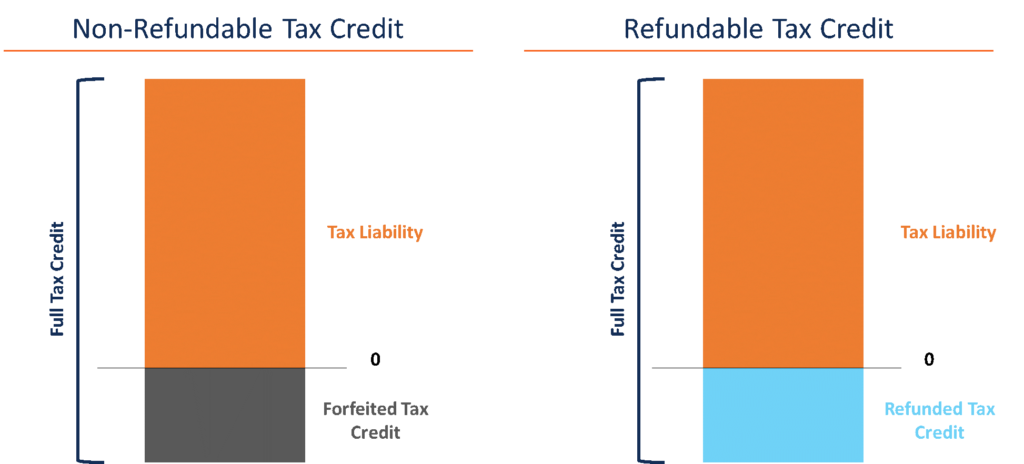
It is in contrast to refundable tax credits. Refundable credits are refunded to the taxpayer, even if their tax liability is below zero. They are favorable for taxpayers since they can actually be refunded cash.
Tax credits are classified based on tax laws as either refundable or non-refundable. Generally, the tax credits differ from year-to-year and between different tax regulatorsHow to Use the IRS.gov WebsiteIRS.gov is the official website of the Internal Revenue Service (IRS), the United States’ tax collection agency. The website is used by businesses and.
Tax Credits Explained
A tax credit is a sum of money that taxpayers are able to subtract from their tax liability. Tax liabilities are money owed to the government. Tax credits are different than tax deductions. Tax deductions reduce the amount of taxable income reported; however, tax credits are applied afterward to reduce the actual amount of tax payable.
Tax credits can be applied to taxable income for both individuals and corporations for various reasons related to locations, classifications, or industries.
Tax credits may be used to incentivize consumers to behave in a certain way. For example, governments providing electric vehicle (EV) tax credits to those who purchase EVs. It incentivizes consumers to purchase EVs that are carbon-neutral and better for the overall environment.
Tax credits can also be used to redistribute wealth and give tax breaks to low-income or otherwise disadvantaged individuals.
Common examples of tax credits in the U.S are as follows:
- Earned Income Tax Credit – For employees
- Child and Dependent Care Credit – For those taking care of a dependent
- American Opportunity Tax CreditAmerican Opportunity Tax Credit (AOTC)The American Opportunity Tax Credit (AOTC) is a tax credit that gives students or their parents the opportunity to reduce their college education expenses – For students pursuing higher education
- Lifetime Learning Credit – For education expenses and job training
- Advanced Premium Tax Credit – For helping low-income earners afford health insurance
- Savers Credit – For low-income earners who contribute to retirement plans
- Adoption Credit – For parents who adopt a child
- Child Tax Credit – For those taking care of a child
- Credit for the Elderly or the Disabled – For those above 65 or are permanently disabled
There are additional tax credits in other jurisdictions that are similar to the ones mentioned above.
Tax credits are generally better than deductions for the taxpayer since they reduce the tax liability directly, whereas deductions reduce tax payable and are deducted based on the taxpayer’s tax bracket.
Practical Example
For example, a tax deduction of $1,000.00 at a marginal tax rate of 25% would result in tax savings of only $250.00 ($1,000 x 25%). Whereas, a tax credit of $1,000 would result in tax savings of $1,000 directly.
Non-Refundable Tax Credits Explained
Non-refundable tax credits directly reduce tax liabilityDeferred Tax Liability/AssetA deferred tax liability or asset is created when there are temporary differences between book tax and actual income tax. but only up to the limit of $0. Any other further tax credits are lost. Non-refundable tax credits are generally only valid for the year of reporting and cannot be carried forward or backward to other years. It is to the detriment of low-income earners who lose their tax credits and cannot realize them in other years.
How Do Non-Refundable Tax Credits Function?
The government utilizes tax credits to provide certain tax breaks and reduce the liability of taxpayers. First, pre-tax net income, or earned income, is calculated by adding all sources of income that an individual earns in a tax year.
Then, deductions are applied to earned income to arrive at the taxable incomeTaxable IncomeTaxable income refers to any individual's or business’ compensation that is used to determine tax liability. The total income amount or gross income is used as the basis to calculate how much the individual or organization owes the government for the specific tax period. figure. After the deductions, the tax credits are the last thing to be applied to the taxable income to arrive at the actual tax payable.
Practical Example
An individual receives $50,000 of employment income and $10,000 of other income from a rental property. The individual is entitled to tax deductions of $5,000 and non-refundable tax credits of $5,000. They are also subject to a marginal tax rate of 25%. What is their taxable income?
Taxable IncomeEmployment Income$50,000Rental Income$10,000Earned Income$60,000Less: DeductionsDeductions$(5,000)Marginal Tax Ratex 25%($1,250)Taxable Income $58,750
Now, what is their tax payable?
Tax PayableTaxable Income$58,750Less: Tax Credits$(5,000)Tax Payable $53,750
Now, assume that instead of the non-refundable tax credit being $5,000, what if it was $60,000 instead? What is the tax payable?
Tax PayableTaxable Income $58,750Less: Tax Credits$(58,750)*Tax Payable $0*Can only reduce tax payable to 0
Related Readings
CFI is the official provider of the Commercial Banking & Credit Analyst (CBCA)™Program Page - CBCAGet CFI's CBCA™ certification and become a Commercial Banking & Credit Analyst. Enroll and advance your career with our certification programs and courses. certification program, designed to transform anyone into a world-class financial analyst.
To keep learning and developing your knowledge of financial analysis, we highly recommend the additional resources below:
- American Opportunity Tax Credit (AOTC)American Opportunity Tax Credit (AOTC)The American Opportunity Tax Credit (AOTC) is a tax credit that gives students or their parents the opportunity to reduce their college education expenses
- FUTA TaxFUTA TaxFUTA is an abbreviation for Federal Unemployment Tax Act. FUTA Tax is a United States federal tax imposed on employers to help fund unemployment payments.
- Nanny TaxNanny TaxThe nanny tax is a combination of payroll taxes that are withheld from a household employee. More specifically, anyone who pays a household employee more
- Schedule ASchedule ASchedule A is an income tax form that is used in the United States to declare itemized deductions.It is attached to Form 1040 for taxpayers that pay annual income taxes. Taxpayers can choose to claim either a standard tax return deduction or itemize their qualifying deductions line by line.
-
Commitment Fees Explained: What They Are & How They Work
A commitment fee is a fee that is charged by a lender to a borrower to compensate the lenderTop Banks in the USAAccording to the US Federal Deposit Insurance Corporation, there were 6,799 FDIC-in
-

Understanding Credit Events: A Guide for Investors
A credit event refers to a negative change in the credit standing of a borrower that triggers a contingent payment in a credit default swap (CDS). It occurs when an individual or organization defaults
finance
- Understanding EFT Credits in Canada: What You Need to Know
- Cashback Credit Cards: A Comprehensive Guide
- Credit Analysis: A Comprehensive Guide to Assessing Credit Risk
- Understanding Credit Scores: What They Are & Why They Matter
- Understanding Foreign Tax Credits: A Comprehensive Guide
- Franchise Tax Explained: What It Is & Who Pays
- Franking Credits: Understanding Corporate Tax Relief for Shareholders
- Saver's Tax Credit: Eligibility, Contribution Limits & Benefits
- Understanding Tax Credits: Reduce Your Tax Bill - [Year]
-
 Understanding Capital Gains Tax: A Comprehensive Guide
Capital gains tax is a tax imposed on capital gains or the profits that an individual makes from selling assets. The tax is only imposed once the asset has been converted into cash, and not when it&rs...
-
 Cash Credit (CC): A Comprehensive Guide for Businesses
A Cash Credit (CC) is a short-term source of financing for a company. In other words, a cash credit is a short-term loanBridge LoanA bridge loan is a short-term form of financing that is used to meet ...