
Understanding Foreign Tax Credits: A Comprehensive Guide
Foreign tax credits are non-refundable tax credits for income taxes that were paid to a foreign government as a result of income taxation. The foreign tax credit is available to those who work internationally or those with investment incomeCapital GainA capital gain is an increase in the value of an asset or investment resulting from the price appreciation of the asset or investment. In other words, the gain occurs when the current or sale price of an asset or investment exceeds its purchase price. from a foreign source. Taxpayers within the United States who also pay or accrue taxes in a foreign country may be entitled to a credit or a deduction for such taxes.

Summary
- Foreign tax credits are non-refundable tax credits for income taxes that were paid to a foreign government as a result of income taxation.
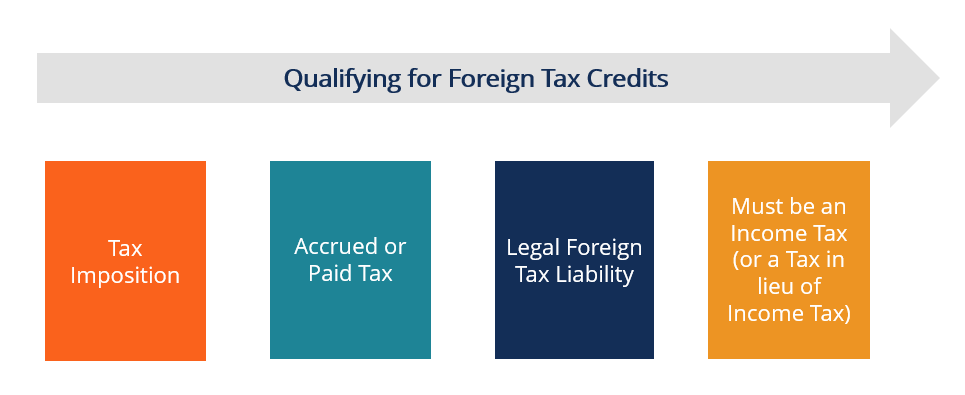
- To qualify for foreign tax credits, the following criteria must be met: (1) the tax must be imposed on you, (2) you must have accrued or paid the tax, (3) the tax must be the legal and actual foreign tax liability, and (4) the tax must be an income tax.
- Claiming a foreign tax credit in the United States as an individual, estate, or trust, and when you’ve paid or accrued certain foreign taxes to a foreign country or U.S. possession, requires the filing of Form 1116, Foreign Tax Credit.
Foreign Taxes that Qualify for the Foreign Tax Credit
For a foreign tax to qualify as a foreign tax credit, the following criterion must be met:
1. The tax must be imposed on the individual
A taxpayer can only claim credits when foreign taxes are imposed by a foreign country or a United States possession. U.S. possessions include American Samoa and Puerto Rico. Foreign countries are considered to be a foreign state and their relevant political subdivisions.
War profits, income, and excess profits taxes paid or accrued to a foreign city or province qualify for the foreign tax credit treatment. Additionally, all qualified taxes paid to U.S. possessions are considered foreign taxation.
2. The individual must have accrued or paid the tax
Credits can only be claimed if the tax is paid or accrued to a foreign country or the United States possession. The three primary ways the taxes are paid and accrued are through (1) joint returns, (2) combined income, (3) as a mutual fund shareholder.
3. The tax must be the legal and actual foreign tax liability
The qualified foreign tax must be the only legal and actual foreign tax liability that was paid or accrued during a year. The amount of foreign income tax liabilityIncome Tax PayableIncome tax payable is a term given to a business organization’s tax liability to the government where it operates. The amount of liability will be based on its profitability during a given period and the applicable tax rates. Tax payable is not considered a long-term liability, but rather a current liability, that qualifies does not necessarily equal the amount withheld by the foreign government.
4. The tax must be an income tax (or a tax in lieu of income tax)
Usually, only war profits, income, and excess profits taxes qualify for foreign tax credits. However, foreign taxes on wages, interest, and dividendsDividendA dividend is a share of profits and retained earnings that a company pays out to its shareholders. When a company generates a profit and accumulates retained earnings, those earnings can be either reinvested in the business or paid out to shareholders as a dividend. also generally qualify for the credit. The tax credit can also be applied on foreign taxes on income even though they are not imposed under an income tax law if the tax is in lieu of war profits, income, or excess profits tax.
The tax must be a foreign levy that is not payable for an already received economic benefit. Moreover, it must be a tax imposed in place of, and not in addition to, an income tax otherwise normally imposed.
Difference in Tax Treatment Between a Deduction and a Credit
A tax deduction reduces the amount of income that is subject to income tax, but a tax credit lowers the amount of tax owed. For example, if you qualify for a $1,000 tax credit and you owe $2,000 in taxes, the credit will reduce your tax liability by $1,000. You may qualify for a tax refund; however, not all tax credits are refundable.
How to Claim a Foreign Tax Credit
Claiming a foreign tax credit in the United States as an individual, estate, or trust, and when you paid or accrued certain foreign taxes to a foreign country or U.S. possession, requires the filing of Form 1116, Foreign Tax Credit.
If you are filing on behalf of a corporation, you must file Form 1118, Foreign Tax Credit – Corporations. Any corporation that elects the benefits of foreign tax credits under section 901 needs to complete and attach Form 1118 to its income tax return.
Related Readings
CFI offers the Commercial Banking & Credit Analyst (CBCA)™Program Page - CBCAGet CFI's CBCA™ certification and become a Commercial Banking & Credit Analyst. Enroll and advance your career with our certification programs and courses. certification program for those looking to take their careers to the next level. To keep learning and developing your knowledge base, please explore the additional relevant resources below:
- American Opportunity Tax Credit (AOTC)American Opportunity Tax Credit (AOTC)The American Opportunity Tax Credit (AOTC) is a tax credit that gives students or their parents the opportunity to reduce their college education expenses
- Capital Gains TaxCapital Gains TaxCapital gains tax is a tax imposed on capital gains or the profits that an individual makes from selling assets. The tax is only imposed once the asset has been converted into cash, and not when it’s still in the hands of an investor.
- Double TaxationDouble TaxationDouble taxation is a situation associated with how corporate and individual income is taxed and is therefore susceptible to being taxed twice.
- Taxable IncomeTaxable IncomeTaxable income refers to any individual's or business’ compensation that is used to determine tax liability. The total income amount or gross income is used as the basis to calculate how much the individual or organization owes the government for the specific tax period.
-

Accelerated Dividends: Understanding Early Dividend Payments
An accelerated dividend is a dividend that is paid out ahead of a change in the way the dividends are treated, such as a change in the tax rateCapital Gains TaxCapital gains tax is a tax imposed on ca
-

Understanding Agency Costs: Protecting Shareholder Interests
Agency costs are internal costs incurred due to the competing interests of shareholders Stockholders EquityStockholders Equity (also known as Shareholders Equity) is an account on a companys balance s
finance
- Understanding Canadian Income Tax Brackets: A Comprehensive Guide
- Foreign Exchange Reserves: Definition & Importance
- Interest Tax Shields: Understanding Tax Deductions on Interest Expense
- Understanding Net Foreign Assets (NFA): A Comprehensive Guide
- Understanding Non-Refundable Tax Credits: A Comprehensive Guide
- Above-the-Line Tax Deductions: Lower Your Tax Bill Easily
- 5 Key Steps in Tax Planning for Businesses
- Understanding Tax Withholdings: A Simple Guide
- Understanding Tax Credits: Reduce Your Tax Bill - [Year]
-
 Florida Sales Tax Exemptions: What's Tax-Free in 2024?
Florida levies a 6 percent sales tax on all transactions within the state. Use tax is also charged if you buy a taxable item without paying sales tax at the time of purchase, or if you buy a Florida-t...
-
 Navigating International Banking Risks: A Comprehensive Guide
Foreign banking is not a risk-free enterprise. The exploding growth of business technology has effected growth in domestic and international business operations. This growth contributes to an...