
Understanding Sharia Law: Principles and Sources
Sharia law is a religious law that lays down governing principles for spiritual, mental, and physical behavior that must be followed by Muslims. Regarded as God’s command for Muslims, Sharia law is essentially Islam’s legal system.

The four primary sources of Sharia Law are:
- The Quran – The Holy Book conveys Allah’s messages relayed by the Prophet which are universal and eternal in nature.
- The Hadith – The Hadith or narrative of the Sunnah of the Prophet constitutes the rules of faith of the Muslim community.
- Ijma – Ijma contains the opinions of Islam’s learned scholars on matters of law.
- Qiyas – Qiyas is the process of comparing difficult questions of doctrine with similar cases settled by the authority of the Holy Book and Sunnah.
Summary
- Sharia law is a religious law that lays down governing principles for spiritual, mental, and physical behavior that must be followed by Muslims.
- It categorizes all man’s acts into five distinct categories: obligatory, recommended, permitted, discouraged, and forbidden. The giving and receiving of interest (riba), extremely risky investments, gambling, prostitution, and alcohol consumption are prohibited.
- The belief that trade is to be conducted in a faithful and beneficial manner and the principle of risk-sharing form the basis of Islamic business.
Intricacies of Sharia Law
Sharia law encompasses legal as well as moral and ethical directives. It characterizes all man’s acts into the following five categories:
- Obligatory
- Recommended
- Permitted
- Discouraged
- Forbidden
Sharia comprises three basic elements:
- Aqidah concerns all forms of faith and belief in Allah, held by a Muslim.
- Fiqh governs the relationship between man and his Creator (ibadat) and between man and man (muamalat). Political, economic, and social activities fall within the ambit of muamalat. Islamic finance, covered in economic activities, is thus linked with Sharia principles through muamalat.
- Akhlaq covers all aspects of a Muslim’s behavior, attitude, and work ethic.
While directives relating to aqidah, ibadah, and akhlaq are fixed and unchangeable, directives of muamalat (including rulings such as contractual law transactions, criminal law, the judiciary, and Islamic finance) which govern the relationship between man and man, may change with the changes in circumstance, custom, time and place.
Fundamental Principles Governing Islamic Banking and Finance
Sharia law encourages Muslims to involve themselves in trade activities. The belief that trade is to be conducted in a faithful and beneficial manner forms the basis of Islamic business.
Trade manipulations and malpractices such as hoarding, black marketing, profiteering, adulteration, etc. are regarded as dishonest trade.
Islamic finance is a method of regulating a financial system that abides by Sharia law. The fundamental principles governing Islamic banking and finance today are as follows:
- The giving and receiving of riba (interest or usury paid to depositors and interest charged from fund users) are strictly prohibited in Islam.
- Qimar or gambling is strictly prohibited as well as it signifies value attained through no effort, can be addictive and compulsive which may lead to bankruptcyBankruptcyBankruptcy is the legal status of a human or a non-human entity (a firm or a government agency) that is unable to repay its outstanding debts and causes anger and frustration upon losing.
- Jahala means ignorance, and Jahala sales are invalid because of information asymmetry affording an unfair advantage to one of the parties involved.
- Gharar is defined in Sharia law as risk, or as a transaction equivalent to “a zero-sum gameZero Sum Game (and Non Zero Sum)A zero sum game is a situation where losses incurred by a player in a transaction result in an equal increase in gains of the opposing player with uncertain payoffs.” Gharar sales are invalid because of the excessive uncertainty and risk involved, which make them similar to gambling.
- Halal refers to those acts that are permitted by Allah, for which no restrictions exist. On the other hand, acts that are absolutely prohibited constitute haram. For example, prostitution, gambling, and consumption of alcohol or pork are considered harmful and impure and are declared to be haram.
Main Categories within Islamic Finance
Risk-sharing forms the underlying principle of Islamic banking. The bank shares the risk of an investment with its customers and the profit is divided among them according to pre-decided terms. The main financial products within Islamic finance are:
- Ijara – A leasing agreement where the bank leases an item to a customer for a specific period.
- Ijara-wa-Iqtina – Similar to Ijara, except that the customer is able to purchase the leased item at the end of the period.
- Mudaraba – Investment products offered by financial experts in which the bank and the customer share all profits.
- Murabaha – A form of credit devoid of interestInterest RateAn interest rate refers to the amount charged by a lender to a borrower for any form of debt given, generally expressed as a percentage of the principal., which allows the customer to make a purchase.
- Musharaka – An investment partnership between the bank and the customer with profit-sharing according to a pre-decided contract.
Related Readings
CFI is the official provider of the Commercial Banking & Credit Analyst (CBCA)™Program Page - CBCAGet CFI's CBCA™ certification and become a Commercial Banking & Credit Analyst. Enroll and advance your career with our certification programs and courses. certification program, designed to transform anyone into a world-class financial analyst.
To keep learning and developing your knowledge of financial analysis, we highly recommend the additional resources below:
- Islamic FinanceIslamic FinanceIslamic finance is the type of financing activities that must comply with Sharia (Islamic Law). The concept can also refer to the investments that are permissible under Sharia law.
- Ethical BankingEthical BankingEthical banking involves consciousness of how banking practices affect society and the environment. Financial institutions that engage in ethical banking practices seek profit like any other financial institution. However, they strive to generate earnings without sacrificing principles or causing harm.
- Trading BookTrading BookCFI's investing and trading book is free, available for anyone to download as a PDF. Read about the markets, trading concepts, and technical trading strategies.
- Ethical Decision-MakingEthical Decision-MakingEthical decision-making in finance is a decision-making ideology that is based on an underlying moral philosophy of right and wrong. Ethical decision
-

Understanding Alpha: A Guide to Investment Performance
Alpha is a measure of the performance of an investment as compared to a suitable benchmark index, such as the S&P 500S&P – Standard and PoorsStandard & Poor’s is an American fi
-
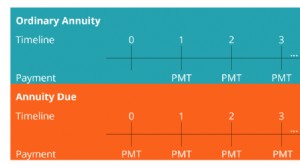
Annuity Due Explained: Payments at the Beginning of Each Period
Annuity due refers to a series of equal payments made at the same interval at the beginning of each period. Periods can be monthly, quarterly, semi-annually, annually, or any other defined period. Exa
finance
- PC Banking: A Comprehensive Guide to Online Banking Security & Features
- IRA CDs: Secure Retirement Savings with FDIC Insurance
- Understanding the DU: Your Mortgage Approval Explained
- Decentralized Finance (DeFi): A Comprehensive Overview
- Jumbo CDs: Higher Rates & Deposits Explained
- Understanding Sharia Law: Principles and Sources
- Understanding Cryptocurrency: A Beginner's Guide to Digital Currency
- Understanding Regulation Z: Your Rights as a Borrower
- Annuities Explained: A Simple Guide to Retirement Income
-
 Acquirer Definition: Understanding Corporate Acquisitions
An acquirer is a registered company that purchases a portion of, or all the rights to, another company. The acquiring company takes over the management of another company by obtaining a majority stake...
-
 Understanding Add-On Interest: How It Works & Loan Payments
Add-on interest refers to the calculation method of determining the total interest to be paid on a loan. Once the interest’s been added to the principal, the amount is divided by the number of m...