
Carbon Trading Explained: A Guide to Emission Trading Schemes
The carbon trade came about in response to the Kyoto Protocol. Adopted in Kyoto, Japan in December 1997, the Kyoto Protocol called for 38 industrialized economies to reduce their greenhouse gas emissions between the years 2008 to 2012 to levels 5.2% lower than those of 1990.
Carbon is an element stored in fossil fuels such as coal and oil. When these fuels are burned, carbon dioxide is released and acts as a greenhouse gas.
The idea behind carbon trading is quite similar to the trading of securities or commodities in a marketplace. Carbon is given an economic value, allowing people, companies, or nations to trade it. If a nation buys carbon, it is buying the right to burn it, and a nation selling carbon gives up its rights to burn it. The value of the carbon is based on the ability of the country to store it or to prevent it from being released into the atmosphere (the better you are at storing it, the more you can charge for it).
The carbon trading market facilitates the buying and selling of the rights to emit greenhouse gases. The industrialized nations, for which reducing emissions is a daunting task, buys the emission rights from another nation whose industries do not produce as much of these gases. The market for carbon is possible because the goal of the Kyoto Protocol was to reduce emissions as a collective.
On the one hand, carbon trading seems like a win-win situation: greenhouse gas emissions may be reduced while some countries reap economic benefits. On the other hand, critics of the idea feel some countries exploit the trading system and the consequences are negative. While carbon trading may have its merits, the debate over this type of market is inevitable, since it involves finding a compromise between profit, equality, and ecological concerns. (For related reading, see: Carbon Credit.)
-
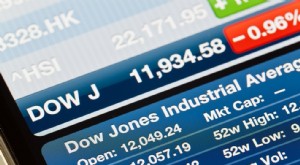
Dow 30 Explained: Understanding the Dow Jones Industrial Average
The Dow 30, or Dow Jones Industrial Average, is a stock index that tracks the performance of the 30 biggest companies listed on the stock indices in the United States. Despite being used by analysts t
-
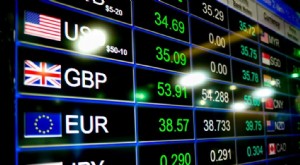
FX Carry Trade: Strategy, Risks & How It Works
FX carry trade, also known as currency carry trade, is a financial strategy whereby the currency with the higher interest rateInterest RateAn interest rate refers to the amount charged by a lender to
Futures trading
- Martingale Strategy: Understanding Risk & Application
- NYBOT: Understanding the New York Board of Trade - Commodity Futures Exchange
- The Trader's Mindset: Key to Successful Trading
- Understanding Trading Psychology: Mastering the Mental Game
- Understanding Trading Volume: A Key Market Indicator
- Forex Spot Trading: A Comprehensive Guide to Instant Currency Exchange
- Overnight Trading Risks: Understanding Liquidity & Potential Pitfalls
- Forex Scalping: A Comprehensive Guide to High-Frequency Trading
- Forex Trading Profit Margins: A Practical Guide
-
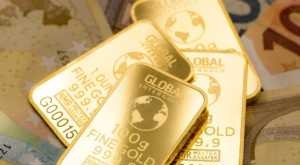 CFD Trading Explained: A Comprehensive Guide for Investors
CFD (Contracts for Difference) trading is increasingly popular with experienced investors, but anyone can try it. Most online trading platformsTrading MechanismsTrading mechanisms refer to the differe...
-
 Day Trading Explained: Strategies, Risks & How It Works
The main attribute of day trading is that the purchasing and selling of securities occurs within the same trading day. It means that all trading positions are liquidated at the end of a trading day. T...