
Coattail Investing: How to Follow Successful Investors
Coattail investing refers to an investment strategy where an investor replicates the investment style of well-known successful investors. Individual investors use information published on the Securities Exchange Commission (SEC)The 1933 Securities ActThe 1933 Securities Act was the first major federal securities law passed following the stock market crash of 1929. The law is also referred to as the Truth in Securities Act, the Federal Securities Act, or the 1933 Act. It was enacted on May 27, 1933 during the Great Depression. ...the law was aimed at correcting some of the wrongdoings website to know what companies a specific investor invested in.
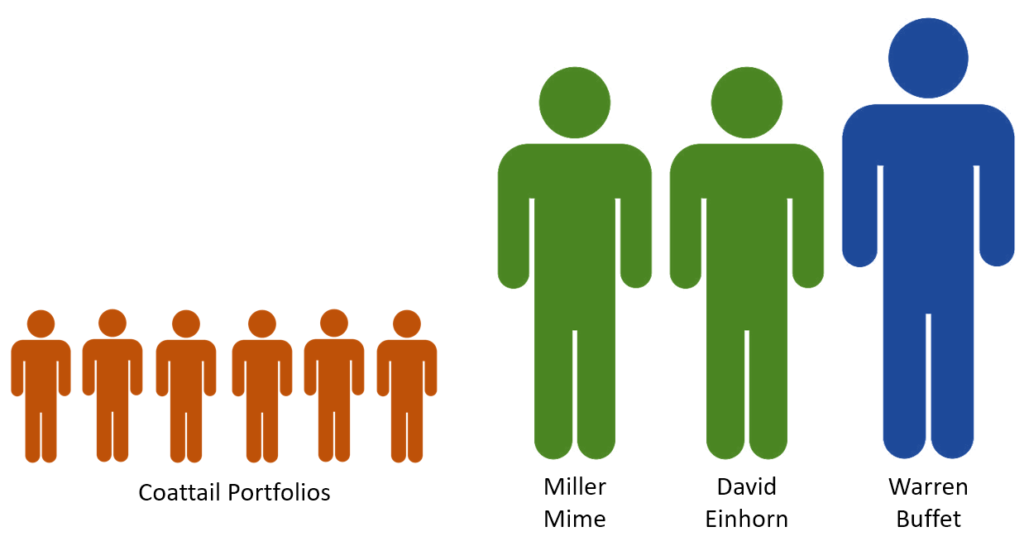
Coattail investing works well when the institution or investor being mimicked invests with a buy and holdStock Investment StrategiesStock investment strategies pertain to the different types of stock investing. These strategies are namely value, growth and index investing. The strategy an investor chooses is affected by a number of factors, such as the investor’s financial situation, investing goals, and risk tolerance. mindset. Successful investors worth replicating are those who have enjoyed continuous success for a period of 20-30 years. Examples of such investors include Warren BuffetWarren Buffett - EBITDAWarren Buffett is well known for disliking EBITDA. Warren Buffett is credited for saying “Does management think the tooth fairy pays for CapEx?", Miller Mime, and David Einhorn.
How to practice coattail investing
According to a 2012 report by Boston-based research firm Aite Group, copycat investing was one of the top wealth management trends. Institutional investors tend to track several successful investors to see what they are investing in. Investors who manage more than $100 million are required to file their trades with the SEC every quarter. Coattail investors then scour the SEC website to discover what such investors are buying and selling.
Online value investing research companies such as GuruFocus make the process of tracking the portfolios of successful investors easier. They continuously monitor the best investors and portfolio managers and then provide the information to others for a fee. The information saves the time required to track, analyze, and sort out ideal investments.
Who to copy in coattail investing?
When considering replicating the investment styles of successful investors, the following are the different categories of investors that one can follow:
1. Activist investors
Activist investors are those who may cause the stocks of a company to appreciate when their involvement is made public. The media reports every move these investors make and this gives those practicing coattail investing an opportunity to act. Activist investors also tend to inform their followers via social media and personal blogs on their investment portfolios.
2. Money managers
Large money managers with over $100 million in assets under management are required to file SEC form 13F that details their investment holdings every quarter. This information is accessible on the SEC website, and members of the public can get this information for free and use it to plan their next investments.
3. Buy and hold managers
Investors with a buy and hold mindset like Warren Buffet provide a good platform for coattail investing. The advantage of buy and hold investments is that they offer a time lag that investors can use to implement the trade replication. Short-term investments are usually too risky for coattail investing since the time lag between buy and sell is too short to replicate the trade earn a reasonable rate of return.
How to succeed as a coattail investor?
Copying the investment strategies of successful investors comes with its own share of benefits and risks. A coattail investor should consider the following when implementing the investing strategies of successful investors:
1. Conduct due diligence
Some investors are likely to make investments blindly with the hope of achieving a high rate of return just because another investor invested in the same investment. Conducting due diligenceDue DiligenceDue diligence is a process of verification, investigation, or audit of a potential deal or investment opportunity to confirm all relevant facts and financial information, and to verify anything else that was brought up during an M&A deal or investment process. Due diligence is completed before a deal closes. on potential investments can help disclose any red flags that might make the investment too risky for an ordinary investor.
2. Be patient
Successful investors are patient. They can wait for the longest time possible before disposing of their investments. Some investments may take 7 to 10 years to bring in substantial profits. Investors must exercise patience when investing in certain things like buy and hold pools that may take longer to mature.
Sometimes, stocks price may rise due to an artificial event. This means that there is a likelihood of the stock price falling in the future. The best time to buy such stocks is when prices are low rather than buying them when the price is high due to an artificial event whose effects will not last for long.
3. Don’t follow a single investor
An investor who wants to capitalize on copying investment strategies of successful investors should track the portfolios of several pros in various sectors. What works for one investor may be different from what works for other investors in different sectors. Diversifying copycat strategies can help increase the chances of getting positive returns across several portfolios and reduce the risk of depending on only one guru for investment ideas.
4. Follow tested and credible investors
Following investors with a credible background and who have enjoyed their fair share of success over the years increases the chances of successful coattail investing. Successful investors like Warren Buffet often share their ideas in conferences, business journals, and popular finance websites. Occasionally, such investors disclose their portfolios and market outlooks on the best investments to watch out for.
What are the risks of coattail investing?
1. Long maturity periods
Some investments take longer to mature and realize meaningful returns. Investors who are impatient or looking for easy ways to profit in the short term may end up disposing of their investments too early, resulting in losses.
2. Too many copycats
In a market where there are too many individuals and institutional investors who are watching what money managers are doing, some engaging in coattail investing may experience delays in getting crucial information. In the stock market, valuable information often becomes obsolete within just a few minutes.
More resources
We hope you’ve enjoyed reading CFI’s guide to coattail investing. CFI is the official provider of the global Financial Modeling & Valuation Analyst (FMVA)™Become a Certified Financial Modeling & Valuation Analyst (FMVA)®CFI's Financial Modeling and Valuation Analyst (FMVA)® certification will help you gain the confidence you need in your finance career. Enroll today! certification program for finance professionals. To help you advance your career, check out the additional resources below:
- Objective vs. Subjective TradingObjective vs Subjective TradingObjective vs subjective trading: Most traders follow either an essentially objective or subjective trading style. Objective traders follow a set of rules to guide their trading decisions. They prefer to have buy and sell decisions essentially pre-planned. In contrast, subjective traders disavow using a strict set of rules
- Investing: A Beginner’s GuideInvesting: A Beginner's GuideCFI's Investing for Beginners guide will teach you the basics of investing and how to get started. Learn about different strategies and techniques for trading
- Investment MethodsInvestment MethodsThis guide and overview of investment methods outlines they main ways investors try to make money and manage risk in capital markets. An investment is any asset or instrument purchased with the intention of selling it for a price higher than the purchase price at some future point in time (capital gains), or with the hope that the asset will directly bring in income (such as rental income or dividends).
- Technical Analysis: A Beginner’s GuideTechnical Analysis - A Beginner's GuideTechnical analysis is a form of investment valuation that analyses past prices to predict future price action. Technical analysts believe that the collective actions of all the participants in the market accurately reflect all relevant information, and therefore, continually assign a fair market value to securities.
-
Factor Investing: A Comprehensive Guide to Strategy and Benefits
Factor investing is an investment strategy that involves choosing assets based on a certain set of factors or attributes. Investors who want to follow a factor investing approach should identify chara
-

Ethical Investing: A Comprehensive Guide to SRI, ESG & Impact
There’s no industry-standard definition of “ethical investing.” There’s not even an agreed-upon name for it. You’ll hear lots of different terms for it used interchangeably, even if there are (mostly
invest
- Understanding Cognitive Bias: How It Impacts Decisions
- Dark Pools Explained: A Guide for Investors
- Ethical Investing: Aligning Investments with Your Values
- Impact Investing: Generate Returns & Positive Change
- Index Investing: A Beginner's Guide to Passive Investing
- Momentum Investing: A Comprehensive Guide for Investors
- Sustainable Investing: A Guide to ESG Strategies
- Value Investing: A Comprehensive Guide to Finding Undervalued Investments
- Investing Explained: A Comprehensive Guide for Beginners
-
 Treasury Direct: Your Direct Access to U.S. Treasury Securities
Treasury Direct is the online platform through which investors can purchase U.S. government securities directly from the U.S. Treasury. Such securities include Treasury bills (T-bills)Treasury Bills (...
-
 Venture Capital Investing: A Comprehensive Guide
Venture capital investing is a type of private equity investing that involves investment in a business that requires capital. The business often requires capital for initial setup (or expansion). Vent...