
Dark Pools Explained: A Guide for Investors
A dark pool is a financial exchange or hub that is privately organized where trading of financial securities is held. Dark pools are in stark contrast to public financial exchange markets, where there is a high degree of regulation and media attention.
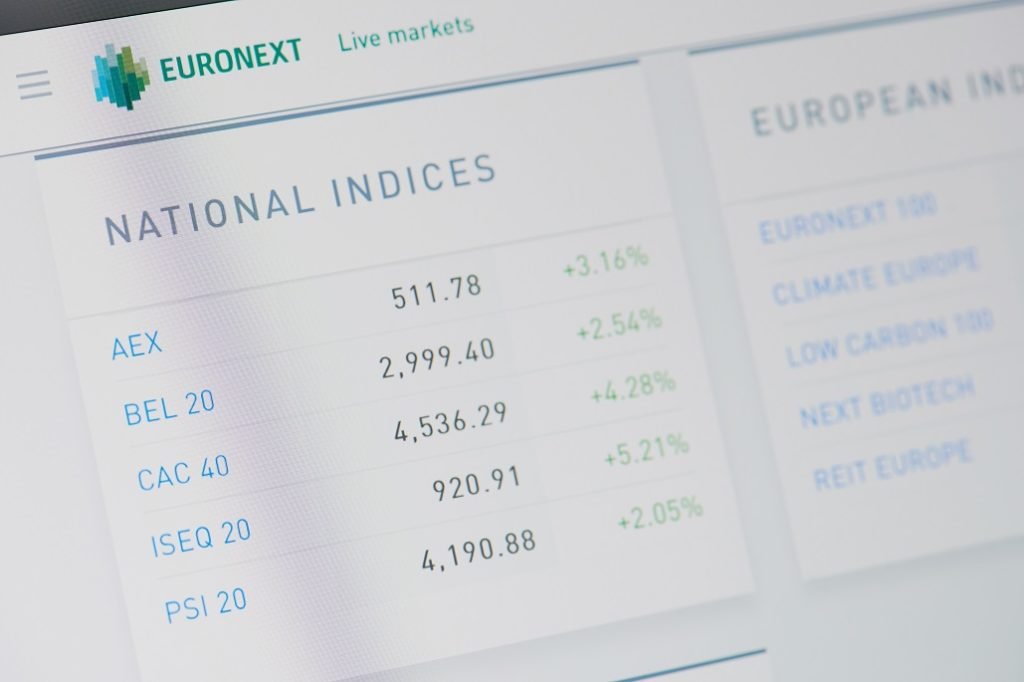
Dark pools allow investors to trade without any public exposure until after the trade is executed and cleared. It is favorable for investors, such as hedge fundsHedge FundA hedge fund, an alternative investment vehicle, is a partnership where investors (accredited investors or institutional investors) pool and activist investors, who do not want the public to know which positions they are taking.
How It Works
Electronic trading’s become more prominent nowadays, and therefore, exchanges can be set up purely in a digital form. Such a move is giving way to an increased number of dark pool exchanges that allow investors to trade securities on a secondary market with lower fees since they are not run by institutional banks or organized public exchanges.
Dark pools are most favorable for institutional investorsInstitutional InvestorAn institutional investor is a legal entity that accumulates the funds of numerous investors (which may be private investors or other legal entities) to who are executing block trades – perhaps when taking a very large position in an investment.
Block Trades
A block trade is simply just the sale or purchase of a very large number of securities between two parties. There are no criteria for a block trade. However, it is usually a trade that is so large that it may result in a tangible impact on the security price.
Most everyday retail investors buy and sell securities without ever impacting the price of the underlying security since there are so many outstanding securities on the secondary marketSecondary MarketThe secondary market is where investors buy and sell securities from other investors. Examples: New York Stock Exchange (NYSE), London Stock Exchange (LSE).. However, an institutional investor possesses the buying power to purchase or sell enough securities to actually move the prices of the securities.
Uses of Dark Pools
Dark pools were initially utilized mostly by institutional investors who did not want public exposure to the positions they were moving into, in case there were investors front running. Front running refers to an investor who enters a position into a security before a block trade is completed and can reap the benefits of the subsequent price movement.
Dark pools have become far more common in the investing world today. Algorithmic trading and high-frequency trading (HFT)High-Frequency Trading (HFT)High-frequency trading (HFT) is algorithmic trading characterized by high speed trade execution, an extremely large number of transactions, are two forms of trading that are executed without any human input. The computer programs will execute huge block trades within fractions of seconds and ahead of other investors.
Since HFT floods the trading volume on public exchanges, the programs need to find ways to break larger orders into smaller ones. It can be accomplished by executing smaller trades on different exchanges as opposed to one financial exchange. It helps to minimize front running and avoid showing where the trader was executing these trades.
Dark pools were established to help fulfill such a need for smaller exchanges in order to fulfill liquidity requirements. Many private financial exchanges were established, and it facilitated traders who received very large orders and could not complete them on traditional public exchanges. Dark pools add to the efficiency of the market since there is additional liquidity for certain securities by getting them to list on the exchanges.
Advantages of Dark Pools
Some advantages were touched on earlier, but the main advantages of dark pools are:
1. Private trading
Dark pools allow for trading execution away from the spotlight of public markets. Public markets tend to overreact or underreact due to news coverage and market sentiment. The pools facilitate trades that will trigger price overreaction or underreaction.
2. Avoidance of price devaluation
As mentioned earlier, dark pools allow large trades to be made with reduced fear of front running. With dark pools, large trades can be broken into smaller trades and executed before the price of a security becomes devalued.
It compares to trying to execute a huge trade on one exchange, where the price will have certainly decreased by the time the order is completely filled.
3. Increased market efficiency and liquidity
Such an advantage is debatable since liquidity can dry up very quickly on a private exchange. However, HFT and other algorithmic trading methods are seen to increase market efficiency since information is priced into securities very quickly. Because dark pools facilitate HFT, it can be argued that dark pools also increase market efficiency.
Disadvantages of Dark Pools
Some disadvantages of dark pools are as follows:
1. Lack of transparency
Since dark pools operate with very little oversight, they are heavily scrutinized for not putting as much regulation in place as other public exchanges. As a result, many feel that they are disadvantaged by investors who trade on the exchanges.
2. Unfair advantages
There are many critics of HFT since it gives some investors an advantage that other investors cannot match, especially on private exchanges. Conflicts of interest and other unethical investing practices can be hidden in dark pools as well.
Related Readings
CFI is the official provider of the Commercial Banking & Credit Analyst (CBCA)™Program Page - CBCAGet CFI's CBCA™ certification and become a Commercial Banking & Credit Analyst. Enroll and advance your career with our certification programs and courses. certification program, designed to transform anyone into a world-class financial analyst.
To keep learning and developing your knowledge of financial analysis, we highly recommend the additional resources below:
- Activist InvestorActivist InvestorAn activist investor is an individual or institutional investor that seeks to acquire a controlling interest in a target company by gaining seats on the
- Algorithmic Trading Algorithmic TradingAlgorithmic trading strategies involve making trading decisions based on pre-set rules that are programmed into a computer.
- Pooled FundsPooled FundsPooled funds is a term used to collectively refer to a set of money from individual investors combined, i.e., "pooled" together for investment purposes
- Securities and Exchange Commission (SEC)Securities and Exchange Commission (SEC)The US Securities and Exchange Commission, or SEC, is an independent agency of the US federal government that is responsible for implementing federal securities laws and proposing securities rules. It is also in charge of maintaining the securities industry and stock and options exchanges
-
Dark Cloud Cover: Understanding This Bearish Reversal Pattern
The dark cloud cover refers to a candlestick pattern in technical analysis that is a bearish reversal signal. It is observed when a “down” candle opens above the close of the previous &ldq
-

Homogeneous Cost Pools: Definition, Examples & Benefits
A homogeneous cost pool is essentially an accounting term used by the management of a company to group together costsFixed and Variable CostsCost is something that can be classified in several ways de
invest
- Coattail Investing: How to Follow Successful Investors
- Understanding Cognitive Bias: How It Impacts Decisions
- HODL Explained: Understanding the Cryptocurrency Investment Strategy
- Understanding Homemade Leverage: A Guide for Investors
- Institutional Investors: Definition, Types & Key Players
- Non-Accredited Investors: Definition, Requirements & Investment Options
- Understanding Sophisticated Investors: Definition & Implications
- Structured Notes: Understanding Hybrid Investments & Potential Returns
- Treasury Direct: Your Direct Access to U.S. Treasury Securities
-
 Understanding Down Rounds: What They Are and Why They Happen
The term “down round” is used to refer to a scenario where the value of a business at a time of investment is below the value of the same business during a previous period or financing rou...
-
 Equity Financing: A Comprehensive Guide for Business Growth
Equity financing refers to the sale of company shares in order to raise capital. Investors who purchase the shares are also purchasing ownership rights to the company. Equity financing can refer to th...