
Understanding JAJO Options Cycles: January, April, July, October
JAJO is one of the three option cycles that comprise multiple options contracts with a successive expiration date in the months of January, April, July, and October. Options contracts come with expiration dates that fit in a cycle, which averages nine months. Each cycle comprises two near-term months plus two additional months from the quarterly cycles starting in January, February or March.
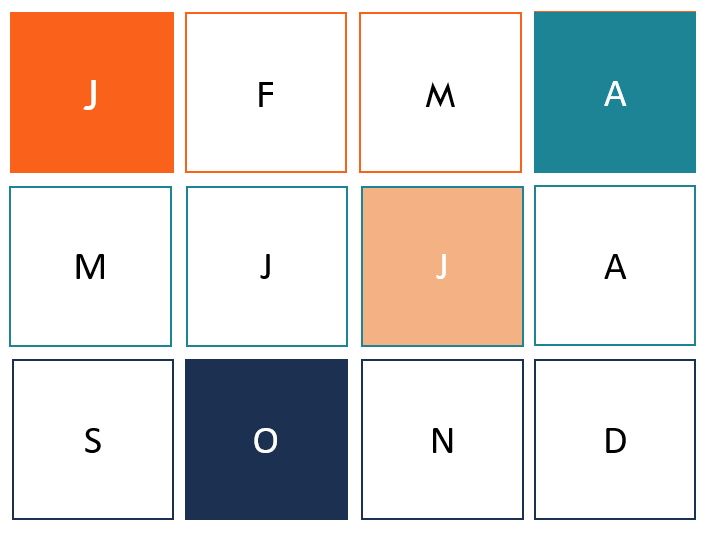
Apart from the JAJO cycle, the other options cycles that an options contract can be assigned to in public markets include FMANFMANFMAN is one of the three options cycles, and it comprises multiple options contracts that share the same terms and expire in the months of February, May, (February, May, August, and November) and MJSDMJSDMJSD is an acronym that stands for the months of March, June, September, and December. The months are the final months of the four annual quarters for releasing financial earnings and declaring dividends. Public companies operating in the United States are required to file quarterly earnings reports (March, June, September, and December).
Summary
- JAJO is an options cycle representing the months of January, April, July, and October.
- The JAJO cycle is one of the three option cycles that comprise listed options with the same features and expiration date but different strike prices.
- It also represents the first month of the four financial quarters in a year.
How Options Cycles Work
Options cycles refer to the period categories where options contracts are assigned. The cycles are integrated across all the derivative contracts such as options and futures contractsFutures ContractA futures contract is an agreement to buy or sell an underlying asset at a later date for a predetermined price. It’s also known as a derivative because future contracts derive their value from an underlying asset. Investors may purchase the right to buy or sell the underlying asset at a later date for a predetermined price. and are overseen by regulatory bodies. When buying options in the public market, a trader will view the available options according to the option classes.
An option class comprises multiple option series listings, which are grouped into either calls or putsOptions: Calls and PutsAn option is a derivative contract that gives the holder the right, but not the obligation, to buy or sell an asset by a certain date at a specified price.. It means that an investor interested in buying call options on the underlying security will view multiple call option series listings, and each of these listings will have a specific strike price and expiration date. In the same way, a trader interested in buying put options will see the available listings, each with a unique strike price and expiration date. In the public market, option classes are listed alongside their strike prices and expiration dates within a specific cycle.
Assigning Options Contracts to Cycles
Before 1984, options cycles were divided by four months before the Chicago Board Options Exchange made a decision to revise the cycles to the current three cycles. It allowed each options listing to make the first two months available to investors followed by another two months in the cycle. The three main cycles include:
- JAJO (1st Cycle): January, April, July, and October
- FMAN (2nd Cycle): February, May, August, November
- MJSD (3rd Cycle): March, June, September, and December
Options on the JAJO cycle comprise contracts available in the first month of each of the four quarters, i.e., January, April, July, and October. A trader interested in buying an option based on the underlying security must find the first two consecutive months, followed by two remaining months in the cycle. It allows investors the option of hedging for short-term contracts or buying long term contracts. For example, if XYZ $150 is assigned to the JAJO cycle in January, the first two months will be January and February, followed by April and July.
Option Contract Expiration Cycle
The expiration cycle refers to the expiration months of options contracts in each of the three cycles. Stock options are set up in one of the three main cycles that tell you the month when an option will expire. An option holder can exercise the option before or on the expiration date in order to recover any intrinsic value attributable to the option.
Exercising an option means buying or selling the underlying security at a strike priceStrike PriceThe strike price is the price at which the holder of the option can exercise the option to buy or sell an underlying security, depending on agreed at the start of the contract. If an option holder fails to exercise the option before the expiration date, the option will expire worthless, and the holder will not get any value out of it.
JAJO in Dividend Cycles
The JAJO cycle also applies to the dividend cycle, in that it stands for the four most important months for investors. JAJO represents the months of January, April, July, and October, which are the months when most companies declare dividends.
Usually, most companies release their earnings reports quarterly, and they also make a dividend declaration of an upcoming dividend payment. However, even with a dividend declaration, some shareholders may not be eligible, especially in companies with dividend preferences over several classes of stock.
Practical Examples of JAJO Option Cycle
Options traded in public markets usually follow their own designated cycles, and listings are available for the first two months followed by the next two months from the cycle schedule. For example, assume that ABC $100 call option is assigned to JAJO cycle in January. It means that the first two months will be January (current month) and February (subsequent month), followed by April and July from the cycle schedule.
Similarly, assume that ABC $100 put option is assigned to JAJO Cycle in February. The put will have the following listing: February (current month), March (subsequent month), April, and July. Each of the listings is considered an individual option series, and the four options offerings represent a full option cycle. Most exchange-traded option series listings expire on the third Friday of the expiration month.
Additional Resources
CFI is the official provider of the Financial Modeling and Valuation Analyst (FMVA)™Become a Certified Financial Modeling & Valuation Analyst (FMVA)®CFI's Financial Modeling and Valuation Analyst (FMVA)® certification will help you gain the confidence you need in your finance career. Enroll today! certification program, designed to transform anyone into a world-class financial analyst.
To keep learning and developing your knowledge of financial analysis, we highly recommend the additional resources below:
- Dividend PolicyDividend PolicyA company’s dividend policy dictates the amount of dividends paid out by the company to its shareholders and the frequency with which the dividends are paid
- Expiration Date (Derivatives)Expiration Date (Derivatives)The expiration date refers to the date in which options or futures contracts expire. It is the last day of the validity of the derivatives contract.
- Option PricingOption Pricing ModelsOption Pricing Models are mathematical models that use certain variables to calculate the theoretical value of an option. The theoretical value of an
- Trading MechanismsTrading MechanismsTrading mechanisms refer to the different methods by which assets are traded. The two main types of trading mechanisms are quote driven and order driven trading mechanisms
-
Understanding Options Expiration: A Comprehensive Guide
In the early days of options trading—two or three decades ago—for market makers in the option trading pits in Chicago and other financial centers, there was one day a month in which attendance was vir
-

Understanding Call Options: A Beginner's Guide to Buying & Selling
Call options are a type of option that increases in value when a stock rises. They’re the best-known kind of option, and they allow the owner to lock in a price to buy a specific stock by a
invest
- Embedded Options: Understanding Rights and Future Actions in Financial Securities
- Understanding European Options: Definition & Key Features
- Understanding FMAN Options: February, May, August & November Expirations
- Understanding Index Options: A Comprehensive Guide
- LEAPS Explained: Understanding Long-Term Equity Options
- Understanding Non-Equity Options: A Comprehensive Guide
- Understanding Options: A Guide to Calls and Puts
- Rho (Finance): Understanding Interest Rate Sensitivity of Options
- Options Trading Explained: A Beginner's Guide to Understanding Options
-
 Barrier Options: Understanding and Trading Strategies
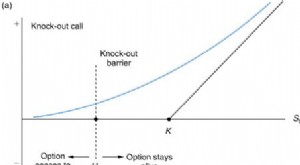
A barrier option is a type of derivative option contract, the payoff of which depends on the value of the underlying asset. In other words, the payoff only comes into effect if the asset underlying th...
-
 Understanding Gamma in Finance: A Comprehensive Guide
In the world of finance, gamma refers to the rate of change in deltaDelta (Δ)Delta is a risk sensitivity measure used in assessing derivatives. It is one of the many measures that are denoted by...