
Understanding the NASD: History and Role in Securities Regulation
The National Association of Securities Dealers (NASD) was a regulatory body responsible for overseeing the securities industry. It was tasked with both the operation and regulation of all securities exchange market trades, as well as over-the-counter (OTC)Over-the-Counter (OTC)Over-the-counter (OTC) is the trading of securities between two counter-parties executed outside of formal exchanges and without the supervision of an exchange regulator. OTC trading is done in over-the-counter markets (a decentralized place with no physical location), through dealer networks. market trades.

Founded in 1939 – using provisions made by the 1938 Maloney Act amendments to the Securities Exchange Act of 1934 – the NASD was given oversight and regulatory authority over securities trading. In 1971, the NASD acted as the lead founder of the NASDAQ stock market.
The NASD was the immediate overseer of all securities trading, with ultimate supervision by the Securities and Exchange Commission (SEC). For nearly 70 years, the NASD operated in this way. Eventually, the SEC determined that merging the NASD with a regulatory arm of the New York Stock Exchange (NYSE) was in the best interest of securities markets. From this merger, the Financial Industry Regulatory Authority, otherwise known as FINRA, was created in 2007.
Summary
- The National Association of Securities Dealers (NASD) was a regulatory body responsible for overseeing the securities industry. It was tasked with both the operation and regulation of all securities exchange market trading, as well as over-the-counter (OTC) market trades.
- FINRA was formed in a combination of the NASD and the regulatory arm of the NYSE. FINRA itself is overseen by the SEC.
- The NASD is significant because of its place in the history of regulating securities trading.
What is FINRA?
Again, FINRA is the combination of the NASD and the regulation, enforcement, and arbitration operations of the NYSENew York Stock Exchange (NYSE)The New York Stock Exchange (NYSE) is the largest securities exchange in the world, hosting 82% of the S&P 500, as well as 70 of the biggest. While not a government agency in its own right, it’s carefully overseen by the SEC and must adhere to all the SEC’s policies, rules, and guidelines.
Among the many functions that FINRA performs, its primary responsibilities are to oversee securities trading representatives and branch offices, as well as brokerage firms. If it relates to securities and securities trading, FINRA oversees it.
Because the group is essentially the securities authority, it manages the Central Registration Depository (CRD). The CRD maintains records for all securities trades, both for companies and for individual representatives. It also must take the lead in any market trading disputes and act as a mediator through which resolutions can be reached. When disputes arise, a panel is put together, hears from all parties involved, and then makes a final ruling which all parties must adhere to.
FINRA is also responsible for facilitating the licensing of representatives who trade securities or offer trading services.
Significance of the National Association of Securities Dealers
The National Association of Securities Dealers is significant as the predecessor of FINRA, the current regulatory body overseeing all securities trade. Today, FINRA helps to ensure that each individual or agency participating in securities trading follows the protocols established by the SEC.
The NASD also offers a one-stop-shop in terms of getting resolutions to trade disputes. Disputes brought before a FINRA panel are conducted in much the same way that a traditional court case would be handled; however, the costs are significantly cheaper.
Learn More
We hope you enjoyed reading CFI’s explanation of the National Association of Securities Dealers (otherwise known today as FINRA). CFI offers the Commercial Banking & Credit Analyst (CBCA)™Program Page - CBCAGet CFI's CBCA™ certification and become a Commercial Banking & Credit Analyst. Enroll and advance your career with our certification programs and courses. certification program for those looking to take their careers to the next level. To keep learning and advancing your career, the following resources will be helpful:
- Dow Jones Industrial Average (DJIA)Dow Jones Industrial Average (DJIA)The Dow Jones Industrial Average (DJIA), also referred to as "Dow Jones” or "the Dow", is one of the most widely-recognized stock market indices.
- Primary MarketPrimary MarketThe primary market is the financial market where new securities are issued and become available for trading by individuals and institutions. The trading activities of the capital markets are separated into the primary market and secondary market.
- S&P SectorsThe S&P SectorsThe S&P sectors constitute a method of sorting publicly traded companies into 11 sectors and 24 industry groups. Created by Standard & Poor's (S&P) and Morgan Stanely Capital International (MSCI), they are also known as the Global Industry Classification Standard (GICS).
- Wall StreetWall StreetWall Street takes up eight blocks in Manhattan, New York. It runs east to west from Broadway to South Street, in the heart of the financial district. Representing the heart of capitalism, Wall Street is home to the New York Stock Exchange (NYSE), numerous banks, other financial institutions, and corporations.
-
ISDA: Understanding the International Derivatives Trade Association
The International Swaps and Derivatives Association (ISDA) is a trade collective made up of more than 800 participants from almost 60 countries around the world. In 1992, the association developed a s
-
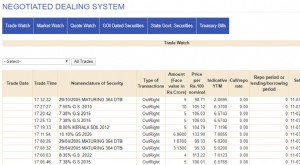
NDS Explained: India's Electronic Government Securities Trading Platform
The Negotiated Dealing System (NDS) is a fully electronic trading platform that is instituted and operated by the Reserve Bank of India (RBI) with the mandate of facilitating the issuance and secondar
invest
- FINRA: Protecting Investors and Regulating the U.S. Securities Industry
- Australian Securities Exchange (ASX): Your Guide to Australia's Stock Market
- NAIC/BetterInvesting: Demystifying Investment Clubs & Resources
- National Futures Association (NFA): Understanding Derivatives Regulation
- National Market System (NMS): Understanding US Securities Trading
- Understanding the NSCC: Risk Management for U.S. Securities Markets
- National Securities Markets Improvement Act (NSMIA): Definition & Impact
- NASAA: Protecting Investors in the U.S. - Mission & Overview
- 1933 Securities Act: Protecting Investors & Market Integrity
-
 Understanding the MSRB: Regulation of Municipal Securities Markets
The Municipal Securities Rulemaking Board (MSRB) is a regulatory organization that drafts protection rules and several other rules that regulate broker-dealers, banks, and other parties within the Uni...
-
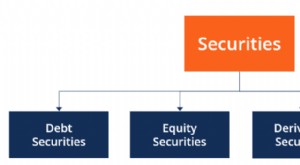 Understanding Security Types: A Comprehensive Guide
There are four main types of security: debt securities, equity securities, derivative securities, and hybrid securities, which are a combination of debt and equity. Fig. 1. Types of Securities&nb...