
Non-Accredited Investors: Definition, Requirements & Investment Options
A non-accredited investor refers to investors who fail to meet the net worth or income requirements defined by the Securities and Exchange Commission (SEC)Securities and Exchange Commission (SEC)The US Securities and Exchange Commission, or SEC, is an independent agency of the US federal government that is responsible for implementing federal securities laws and proposing securities rules. It is also in charge of maintaining the securities industry and stock and options exchanges. Non-accredited investors are also known as retail investors.

Being a non-accredited investor does not mean that the individual cannot invest; however, investment opportunities for them are different from accredited investors. The options available for non-accredited investors include certain types of bonds, real estate, equities, and other securities.
Summary
- Non-accredited investors are investors who fail to meet the net worth or income requirements determined by the SEC.
- The SEC protects non-accredited investors by applying restrictions on their investment choices; examples include hedge funds and private equities.
- There are more disclosure and documentation requirements for the funds available for non-accredited investors.
Characteristics of Non-Accredited Investors
After the 1929 financial crisis, the SEC was established to protect general investors from investing in the areas that they do not understand well or taking a large risk that they cannot afford. Thus, the SEC distinguishes non-accredited investors from accredited investors and regulates which investments non-accredited investors can make.
According to the current SEC rules, there are four standards for individuals to be considered accredited:
1. Having an annual income above $200,000;
2. Having a combined annual income above $300,000 with a spouse; or
3. Having a net worth above $1 million excluding the value of the one’s primary residence.
4. If the investment is made on behalf of a business, all the equity owners of a business with assets of more than $5 million.
Therefore, an individual investor is considered as a non-accredited investor if the individual’s annual income is lower than $200,000 (or $300,000 with a spouse) and owns assets that are worth less than $1 million besides the primary residence. Based on the standards, the great majority of Americans are non-accredited investors.
Non-accredited investors are limited by the SEC from some investment opportunities for their own financial safety. The SEC also set regulations on the disclosure and documentation of the investments available to the investors.
For example, non-accredited investors are eligible to invest in mutual funds. Compared with hedge funds and private equities, mutual funds need to be more transparent in their investment strategies and other fund information. The private funds that primarily target accredited investors are usually less regulated by the SEC.
Accredited Investors
Accredited investors refer to the high-net-worth investors who can meet the SEC requirements mentioned in the section above. Such investors are considered to be more sophisticated in investing activities; thus, they need less protection from the SEC.
The accredited investors’ high net worth and financial knowledge allow them to afford larger potential losses and make riskier investment choices. Investments targeting such investors generally come with higher risks and returns. Hedge funds, specialty investment funds, private equities, and venture capitals are some examples. The funds also provide less information to their investors.
The disclosure of a hedge fund’s specific strategies and portfolio holdings is sparse most of the time. Many hedge fund managers consider that disclosure might reduce the funds’ return and competitiveness.
Non-Accredited Investors and Crowdfunding
Crowdfunding raises funds in small amounts from a large pool of investors to make investments. It is typically processed through the network. There are various types of crowdfunding, depending on where the money is invested.
Some examples include real estate crowdfunding, equity crowdfunding, and peer-to-peer lendingPeer-to-Peer LendingPeer-to-peer lending is a form of direct lending of money to individuals or businesses without an official financial institution participating as an intermediary in the deal. P2P lending is generally done through online platforms that match lenders with the potential borrowers.. Crowdfunding provides opportunities for non-accredited investors to invest in areas that were previously only available to accredited investors.
Since 2016, non-accredited investors are allowed to participate in equity crowdfunding. Many start-up companies use equity crowdfunding as a part of their early-round funding. Through equity crowdfunding, general investors can invest in and earn equity shares from the companies in their early stages. The high-net-worth venture capitalists and angel investors are no longer the only players.
Non-accredited investors can also invest in real estate crowdfunding. It provides them with an additional way to get exposure in real estate besides direct ownership and real estate investment trusts (REITs)Real Estate Investment Trust (REIT)A real estate investment trust (REIT) is an investment fund or security that invests in income-generating real estate properties. The fund is operated and owned by a company of shareholders who contribute money to invest in commercial properties, such as office and apartment buildings, warehouses, hospitals, shopping centers, student housing, hotels. Investors can choose between debt investment or equity investment for real estate crowdfunding. By investing in debt, the investor receives interest and repayments of a mortgage. By investing in equity, the investor earns the ownership stakes of a property.
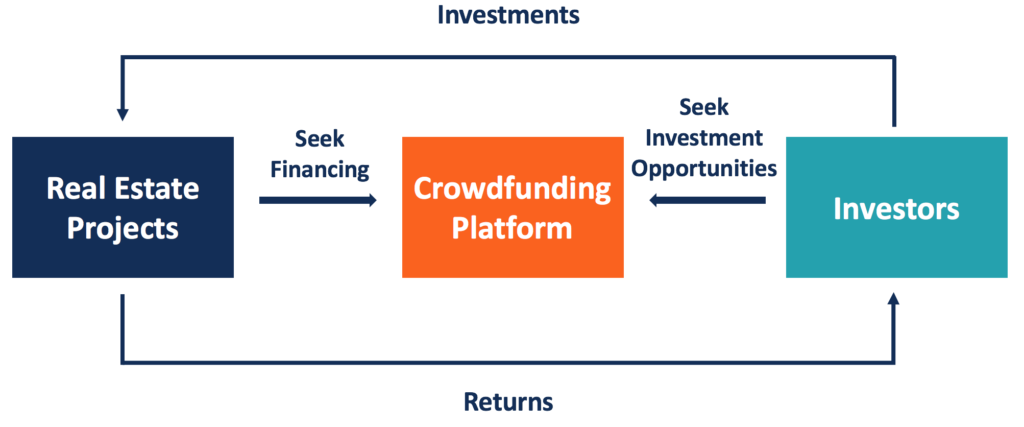
Some restrictions still exist on the maximum amount of money that a non-accredited investor can invest annually. The limits are determined by the SEC based on an individual’s net worth and income level. The restrictions are applied to reduce investment risks and to cap potential losses for non-accredited investors who may lack sufficient knowledge in crowdfunding. There are no restrictions on investment amounts for accredited investors.
Related Readings
CFI is the official provider of the global Commercial Banking & Credit Analyst (CBCA)™Program Page - CBCAGet CFI's CBCA™ certification and become a Commercial Banking & Credit Analyst. Enroll and advance your career with our certification programs and courses. certification program, designed to help anyone become a world-class financial analyst. To keep advancing your career, the additional CFI resources below will be useful:
- Investing: A Beginner’s GuideInvesting: A Beginner's GuideCFI's Investing for Beginners guide will teach you the basics of investing and how to get started. Learn about different strategies and techniques for trading
- High Net Worth Individual (HNWI)High Net Worth Individual (HNWI)A high net worth individual (HNWI) refers to an individual with a net worth of a minimum of $1,000,000 in highly liquid assets, such as cash and cash
- Institutional InvestorInstitutional InvestorAn institutional investor is a legal entity that accumulates the funds of numerous investors (which may be private investors or other legal entities) to
- Equity CrowdfundingEquity CrowdfundingEquity crowdfunding (also known as crowd-investing or investment crowdfunding) is a method of raising capital used by startups and early-stage companies. Essentially, equity crowdfunding offers the company’s securities to a number of potential investors in exchange for financing.
-

Angel Investors: Definition, Funding & vs. Venture Capital
An angel investor is a person or company that provides capitalPrivate Equity vs Venture Capital, Angel/Seed InvestorsCompare private equity vs venture capital vs angel and seed investors in terms of r
-

Hands-Off Investing: A Passive Strategy for Long-Term Growth
A hands-off investor invests their money and loosely manages it over a long period of time. Investors who passively manage their money believe in market efficiency. SummaryHands-off investi
invest
- Understanding Institutional Investors: A Comprehensive Guide
- Accredited Investors: Definition & Requirements | SEC
- Activist Investors: Definition, Strategy & Impact
- Coattail Investing: How to Follow Successful Investors
- Understanding Cognitive Bias: How It Impacts Decisions
- Contrarian Investing: A Beginner's Guide to Profiting Against the Crowd
- Institutional Investors: Definition, Types & Key Players
- Margin Trading Explained: Borrowing Money to Invest
- Understanding Sophisticated Investors: Definition & Implications
-
 Understanding Bond Yield: A Beginner's Guide
Before we get to the bond yield, let's review some bond basics. Bonds are just a loan agreement entered into by an investor and a bond issuer. The “face value” is how much the issuer needs to rai...
-
 Understanding Investors: Types and Strategies for Long-Term Wealth
Investing is a key part of building long-term financial stability. But what is an investor? As you dive into this new world, you’ll discover that there are many differen...