
Securities Lending: Definition, Process & Benefits
Securities lending is the act of lending or loaning a financial security, a stock, bond, or derivative, to a firm or an investor. It involves the borrower to provide collateral for the security that they are borrowing. The collateralCollateralCollateral is an asset or property that an individual or entity offers to a lender as security for a loan. It is used as a way to obtain a loan, acting as a protection against potential loss for the lender should the borrower default in his payments. can be in the form of either cash, bonds, shares or letter of credit (LOC).

A securities lending agreement governs the terms of a security lending loan. The agreement includes the type of collateral – cash, securities or LOC – of value equal to or greater than 100% of the loaned security. The borrower of the security will pay a lending fee, which is typically paid monthly to the lender. Also, the borrower is contractually obligated to return the loaned security either on a pre-determined date or on-demand by the lender.
Common Applications
One of the most common applications for securities lending is short sellingShort SellingShort selling is the practice of selling borrowed securities – such as stocks – hoping to be able to make a profit by buying them back at a. A short sell is when a party sells a security and then repurchases it at a date in the future. It is a trade that takes the position that the underlying security value will decrease in the future.
However, to short sell, a party must be able to sell the security first. It is commonly achieved through securities lending. A party would borrow a security, provide collateral, sell the security, then repurchase it in the future (hopefully at a lower price) and return the security to the lender. The collateral that the borrower supplies is typically equal to the security.
Furthermore, if the underlying security pays a dividend or accrues interest during the period the borrower holds the security, the borrower must pay the dividends or accrued interestAccrued InterestAccrued interest refers to interest generated on an outstanding debt during a period of time, but the payment has not yet been made or to the lender. Securities lending is also common among funds. Funds will lend a security to earn a lending fee, which is paid by the borrower.
Securities Lending Benefits
From the lender’s point of view, the benefits of securities lending include the ability to earn additional income through the fee charged to the borrower to borrow the security. It could also be viewed as a form of diversification.
From the borrower’s point of view, it allows them to take positions like short selling. It also gives investors more options to take different views on the market. For the market as a whole, as mentioned above, it helps to increase liquidity. Increasing liquidity in the market tends to also tighten spreads, which is beneficial to all market participants as the gap between the bid and the ask decreases.
Securities Lending Risks
All investment strategies involve risk, including securities lending. As a lender, the main risk is that the value of the collateral decreases below the cost of the security that was lent out. Another risk to the lender could be that the borrower becomes insolvent and is unable to return the borrowed security.
Additionally, a timing risk could occur for the lender if the lender gives the borrower the security before receiving the collateral. As a borrower, the main risk is that the value of the security increases after a short position is taken. When the borrower takes a short position and the value of a security increases, the borrower essentially has sold low and bought high, losing money.
Securities Lending and Market Liquidity
Empirical evidence supports that securities lending helps to provide liquidity in over-the-counter markets. It helps facilitate various trades that allow investors or institutions to hedge, take a bespoke position, or in arbitrage situations.
Securities lending is a common practice in insurance companies. Insurers may take long-term investments to match with insurance liabilities. Thus, the securities are not actively traded. It gives rise to the opportunity for insurance companies to lend the securities and earn a fee to boost returns.
Furthermore, if cash collateral is given to a lender, it is typically reinvested. The reinvestment increases trading in the markets, which tends to lead to an increase in market liquidity and the tightening of spreads.
To learn more about how you can master the concepts of security lending through real-world applications, and advance your career as a world-class capital markets analyst, download our CMSA® program brochure below:
Learn More
CFI is the official provider of the global Capital Markets & Securities Analyst (CMSA)®Program Page - CMSAEnroll in CFI's CMSA® program and become a certified Capital Markets &Securities Analyst. Advance your career with our certification programs and courses. certification program, designed to help anyone become a world-class financial analyst. To keep advancing your career, the additional CFI resources below will be useful:
- Asset-Based LendingAsset-based LendingAsset-based lending refers to a loan that is secured by an asset. In other words, the loan is collateralized with an asset (or assets) of the borrower.
- LiquidityLiquidityIn financial markets, liquidity refers to how quickly an investment can be sold without negatively impacting its price. The more liquid an investment is, the more quickly it can be sold (and vice versa), and the easier it is to sell it for fair value. All else being equal, more liquid assets trade at a premium and illiquid assets trade at a discount.
- Quality of CollateralQuality of CollateralQuality of collateral is related to the overall condition of a certain asset that a company or an individual wants to put as collateral when borrowing funds
- Underlying SecurityUnderlying SecurityUnderlying security is a term in investing that denotes the negotiable financial instrument upon which a financial derivative, such as an
-

Understanding Indications of Interest (IOIs) in Securities
An indication of interest utilized by an investor to show interest in a security that is not yet on the market. When a new security is about to be put on the market it has to register with the S
-
Securities Explained: A Beginner's Guide to Stocks, Bonds & More
Many people wondering what securities are may not realize that they're likely already familiar with this investment category. The most common examples include stocks and bonds.Along with commodit
invest
- Securities Lending: Definition, Process & Benefits
- Understanding Securities: A Comprehensive Guide
- Understanding Junior Securities: Risks and Implications
- Disgorgement Explained: Legal Remedy for Illegal Profits
- Understanding Non-Covered Securities: Definition & SEC Role
- Understanding Non-Marketable Securities: Definition & Examples
- Understanding Security Quality: A Guide to Investment Risk
- Understanding Security Types: A Comprehensive Guide
- Understanding Underlying Securities: A Key to Derivatives Investing
-
 Understanding Technical Decline in Securities: Causes & Factors
Technical decline is the downward price movement of a security that is caused by factors other than a fundamental change in the security’s value. The forces that power the downward movement rela...
-
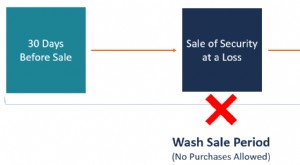 Understanding Wash Sales: IRS Rules and Implications
A wash sale is categorized when an investor sells a stockStockWhat is a stock? An individual who owns stock in a company is called a shareholder and is eligible to claim part of the company’s re...