
Understanding Security Quality: A Guide to Investment Risk
Selecting the right quality of security is one of the most important factors to consider in investing. Security refers to a negotiable financial instrument that holds monetary value and represents an ownership stake in a publicly traded corporation, either through stocks, bonds, or optionsOptions: Calls and PutsAn option is a derivative contract that gives the holder the right, but not the obligation, to buy or sell an asset by a certain date at a specified price..

The security ownership may be represented by a certificate, electronic record, or book-entry only form. The company issuing the securities is referred to as the issuer. The Securities and Exchange Commission (SEC)Securities and Exchange Commission (SEC)The US Securities and Exchange Commission, or SEC, is an independent agency of the US federal government that is responsible for implementing federal securities laws and proposing securities rules. It is also in charge of maintaining the securities industry and stock and options exchanges regulates securities trading and protects investors from fraud.
Summary
- A security is a type of financial instrument that represents the holder’s ownership stake in a publicly traded company.
- Investors follow a defined set of criteria for identifying quality stocks based on the company’s quality characteristics.
- The selection criteria consider factors such as the quality of the balance sheet, valuation, and corporate governance.
What is Quality Investing?
Quality investing is an investment strategy that involves picking stocks of companies with superior quality characteristics. The concept was borrowed from real estate and bond investing, where investments are determined based on expert opinions and ratings from rating agencies. It was later adopted in the equities market to select stocks with the highest potential to earn profits based on the company’s quality characteristics.
The concept of quality investing was introduced in the 1930s by British-born American economist, investor, and professor Benjamin Graham, who identified the quality problem in equities. Graham grouped stocks into either low quality or high quality, depending on the issuer’s quality characteristics. He noted that the greatest losses resulted from buying low-quality stocks at a seemingly good value and not from buying quality stocks at unreasonably high prices.
The concept of value investingStock Investing: A Guide to Value InvestingSince the publication of "The Intelligent Investor" by Ben Graham, what is commonly known as "value investing" has become one of the most widely respected and widely followed methods of stock picking. also became popular in 2001 after the burst of the dot-com bubble when large corporations like WorldCom and Enron collapsed, resulting in huge losses in investor funds. With the insolvency of these companies, investors gained awareness of security quality and started focusing their attention on important characteristics such as earnings quality, balance sheet, and corporate governance.
Characteristics of Quality Securities
Investors have a defined set of criteria that they use to determine the quality of securities. The selection criteria include the following factors:
1. Financial strength
Companies with strong financial strength can withstand adverse financial conditions or unexpected events in the markets. The company’s financial strength can be demonstrated by a strong balance sheet, a high volume of sales and profits, and the ability to generate sufficient cash flows to meet the operating costs of the company. Also, strong companies tend to report consistent positive results for several years in a row.
On the downside, companies burdened with debts will grow slowly since most of the resources are diverted to pay the cost of liabilities. Investors can also use financial ratios such as the debt-to-equity ratioDebt to Equity RatioThe Debt to Equity Ratio is a leverage ratio that calculates the value of total debt and financial liabilities against the total shareholder’s equity. and the interest coverage ratio to determine a company’s financial strength.
2. Economic moat
The term “economic moat” was coined by Warren Buffett to describe a company’s competitiveness in the market vis-à-vis its competitors. Quality companies possess an economic moat, and it allows them to take a leading market position. Also, the company can protect its market share by creating barriers to entry to deter potential competitors from the market where it operates.
3. Corporate governance
Corporate governance relates to how a company is controlled and operated. Governance structures in a company determine how rights and responsibilities are distributed among participants in the corporation and the procedures for making decisions relating to the company.
A quality company employs a professional management team that can see potentially lucrative opportunities and capitalize on them. Also, there should be low turnover rates among managers in the middle- and upper-management levels.
4. Attractive valuation
Valuation is an important factor in determining the quality of a company in its specific industry. Companies with attractive valuations are characterized by a low price-to-earnings ratio, price-to-book ratio, and a high discounted cash flow. A company that’s been able to maintain an attractive valuation over time can offer quality securities to investors looking for stable returns in the future.
5. Dividend-paying stocks
When looking for potential companies to invest in, investors are more interested in owning stocks in companies that pay dividends consistently. A history of consistently paying dividends to shareholders shows that the company’s reported enough revenues over the years to sustain its dividends payouts. Also, a history of dividend growth is an added advantage to investors since they are assured of regular and growing dividend payments over time.
Quality Investing vs. Value Investing
Quality investing is an investment strategy that differs from value investing.
Quality investing involves buying stocks from companies with outstanding qualities, while value investing involves buying stocks that are considered undervalued (trading below their intrinsic valueIntrinsic ValueThe intrinsic value of a business (or any investment security) is the present value of all expected future cash flows, discounted at the appropriate discount rate. Unlike relative forms of valuation that look at comparable companies, intrinsic valuation looks only at the inherent value of a business on its own.).
Value investors pick stocks that they think are undervalued since the stock price movements do not correspond to the company’s long-term fundamentals. The investors buy the undervalued stocks for the long-term, with a plan to sell them later when their price appreciates.
Additional Resources
CFI is the official provider of the Capital Markets & Securities Analyst (CMSA)®Program Page - CMSAEnroll in CFI's CMSA® program and become a certified Capital Markets &Securities Analyst. Advance your career with our certification programs and courses. certification program, designed to transform anyone into a world-class financial analyst.
To keep learning and developing your knowledge of financial analysis, we highly recommend the additional resources below:
- Capital MarketsCapital MarketsCapital markets are the exchange system platform that transfers capital from investors who want to employ their excess capital to businesses
- Interest Coverage RatioInterest Coverage RatioInterest Coverage Ratio (ICR) is a financial ratio that is used to determine the ability of a company to pay the interest on its outstanding debt.
- Growth Stocks vs. Value StocksGrowth Stocks vs Value StocksIn this article, we will talk about the key features and differences between growth stocks vs value stocks. Growth stocks demonstrate a substantially high growth
- Quality of Real EstateQuality of Real EstateFor potential buyers or investors, determining the quality of real estate is a very important undertaking. Real estate is widely considered
-

Understanding Social Security Disability Quality Reviews
The focus of a Social Security quality review may affect a benefit decision, but it doesn't target you specifically. Instead, the focus is on the claims examiner in charge of evaluating your appli
-
Securities Explained: A Beginner's Guide to Stocks, Bonds & More
Many people wondering what securities are may not realize that they're likely already familiar with this investment category. The most common examples include stocks and bonds.Along with commodit
invest
- Understanding Security Deposits: What You Need to Know
- Understanding Securities: A Comprehensive Guide
- Understanding Junior Securities: Risks and Implications
- Disgorgement Explained: Legal Remedy for Illegal Profits
- Understanding Non-Covered Securities: Definition & SEC Role
- Understanding Non-Marketable Securities: Definition & Examples
- Securities Lending: Definition, Process & Benefits
- Understanding Security Types: A Comprehensive Guide
- Understanding Underlying Securities: A Key to Derivatives Investing
-
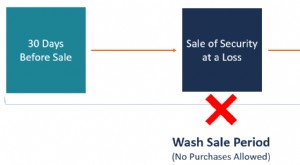 Understanding Wash Sales: IRS Rules and Implications
A wash sale is categorized when an investor sells a stockStockWhat is a stock? An individual who owns stock in a company is called a shareholder and is eligible to claim part of the company’s re...
-
Understanding Indications of Interest (IOIs) in Securities
An indication of interest utilized by an investor to show interest in a security that is not yet on the market. When a new security is about to be put on the market it has to register with the S...