
Understanding Underlying Securities: A Key to Derivatives Investing
Underlying security is a term in investing that denotes the negotiable financial instrument upon which a financial derivative, such as an option on a stock – is based. Therefore, the value of the underlying security also determines the value of its financial derivative.

A financial derivative is defined as a financial security or instrument that is derived from another security or financial asset.
One difference between underlying securities and their derivatives lies in where and how the two financial instruments are traded. Underlying securities are commonly traded in the cash market and on standardized exchanges, such as the New York Stock Exchange (NYSE)New York Stock Exchange (NYSE)The New York Stock Exchange (NYSE) is the largest securities exchange in the world, hosting 82% of the S&P 500, as well as 70 of the biggest.
Financial derivatives, on the other hand, are commonly traded in over-the-counter markets. Or, if they are traded on an exchange, then it’s on a smaller, specialized exchange that is usually dedicated to the trading of derivative instruments.
Summary
- Underlying security is a term in investing that denotes the negotiable financial instrument upon which a financial derivative, such as an option on a stock – is based.
- Underlying securities include stocks, bonds, and market indexes.
- Underlying securities are essentially the same thing as underlying assets, although not all assets exist in the form of a security.
Classifying Underlying Securities
The different kinds of underlying securities, along with their associated derivative instruments, are frequently classified according to the type of investment risks that they are subject to. For example, stocks and commodities are subject to both systematic and unsystematic market risk, along with general economic risk.
The investment risks that bondholders or investors in other debt instruments are most focused on include default risk (also referred to as counterparty risk), interest rate riskInterest Rate RiskInterest rate risk is the probability of a decline in the value of an asset resulting from unexpected fluctuations in interest rates. Interest rate risk is mostly associated with fixed-income assets (e.g., bonds) rather than with equity investments., and credit risk.
The term “underlying securities” is frequently used interchangeably with the term “underlying assets.” Both underlying securities and underlying assets refer to things that financial derivatives are based on. However, the terms are not precisely synonymous.
A security refers to a negotiable financial instrument that, at least potentially, also comes with some type of monetary value. Virtually all securities can also be referred to as assets – but not all assets exist in the form of securities.
For example, heating oil and oranges are both assets, but they are not securities. However, they can be traded through derivative instruments, such as futures contracts and options, forward contracts, and contracts for difference (CFD)Contract for Difference (CFD)Contract for Difference (CFD) refers to a contract that enables two parties to enter into an agreement to trade on financial instruments based on the price difference between the entry prices and closing prices..
Examples
Stocks are probably the most widely recognized and widely traded underlying securities. Stocks are the underlying security on which the derivative instrument, stock options, is based. Changes in the price of a given stock will also result in changes in the prices of available options on the stock.
A stock option gives the buyer the right, but not the obligation, to buy (call option) or sell (put option) a specified number of shares of the stock, at a specified price – known as the “strike price,” within a specified time frame (i.e., before the date on which the option expires).
The relationship between the option’s price and the price of the underlying stock is a fairly direct one. If, for example, the underlying stock is selling for $100 a share, and an investor purchases a call option on the stock with a $90 strike price, then the option is worth at least $10 a share.
(Other factors, in addition to the market price of the underlying security, significantly impact the value of derivatives, such as, with stock and futures options, the amount of time remaining before the option expires).
Another example of underlying securities is a pool of mortgage loans that are packaged together to create the derivative debt instrument, mortgage-backed securities (MBS). Besides stocks and mortgage loans, other financial instruments that are underlying securities for various financial derivatives include bonds, currencies, interest rates, and market indexes.
Market indexes, as they are merely a financial calculation and not a tangible, physical asset, may not appear initially to be a proper candidate to serve as an underlying security. However, they are the underlying security for index derivatives, such as index-based exchange-traded funds (ETFs).
Related Topics
CFI is the official provider of the global Financial Modeling & Valuation Analyst (FMVA)®Become a Certified Financial Modeling & Valuation Analyst (FMVA)®CFI's Financial Modeling and Valuation Analyst (FMVA)® certification will help you gain the confidence you need in your finance career. Enroll today! certification program, designed to help anyone become a world-class financial analyst. The following related CFI resources will be helpful in furthering your financial education and advancing your career:
- Options: Calls and PutsOptions: Calls and PutsAn option is a derivative contract that gives the holder the right, but not the obligation, to buy or sell an asset by a certain date at a specified price.
- Exchange Traded Fund (ETF)Exchange Traded Fund (ETF)An Exchange Traded Fund (ETF) is a popular investment vehicle where portfolios can be more flexible and diversified across a broad range of all the available asset classes. Learn about various types of ETFs by reading this guide.
- Futures ContractFutures ContractA futures contract is an agreement to buy or sell an underlying asset at a later date for a predetermined price. It’s also known as a derivative because future contracts derive their value from an underlying asset. Investors may purchase the right to buy or sell the underlying asset at a later date for a predetermined price.
- Underlying AssetUnderlying AssetUnderlying asset is an investment term that refers to the real financial asset or security that a financial derivative is based on. Thus, the
-

Understanding Indications of Interest (IOIs) in Securities
An indication of interest utilized by an investor to show interest in a security that is not yet on the market. When a new security is about to be put on the market it has to register with the S
-
Securities Explained: A Beginner's Guide to Stocks, Bonds & More
Many people wondering what securities are may not realize that they're likely already familiar with this investment category. The most common examples include stocks and bonds.Along with commodit
invest
- Understanding Securities: A Comprehensive Guide
- Understanding Junior Securities: Risks and Implications
- Disgorgement Explained: Legal Remedy for Illegal Profits
- Understanding Non-Covered Securities: Definition & SEC Role
- Understanding Non-Marketable Securities: Definition & Examples
- Understanding Security Quality: A Guide to Investment Risk
- Securities Lending: Definition, Process & Benefits
- Understanding Security Types: A Comprehensive Guide
- Understanding Underlying Securities: A Key to Derivatives Investing
-
 Understanding Underlying Assets: Definition & Importance
Underlying asset is an investment term that refers to the real financial asset or security that a financial derivative is based on. Thus, the value of the underlying asset drives the value of the fina...
-
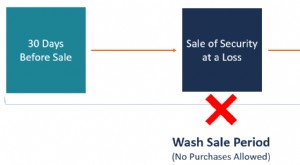 Understanding Wash Sales: IRS Rules and Implications
A wash sale is categorized when an investor sells a stockStockWhat is a stock? An individual who owns stock in a company is called a shareholder and is eligible to claim part of the company’s re...