
Sell to Close Options: A Comprehensive Guide for Investors
Sell to close is an options trade order and refers to closing out (selling) a long position in an options contractOptions: Calls and PutsAn option is a derivative contract that gives the holder the right, but not the obligation, to buy or sell an asset by a certain date at a specified price..
Understanding Sell to Close
A long options contract comes with three outcomes:
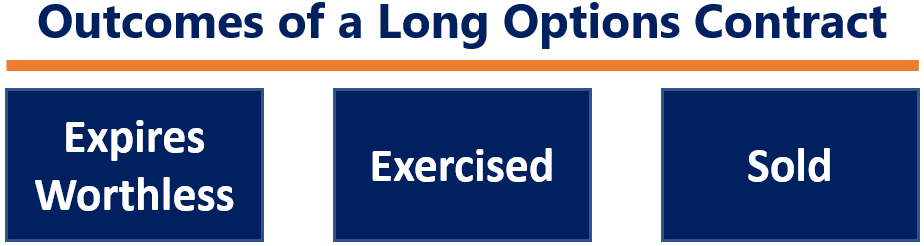
1. The options contract expires worthless.
In long call options, it occurs when the underlying asset’s price expires below the strike priceStrike PriceThe strike price is the price at which the holder of the option can exercise the option to buy or sell an underlying security, depending on.
In long put options, it occurs when the underlying asset’s price expires above the strike price.
2. The options contract is exercised.
- In long call options, it occurs when the underlying asset’s price is above the strike price and the option is exercised.
- In long put options, it occurs when the underlying asset’s price is below the strike price and the option is exercised.
3. The options contract is sold (sell to close) on the market before expiry.
When an investor sells to close an options contract, he/she is selling the contract to another market participant. Depending on the contract’s value at the time of execution, a sell to close trade order can generate a profit or loss for the investor.
Example of Sell to Close
Question: Tim currently holds a long European-style call optionsEuropean OptionA European option is a type of options contract where the buyer or seller are only able to execute the option on its expiration date contract on Apple stock valued at $1,000. The contract expires in one month. Tim would like to realize a profit on the contract, but due to the call options contract being European-style, it can only be exercised on the expiration date. What suggestion would you give to Tim such that he can realize a profit on the options contract?
Answer: Tim could sell to close the long call options contract on the market. In doing so, he is selling the contract to another party and is able to realize a profit (somewhat discounted) immediately.
Sell to Close or Exercise an Options Contract?
Given an in-the-money options contract, a common question is whether to exercise the options contract or sell to close.
In reality, the majority of options traders choose to sell an in-the-money options contract rather than exercise it. The primary reasons being:
- To avoid extra commissions involved with buying the underlying asset and subsequently selling it in the open market.
- To avoid the risk of spillage, which is defined as receiving a different price than expected from selling a stock on the open market. Spillage is likely to occur when the underlying asset has high volatility and low volume.
- To retain extrinsic value on the options contract. Exercising the options contract would only generate the intrinsic value for the contract holder while selling the options contract would generate the extrinsic and intrinsic value.
The two main factors that affect extrinsic valueExtrinsic ValueExtrinsic value of an option is calculated by taking the difference between the market price of an option and its intrinsic price. are:
- Time to expiration: An option with a longer time to maturity would come with a greater extrinsic value.
- Implied volatility: An option whose underlying asset is more volatile would assume a greater extrinsic value.
Key Takeaways
- Sell to close refers to closing out a long position in an options contract.
- There are three outcomes with a long options contract: (1) it expires worthless, (2) it is exercised, and (3) it is sold.
- The majority of option holders choose to sell a long options contract rather than exercise it. It is to (1) avoid extra commissions, (2) avoid the risk of spillage, and (3) retain extrinsic value.
Learn More
CFI is the official provider of the global Capital Markets & Securities Analyst (CMSA)®Program Page - CMSAEnroll in CFI's CMSA® program and become a certified Capital Markets &Securities Analyst. Advance your career with our certification programs and courses. certification program, designed to help anyone become a world-class financial analyst. To keep advancing your career, the additional resources below will be useful:
- American vs. European vs. Bermudan OptionsAmerican vs European vs Bermudan OptionsThere are different types of options that differ in terms of their exercise restrictions. Let’s explore American vs European vs Bermudan options to find out
- Early ExerciseEarly ExerciseEarly exercise refers specifically to options contracts. The early exercise of an options contract refers to the process of buying and/or
- Implied Volatility (IV)Implied Volatility (IV)Implied volatility – or simply IV – uses the price of an option to calculate what the market is saying about the future volatility of the
- Underlying AssetUnderlying AssetUnderlying asset is an investment term that refers to the real financial asset or security that a financial derivative is based on. Thus, the
-
Embedded Options: Understanding Rights and Future Actions in Financial Securities
An embedded option is a provision in a financial security (typically in bondsBondsBonds are fixed-income securities that are issued by corporations and governments to raise capital. The bond issuer bo
-

Fixed Income Forward Contracts: Definition & Uses
A fixed income forward contract refers to an agreement between two counterparties to buy or sell a fixed income instrument at a specified date, price, and amount in the future. The contracts are used
invest
- Understanding Options Contracts: A Comprehensive Guide
- Understanding Early Exercise of Options Contracts
- Equity Futures Contracts: Definition, Types & Uses
- Understanding European Options: Definition & Key Features
- Understanding Exotic Options: A Comprehensive Guide
- Understanding Options Expiration Time: Key Dates & Deadlines
- Understanding Index Options: A Comprehensive Guide
- Understanding Non-Equity Options: A Comprehensive Guide
- Sell to Open Options: A Comprehensive Guide
-
 E-mini Futures: A Comprehensive Guide to Electronic Trading
E-mini futures, or more commonly known as e-minis, is a futures contract. The difference is that it is traded electronically, hence the name e-mini. Fig.1: E-mini S&P 500 Futures Quotes (Sour...
-
 Options Trading Explained: A Beginner's Guide to Understanding Options
As different investing apps make it easier to learn about options and trade them, more people are becoming interested in trying to make money from them. However, as with any investment, ...