
Understanding Settlement Periods in Securities Transactions
Settlement date is a term used in the securities industry to refer to the period between the transaction date when an order is executed to the settlement date when the security changes hands and payment is made. When the seller and the buyer enter into a trade, each party in the transaction must fulfill their part to complete the transaction.
During the settlement period, the seller must initiate the transfer of ownership of the security to the buyer against the appropriate payment that both parties agreed during the execution of the contract.
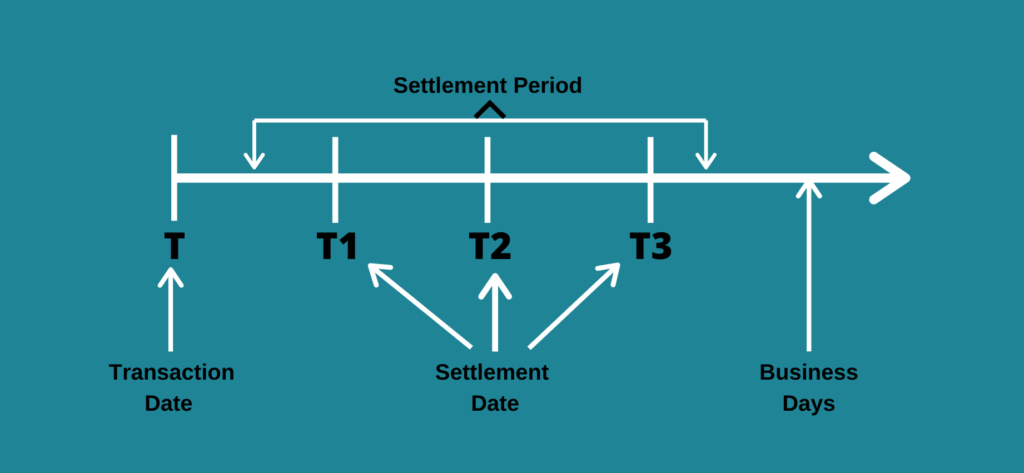
The trade is deemed settled when the ownership of the security is transferred, the payment received, and the buyer becomes the new holder of the security. Different types of securitiesPublic SecuritiesPublic securities, or marketable securities, are investments that are openly or easily traded in a market. The securities are either equity or debt-based. come with varied settlement periods, and the period may range anywhere from one day to three trading days since the trade date.
History of Settlement Period for Securities
The Securities and Exchange Commission (SEC)Securities and Exchange Commission (SEC)The US Securities and Exchange Commission, or SEC, is an independent agency of the US federal government that is responsible for implementing federal securities laws and proposing securities rules. It is also in charge of maintaining the securities industry and stock and options exchanges is the entity that has the power to set basic rules for stock trading in the United States. The authority was granted under Section 17A of the SEC Act that was passed into law in 1975. The law authorized the SEC to establish a national clearance and settlement system to guide securities trading.
The system provides guidance on the process of trading securities and the actual duration of the settlement period. Before Section 17A of the SEC Act was enacted, the buyer and the seller were responsible for deciding how the transaction would be conducted and the duration it would take for the transaction to be completed.
The ownership transfer of securities was executed manually; the seller had to deliver the stock certificate by post or hand delivery to the broker representing the buyer. The buyer would not make payment for the security until the share certificate was received. Due to the fluctuating prices during the waiting period, the SEC set the settlement date to be five business days (T+5) after the transaction date.
With the advent of technology, the ownership transfer of securities is processed electronically in less time. Electronic transactions eliminate the need for paper stock certificates, and securities exist as entries in a data storage system, backed by the account statements. Most online brokers require buyers to fund their accounts before initiating a trade, and they must have sufficient funds to buy the stocks.
Understanding the Settlement Period
The duration of the settlement period has changed over the years as security trading moved from manual to electronic transactions. Initially, the SEC had set the settlement period to five business days. However, it was revised in 1993, when the SEC changed the settlement period from five business days to three business days. It means that a transaction executed on Monday would be completed on Thursday, as long as there were no holidays in between the week.
In March 2017, the SEC again revised the settlement period from three business days to two business days to help reduce the credit and market risks that the transacting parties faced. A two-day waiting period was necessitated by the improvements in technology, where parties could execute a trade and transfer ownership of securities quickly and conveniently.
When referring to the settlement period, brokers use the shorthand “T+” to refer to the number of business days the transaction will take to complete. For example, “T+1” means “transaction date plus one day.” Sometimes, brokers may provide an extended settlement period for foreign stock exchange transactions.
Settlement Period in the Real Estate Industry
In the real estate industry, the term “settlement period” is used to refer to the lag between the date when a transaction is initiated and the date when the transaction is settled. A normal settlement period in the real estate industry is 30 days, which is from the date of the offer to the settlement date. However, this period can be longer or shorter, depending on the type of property being sold.
During the settlement period, the buyer may incur various costs as part of the settlement process. They include the cost of obtaining a credit reportCredit Report AnalysisCredit report analysis involves evaluating the information contained in a credit report such as the personal details of a customer, their credit summary, from a credit bureau, performing a home appraisal, conducting a title search for the property, as well as paying the relevant mortgage application fees. The seller will also be required to organize moving, cleaning, repairs, and other details required before finalizing the transaction.
On the settlement date, the ownership of the real estate officially changes hands from the seller to the buyer. The buyer completes payment for the associated costs linked to the real estate transaction, whereas the seller receives the proceeds from the sale of the property.
Usually, the settlement date is usually the last day to make sure that all conditions regarding the property have been met and that all figures given have been verified to be accurate. Once all documents are ready, the buyer or his/her representative is required to bring a cashier’s checkHow to Write a CheckEven though digital payments are continually gaining more market share, it’s still important to know how to write a check. This guide shows you step by step with an amount equal to the closing costs of the property.
More Resources
CFI is the official provider of the Commercial Banking & Credit Analyst (CBCA)®Program Page - CBCAGet CFI's CBCA™ certification and become a Commercial Banking & Credit Analyst. Enroll and advance your career with our certification programs and courses. certification program, designed to transform anyone into a world-class financial analyst.
To keep learning and developing your knowledge of financial analysis, we highly recommend the additional resources below:
- Commodities: Cash Settlement vs Physical DeliveryCommodities: Cash Settlement vs Physical DeliveryThe modes of settlement for most options and futures contracts can be either of the following two methods: Cash Settlement vs Physical Delivery
- Forward ContractForward ContractA forward contract, often shortened to just "forward", is an agreement to buy or sell an asset at a specific price on a specified date in the future
- Settlement DateSettlement DateSettlement date is an industry term that refers to the date when a trade or derivative contract is deemed final, and the seller must transfer the ownership
- The 1933 Securities ActThe 1933 Securities ActThe 1933 Securities Act was the first major federal securities law passed following the stock market crash of 1929. The law is also referred to as the Truth in Securities Act, the Federal Securities Act, or the 1933 Act. It was enacted on May 27, 1933 during the Great Depression. ...the law was aimed at correcting some of the wrongdoings
-

PC Banking: A Comprehensive Guide to Online Banking Security & Features
PC banking refers to a person being able to access their banking information from a "personal computer." It has become a popular method for people to manage money and pay bills using online
-

Understanding Average Collection Period: A Key Metric for Businesses
The average collection period amount of time that passes before a company collects its accounts receivable (AR)Accounts ReceivableAccounts Receivable (AR) represents the credit sales of a business, wh
invest
- Understanding Trade Settlement: A Comprehensive Guide
- Debt Settlement: Definition, How It Works & Is It Right For You?
- Net Settlement Explained: How Banks Settle Transactions
- Understanding Quiet Periods: SEC Regulations & Corporate Communications
- Cross Currency Settlement: A Comprehensive Guide
- Understanding Settlement Dates: A Comprehensive Guide
- Period Costs: Definition, Examples & Impact on Financial Statements
- Understanding Reporting Periods: A Comprehensive Guide
- Understanding Structured Settlements: A Comprehensive Guide
-
 Understanding Pre-Authorization for Settlement Credits: A Comprehensive Guide
What Is a Pre-Authorization for a Settlement Credit? Credit cards make paying for goods and services convenient for both the cardholder and the merchants. If the cardholder uses the credit pr...
-
 Discounted Payback Period: Definition & Calculation
The discounted payback period is a modified version of the payback period that accounts for the time value of moneyTime Value of MoneyThe time value of money is a basic financial concept that holds th...