
Stock Market Indexes: A Comprehensive Guide to Understanding
A stock market index, also known as a stock index, measures a section of the stock market. In other words, the index measures the change in the share prices of different companies.
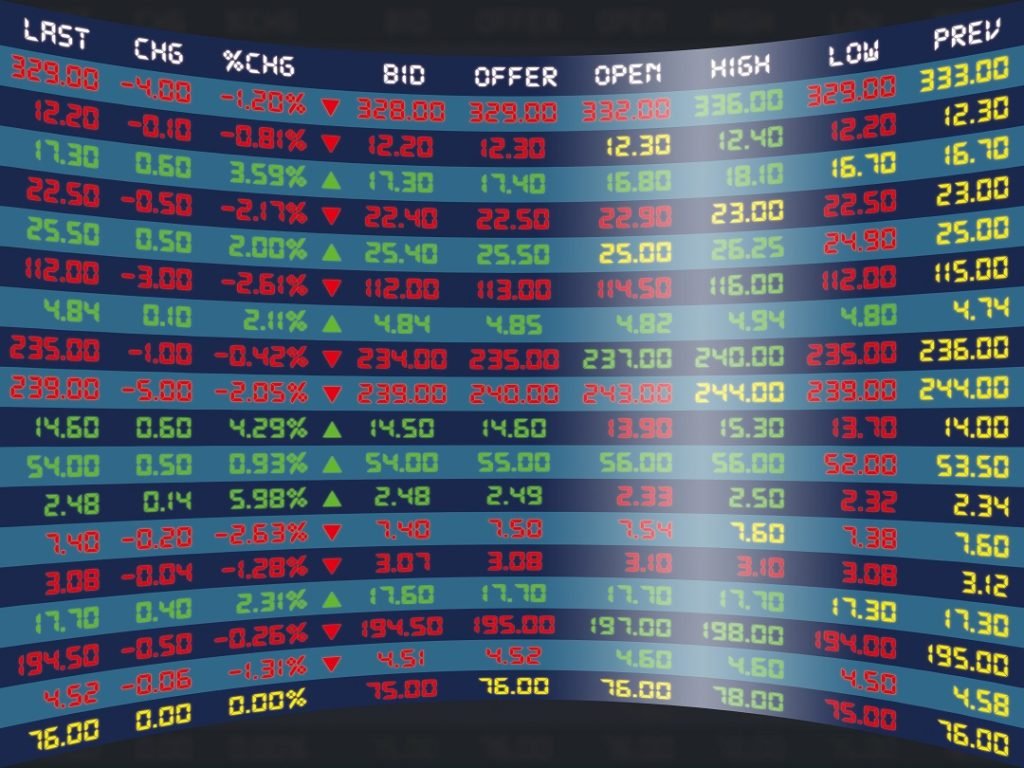
The stock index is determined by calculating the prices of certain stocks (generally a weighted averageCapitalization-Weighted IndexThe Capitalization-Weighted Index (cap-weighted index, CWI) is a type of stock market index in which each component of the index is weighted relative to its total market capitalization. In a capitalization-weighted index, companies with larger market capitalization exert a greater impact on the index value.). It is a tool widely used by financial institutions and investors to compare the return on specific investments and to describe the market.
Summary
- A stock market index measures a section of the stock exchange.
- It is determined by calculating the prices of certain stocks.
- Three of the most popular stock market indices in the USA are S&P 500, Dow Jones Industrial Average (DJIA), and Nasdaq Composite.
Types of Stock Market Indices
Stock market indices may be classified in different ways. A “global” or “world” stock market index, such as the MSCI World or the S&P Global 100, contains stocks from multiple regions. Regions can be defined geographically (for example, Asia, Europe) or by levels of income or industrialization (for example, frontier markets, developed markets).
A national index represents the performance of the stock market of a definite country and reflects the sentiment of investors on the state of the economy. National indices include the stocks of large companies listed on the nation’s largest stock exchanges. Many indices are regional, e.g., the FTSE Developed Asia Pacific Index or the FTSE Developed Europe Index.
There are more specialized indices that track the performance of specific sectors of the stock market. In the United States, specialized indices include the Morgan Stanley Biotech Index, which consists of 36 American companies in the biotechnology industry, and the Wilshire US REIT, which tracks more than 80 U.S. real estate investment trustsReal Estate Investment Trust (REIT)A real estate investment trust (REIT) is an investment fund or security that invests in income-generating real estate properties. The fund is operated and owned by a company of shareholders who contribute money to invest in commercial properties, such as office and apartment buildings, warehouses, hospitals, shopping centers, student housing, hotels. There are other indices that may monitor organizations of a certain size or type of management.
The Importance of Indices
The daily results of stock market indices are perhaps the most popular and significant numbers in the whole world of investing and finance. Probably the world’s best-known and most widely used stock market index, the Dow Jones Industrial Average (DJIA)Dow Jones Industrial Average (DJIA)The Dow Jones Industrial Average (DJIA), also referred to as "Dow Jones” or "the Dow", is one of the most widely-recognized stock market indices. consists of 30 largest traded companies in the United States.
Many investors use market indices for managing their investment portfolios and following the financial markets. Indexes are deeply integrated into the investment management business, and funds use them as benchmarks for performance comparisons.
Indices as Benchmarks
Indexes serve as benchmarks for different purposes in the financial markets. As mentioned, the Dow Jones Industrial Average, Nasdaq CompositeNASDAQ CompositeThe NASDAQ Composite is an index of more than 3,000 common equities listed on the NASDAQ stock market. The index is one of the most followed indices in the, and S&P 500 are the three most popular U.S. indexes. The three indexes contain the 30 largest stocks in the U.S. by market capitalization, all stocks on the Nasdaq Exchange, and the 500 largest stocks, respectively. Benchmarks can be a good indicator of the overall U.S. stock market since they include some of the most valuable U.S. stocks.
Investors can also use performance and benchmark values to follow investments by segments. Some investors may diversify their investment portfolios based on the returns or expected returns of certain segments. Furthermore, a specific index may act as a benchmark for a mutual fund or a portfolio.
Additional Resources
CFI is the official provider of the global Financial Modeling & Valuation Analyst (FMVA)™Become a Certified Financial Modeling & Valuation Analyst (FMVA)®CFI's Financial Modeling and Valuation Analyst (FMVA)® certification will help you gain the confidence you need in your finance career. Enroll today! certification program, designed to help anyone become a world-class financial analyst. To keep advancing your career, the additional resources below will be useful:
- Nikkei IndexNikkei IndexThe Nikkei Index, or Nikkei 225, is the most recognized Japanese stock market index. It comprises Japan's top 225 companies listed on the Tokyo Exchange.
- Overweight StockOverweight StockAn overweight stock is a stock that financial analysts believe will outperform a benchmark stock, security, or index. The overweight recommendation signals to investors to devote a larger percentage of their portfolio to the stock. Hence the term "overweight".
- Price-Weighted IndexPrice-Weighted IndexA price-weighted index is a type of stock market index in which each component of the index is weighted according to its current share price. In price-weighted indices, companies with a high share price have a greater weight than those with a low share price.
- The S&P SectorsThe S&P SectorsThe S&P sectors constitute a method of sorting publicly traded companies into 11 sectors and 24 industry groups. Created by Standard & Poor's (S&P) and Morgan Stanely Capital International (MSCI), they are also known as the Global Industry Classification Standard (GICS).
-

Capitalization-Weighted Index (CWI): Explained
The Capitalization-Weighted Index (cap-weighted index, CWI) is a type of stock market index in which each component of the index is weighted relative to its total market capitalizationMarket Capitaliz
-

NIFTY 50 Index: Understanding India's Top 50 Stocks | NSE
NIFTY 50 is the most important index of the National Stock Exchange of India Limited (NSE)National Stock Exchange of India Limited (NSE)The National Stock Exchange of India Limited (NSE) is the larges
invest
- DAX Index: Your Guide to Germany's Top 30 Companies
- Equal-Weighted Index Explained: Benefits & How It Works
- Understanding Indexing: A Passive Investment Strategy
- Market Breadth: Understanding Price Advancement & Decline
- Understanding Market Indexes: A Comprehensive Guide
- Stock Indexes Explained: A Beginner's Guide to Market Benchmarks
- Understanding Stock Market Crashes: Causes & Impact
- Understanding Stock Market Corrections: Causes, Signs & What to Do
- Stock Dilution Explained: Understanding Its Impact on Investors
-
 Understanding Stock Market Volume: A Comprehensive Guide
Financial market data After price, volume is one of the most commonly quoted data points related to the stock market. Reflecting the overall activity in a stock or market, volume is the busin...
-
 Understanding US Stock Market Indices: A Comprehensive Guide
Before you start looking at investment opportunities in the US, it is important to spend some time understanding the way the markets work there and factors that influence them. An essential aspect of ...