
Understanding Investment Risk: Types & Management
Risk can be thought of as the possibility that your investment will be worth less at the end of your holding period than it was at the time that you originally bought it. The volatility of the financial markets creates risk. But risk is also the reason that you have the potential to earn more than what is available from T-bills, if you know how to recognize and manage it wisely. Your investment choices should be considered in terms of both reward and risk, and the trade-off that you're willing to make.
In the stock and bond markets, there are actually only two types of factors that can cause a stock's return to vary. One relates to changes in the corporation or the way that investors perceive the corporation. The other has to do with changes and movements in the overall securities markets. Consequently, this means there are two basic components to the risk that every investor faces: market risk, which is inherent in the market itself; and company risk, which encompasses the unique characteristics of any one stock or bond and the industry in which it operates.
About 70 percent of the risk that you face as an investor is company risk. Fortunately, you can minimize and control this risk by diversifying among different securities. For example, you can invest in ten different stocks or bonds rather than just one (which is certainly advisable). On the other hand, market risk – the remaining 30 percent of the total risk that you're exposed to – cannot be avoided by diversification; all stocks and bonds are affected to some degree by the overall market.
The fact that you can eliminate company risk simply by diversifying your portfolio is critical to the long-term success of your investment strategy. An investor who owns just one stock is taking on 100 percent of the risk associated with investing in common stocks, while an investor who owns a diversified portfolio has only 30 percent of that risk. In other words, a single-stock investor has more than three times the risk of a diversified investor.
Investors who think of themselves as conservative but who invest in one low-risk stock actually incur more risk than investors who have a portfolio of ten aggressive growth stocks. On top of that, the conservative investors are earning a lower expected return because they're invested in lower-risk, lower-return securities.
This is a crucial investment concept; many investors, however, commonly overlook it. The stock and bond markets provide higher returns for higher risks, but they provide those higher returns only for unavoidable risk – the risk inherent in the market. Company risk can to a large degree be circumvented through diversification. Regardless of the investment objective that you may have, what your intended holding period is, or what kind of securities analysis is performed, if you don't have a diversified portfolio you're either throwing away part of your return or assuming risk that could and should be avoided (or at least dramatically reduced), or both.
-
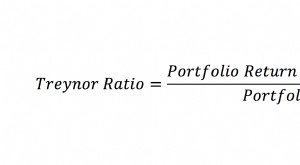
Treynor Ratio: Understanding Risk-Adjusted Portfolio Performance
The Treynor Ratio is a portfolio performance measure that adjusts for systematic riskSystematic RiskSystematic risk is that part of the total risk that is caused by factors beyond the control of a spe
-

Understanding Mutual Fund Risks: A Comprehensive Guide
Investment in mutual funds depends on the market conditions, and despite having a high return potential, its not risk-free. Read on to know the different types of risks involved in mutual fund investm
invest
- Understanding and Mitigating Risks in Commercial Banks
- Risk Aversion vs. Risk Neutrality: Understanding Investor Profiles
- Understanding Portfolio Risk: Factors and Mitigation Strategies
- Understanding Foreign Exchange Risks: A Comprehensive Guide
- Understanding Types of Insurance Risks: A Comprehensive Guide
- Understanding Brokerage Accounts: A Comprehensive Guide
- Characteristics of Successful Investors: 4 Traits to Emulate
- Common Investor Mistakes & How to Avoid Them
- Investment Diversification: Reduce Risk & Maximize Returns
-
Millennial Investing: Building a Diversified, Low-Cost Portfolio
This post contains references to our advertisers and we may receive compensation if you click on links. Learn more here. Millennial Money Snapshot: Don’t trust Wall Street or buy “trendy” secto...
-
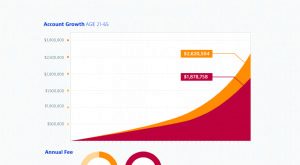 Investment Fees: How They Impact Your Returns
The median price of a home in the United States was recently reported by the U.S. Census Bureau to be $319,700 (including the land on which the home sits). So what exactly does this number have to do ...