
Understanding Foreign Exchange Risks: A Comprehensive Guide
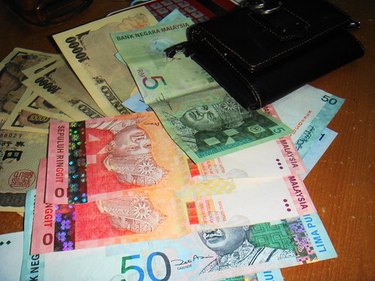
With an average daily volume of over $1 trillion, the foreign exchange system is the largest market in the world. It is used by central banks, commercial financial institutions, multinational corporations, and individual speculators, each of which have their own specific types of risk.
History
Today's international foreign exchange system has its roots in the global currency exchange regime created by the 1944 Bretton Woods Agreement.
Players
The largest players in the foreign exchange system are central banks like the European Central Bank, Bank of Japan, and U.S. Federal Reserve. They are followed by commercial and investment banks, global companies like Coke and McDonald's, and many different kinds of investors and traders.
Sovereign Currency Risk
The largest risk in Forex is that a country's currency will significantly depreciate or possibly even devalue. This may happen in response to political turmoil, social unrest, war, or may be a long-term consequence of the country pursuing unsustainable budget and trade deficits.
Multi-National Company Risk
Major multinational companies like Coke, Pepsi, and McDonald's derive a considerable share of their revenue from overseas markets. McDonald's, in particular, earns of 65 percent of its income outside the U.S. As a result, these companies would be very badly affected if the currency values in one or more of their major foreign markets would significantly depreciate--this would cheapen the value of their revenues, while bolstering the value of their expenses. As a result, many of these billion-dollar firms employ complex hedging strategies designed to significantly minimize bottom-line risk in the event of adverse currency swings.
Investment Risk
Investment risk is the more classic kind of risk faced by almost every foreign exchange investor, from billion-dollar macro hedge funds to individuals trading miniscule accounts. A currency investor typically buys and sells two currencies simultaneously, hoping the one he buys appreciates in value relative to the one he sold. If this doesn't happen, he'll have a loss. Given the very high borrowing limits availed to Forex investors, sometimes in excess of $200 for every $1 on deposit, losses of even a few percent on the underlying currencies can rapidly lead to ruinous losses in a brokerage account.
-

Understanding Business Structures: A Comprehensive Guide
There are different types of businesses to choose from when forming a company, each with its own legal structure and rules. Typically, there are four main types of businesses: Sole ProprietorshipsSole
-

Understanding Life Insurance Types: Term vs. Whole Life & More
The decision to purchase life insurance is daunting enough without considering the many types of life insurance. The purpose of life insurance is to protect your family’s financial future if you pass
investing
- Understanding Foreign Exchange: Impact on Investment & Economy
- Navigating International Banking Risks: A Comprehensive Guide
- Safe Tangible Investments: A Guide to Protecting Your Wealth
- Understanding Corporate Stock Classes: Common vs. Preferred
- Foreign Exchange Reserves: Definition & Importance
- Understanding Foreign Exchange Risk: A Comprehensive Guide
- Understanding Key Risks Facing Banks: A Comprehensive Overview
- Major U.S. Stock Exchanges: A Comprehensive Guide
- Understanding Mutual Fund Risks: A Comprehensive Guide
-
 Understanding Asset Types: A Comprehensive Guide
An asset is a resource owned or controlled by an individual, corporationCorporationA corporation is a legal entity created by individuals, stockholders, or shareholders, with the purpose of operating ...
-
 Understanding Liability Types: Current, Non-Current & Contingent
There are three primary types of liabilities: current, non-current, and contingent liabilities. Liabilities are legal obligations or debtSenior and Subordinated DebtIn order to understand senior and s...