
Hidden Fees: Uncovering Costly Charges Businesses Are Imposing
In today’s business world, profit is more important than ever. Whereas in the past most businesses would do the right thing just to keep a customer, today many companies are more concerned with milking every penny out of the customer. How do I know this? Just look at the fees various companies are charging you. I think you will agree that there are many outrageous fees listed below.
Outrageous Fees You’re Being Charged
Here are a handful of various fees I’ve encountered recently. Sadly, they are all too common:
Airline Change Fee: Did you know it costs you around $150 to change your plane ticket? How crazy is that? I have plans to fly down to Florida to see my niece and sister next month. We just found out my sister’s husband might be getting a new job and they may need to relocate, which puts my trip down there in question.
I called the airline I am booked to fly on to see if I could go down earlier. The woman was super nice and told me “of course you can”. They she quickly added “it’ll cost you $150”. I nearly fainted!
Using A Bank Teller: How crazy is this fee? If you go to the bank and want a human being to handle your deposit or withdrawal, it is going to cost you. Granted not all banks are using this fee, but why do I have to pay to see a teller? Isn’t it their job to wait on customers? (As a quick aside, if any bank tellers are reading this, I would be concerned for job safety. This sounds like a way to boost profit, err, cut costs by letting you go.)
Airline Baggage Fee: I hate to pick on the airlines, but it is too easy. At first, this fee was charged to us because of the high gas prices, or so the airlines told us. Here we are, almost 10 years after gas prices first skyrocketed up and we are still being charged this fee. Interestingly, gas prices have come down while this fee is still here.
Are You Paying Any Outrageous Fees?
I bet you are being charged outrageous fees. In fact, I bet you are being charged some outrageous fees and you don’t even know it. If you invest in the stock market, you most likely are paying some crazy high fees – management fees.
What are these management fees? They are fees on the mutual funds you invest in. They pay the salary of the mutual fund manager and his team as well as cover other costs of running the fund.
As of this writing, the average management fee on an equity mutual fund is 1.40%. Broken down into dollars, this means that for every $100 invested, the mutual fund charges you $1.40.
You might be looking at this and think 2 things:
- First, you never get a bill from your mutual fund, so your mutual fund must not charge a fee.
- Second, even if you are charged a fee, it’s only $1.40. Nothing outrageous there.
To the first point, if you invest in a mutual fund, you are getting charged a fee. You don’t get a bill for it because the money is taken from the fund itself. So for example, if you are investing in a mutual fund that charges you a 1% fee and you see that the mutual fund earned 8% this year, it really earned 9%; you only earned 8%. The difference is the fee you paid.
Getting back to the $1.40 fee from above, while it doesn’t seem outrageous now, realize this fee is being charged to you every single year you own the fund.
How Much Mutual Fund Fees Are Costing You
So let’s have some fun. Let’s say you are 25 years old and want to stop working and sit on the beach drinking pina coladas all day long. You know that you need to invest in the stock market to be able to grow your money enough to afford sunscreen and drinks.
You invest $10,000 into a mutual fund that charges you 1.40% a year. You leave the money alone and it grows at 8% a year for 30 years. Congratulations! In 30 years, you have just shy of $66,000. What you don’t see is what that annual fee cost you. Want to take guess at what it was? Here is a multiple-choice list of answers for you to choose from:
A. $6,342
B. $21,953
C. $13,032
If you chose C, you are correct. The annual fee cost you $13,032 over those 30 years. That’s $434 a year. Unfortunately, the fee doesn’t stop there.
As I mentioned above, the fee you pay is taken right from your investment. This means that not only do you pay the fee but you also pay in terms of lost compounding. In other words, if you weren’t charged that fee, the $13,032 could grow, increasing the value of your investment.
- Read now: Understand how mutual funds work
- Read now: Learn the pros and cons of index funds
- Read now: Find out the biggest advantages and drawbacks to target date funds
Just how much lost growth is $13,032 over 30 years at 8%? Over $21,000! In total, that measly 1.40% fee cost you a grand total of $34,706 or $1,156 a year.
If, on the other hand, you invested in a mutual fund that charged a lower management fee, say 0.20% for example, your investment would be worth $94,760. Here is the difference between the two in a chart.
By simply investing in a lower fee investment, you saved yourself close to $30,000. That’s a lot of sunscreen and pina coladas or whatever you plan to spend your money on in retirement.
And remember, I’m only talking about an investment of $10,000 here. Think about the amount of fees you pay on a portfolio worth $50,000 or $100,000! Hint: it’s close to $350,000 on a $100,000 investment. Yikes!
If you want more proof that mutual fund fees hurt you, check out this study.
Stock and ETF Trading Fees
While management fees are strictly related to mutual funds, stocks and ETFS are not immune to fees. Whenever you buy or sell stocks, you pay an outrageous fee, or a commission. For many online brokers, this fee is less than $10. On the surface this sounds acceptable. But think for a minute just how much you are investing. If you are placing a trade for $100 and the commission is $9.95, that means you are getting hit with a 10% fee! If you trade regularly this way, you are paying a ton of money in commissions each year!
In fact, a professor at the University of California at Berkley conducted a study and found that those that traded on a regular basis earned 2.65% less than if they had just left the investment alone (i.e. used a buy and hold investing strategy).
Take this example: if you invest $200,000 and earn 8% over 15 years, your investment will grow to just under $692,000. Take the same amount over the same length of time but only earn 5.35% (8% less the 2.65%) and you wind up with a little more than $454,000 which is a difference of $238,000. That is a serious chunk of change.
So how can lessen this hit when investing in stocks and ETFs? One option is to use a broker that doesn’t charge for making ETF trades. This is why I love Charles Schwab so much. I invest in their ETFs and never pay a commission.
For stocks, I like Motif Investing. While you do still pay a commission to trade, you get to buy a basket of stocks as opposed to just one, which lowers your overall cost when investing.
Final Thoughts
The point of this post wasn’t to tell you that mutual fund fees and other trading commissions are completely outrageous fees and you should avoid investing altogether. You need to invest if you want any hope of retiring or being financially free. But with that said, you do need to pay attention to what your investments are costing you. This is one of the key principles in becoming a stock market millionaire.
Don’t fall victim to high investment fees. It’s your money and no one cares about it as much as you do. Make it a point to know how much your investments are costing you. For all you know, you could be throwing thousands of dollars down the drain and not even know it.
[Photo Credit: Jenn Durfey]
-
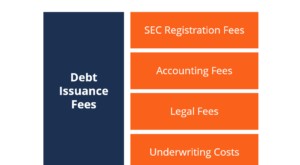
Understanding Debt Issuance Fees: Costs of Bond Sales
Debt issuance fees refer to expenses that the government or public companies incur in selling bonds. The expenses include registration fees, legal fees, printing costs, underwriting costs, etc. The co
-

Hedge Fund Strategies: A Comprehensive Guide for Investors
In this article, we will explore the main hedge fund strategies. But first, what is a hedge fund?A hedge fund is an investment fund created by accredited individuals and institutional investors for th
invest
- Understanding Hedge Fund Fees: The 2 and 20 Structure
- Understanding Management Fees: What They Are & How They Work
- Understanding 12b-1 Fees: What Mutual Fund Investors Need to Know
- Understanding Mutual Fund Benchmarks: A Guide for Investors
- Understanding Mutual Fund Fees: What to Expect & What's Reasonable
- Understanding Investment Fees: A Comprehensive Guide
- Understanding Basis Points: A Simple Guide
- Understanding Mutual Fund Fees: A Comprehensive Guide
- Understanding Bank Fees: How They Impact Your Savings
-
 Understanding Debt Cancellation Fees: What You Need to Know
Debt cancellation fees can be used to pay off the debt in case of cancellation for many reasons. Debt cancellation fees are fees paid by borrowers as an insurance against their cancellation o...
-
 Understanding Brokerage Fees: A Comprehensive Guide
Some things in life are certain: death, taxes and (probably) broker fees. Okay, it doesn’t roll off the tongue quite as easily, but it’s important to understand if you’re planning to get yourself into...