
Understanding & Calculating Residual Dividend Policy: A Comprehensive Guide

A dividend represents the share of earnings that a company distributes to its shareholders. Dividends may be paid in the form of cash or stock and are residual in nature because they represent the earnings distributed to shareholders after all of a company's obligations have been met and the management has allocated funds for reinvestment into the business.
Step 1
Procure the company's financial statements. The first step in calculating a company's residual dividend policy is to gain access to its financial statements. All publicly listed companies must register annual and quarterly reports with the Securities and Exchange Commission. These reports are available free of charge on the EDGAR Database of Online Corporate Financial Information. If the company is private, contact the company to request its financial records.
Step 2
Take note of the company's net income and dividends paid to shareholders. Turn to the company's income statement and locate the net income, or net earnings. This figure reflects the company's profit after all expenses have been accounted for, including interest and taxes. If the company pays a dividend, it normally appears below the net income line as dividends paid to shareholders.
Step 3
Calculate the company's retention ratio. The retention ratio, or plowback ratio, describes the proportion of earnings that are retained relative to earnings that are paid out in the form of a dividend. For example, a company that generated $1,000 of net income and paid a $200 dividend in one year has a retention ratio of 80 percent. This statistic is a measure of the company's residual dividend policy.
Step 4
Repeat the same process for as many historical periods as desired. A company may choose to have a stable dividend, one that grows or one that's determined arbitrarily. To understand the company's residual dividend policy, calculate the retention ratio for more than one historical period and take note of any variations.
Tip
High retention ratios are generally observed in high-growth companies that have a number of positive net present value investment opportunities, whereas low retention ratios are characteristic of mature companies.
-

Calculating Additional Investment in Stockholders' Equity: A Comprehensive Guide
A company receives additional investment money by selling stock to investors. A company's stockholders' equity is the amount of investors' stake in the company. Stockholders'
-

Understanding Cumulative Preferred Stock Dividends: A Comprehensive Guide
Preferred stock shares are a type of ownership equity security. They are similar to regular (common) stock shares, although preferred shares normally don't have voting rights at stockholder's
investing
- Understanding EPS Changes: Calculating Percentage Growth
- Understanding Inventory Purchases: Calculation & Reporting
- Calculating Preferred Stock Dividends: A Comprehensive Guide
- Stock Dilution Explained: Calculation & Impact on Investors
- Calculating Shareholder Value: A Comprehensive Guide
- Unlevered Beta: Calculation, Meaning & Importance
- Understanding Coinsurance: How It Works & Cost Sharing
- Understanding Dividend Policy: A Comprehensive Guide
- Strategic Dividend Policy Development for Sustainable Growth
-
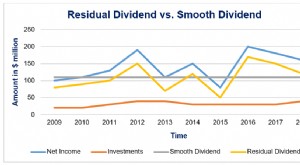 Residual Dividend Policy: Definition, Pros & Cons
A business with a residual dividend policy holds zero excess cash at any given point in time. All spare cash must be either reinvested in the business or redistributed among the shareholders.Imperfect...
-
 Dividend Yield Explained: Calculation & Importance for Investors
INVESTING ADVICE Whether you’re a seasoned investor or are just getting started, chances are you come across one investing term more often than others: dividend yield. While defining “ In...