
Commodity Options: 2 Strategies to Boost Investment Returns
A commodity option is essentially no different from a stock option. You purchase the option to either buy or sell a commodity at a given time in the future at a given price. You purchase this option because you think you can predict the market price for that commodity at the future time, and by predicting the price you can beat the market. There are really only two ways to improve returns using options. The first is to buy below the market price, and the second is to sell above the market price.
#1 Buying Below the Market Price
You can purchase an option on a buy today, but you are not actually buying the commodity. Instead, you are agreeing to buy the commodity at a given price at a set point in the future. You set the price now, opening the door to negotiate a price that will be below the actual price in the future. Then, you can use the option to buy the commodity in the future at the low price and sell it for the actual, higher price on the market at the time.
For example, you may purchase a crude oil option that promises you can buy a barrel at the price of $100 six months from now. The seller thinks the price will be equal to or less than $100 at the time of the sale. You anticipate the price will rise. You are correct, the price of the barrel rises to $108. You can purchase the barrel for $100 and sell it on the market for $108, making a profit of $8. This model is carried out on a much bigger scale with hundreds or barrels of oil, leading to large profits if you can correctly estimate a price increase in the future.
#2 Selling above the Market Price
If you currently own commodities through a trading account, you can purchase an option to sell those commodities in the future at a given price. You, acting as the seller, are anticipating the price at the time of sale is equal to or greater than the market value of the commodity. If you are right, you can exercise the option, selling the commodity to the buyer at the lower price without the buyer having the authority to turn elsewhere for a discount.
Using the same example above, imagine you are the seller in the oil scenario. You sign the option contract with a buyer, and you agree to sell a barrel of oil for $100 six months from now. The buyer thinks the price will rise, making the option a good value. You believe the price will fall. In this scenario, you are correct. The price for a barrel of crude oil has dropped to $88. You exercise your option to sell, profiting $12 on every barrel sold above the market price. You can even take the profits from the sale and reinvest in barrels of oil, increasing your capital equity.
-

Knock-In Options Explained: A Comprehensive Guide
A knock-in option is a latent options contract that comes into effect once the underlying asset reaches a certain price before the expiration date of the contract. An options contractOptions: Calls an
-

Knock-Out Options: A Comprehensive Guide
A knock-out option is an options contract that will become worthless if the investment reaches a specific price. In such a case, the options contract is “knocked out,” and the investor wil
Option
- Understanding Swing Options in Energy Markets
- Balloon Options: Understanding and Leveraging Increased Leverage
- Understanding Options Trading: 4 Fundamental Strategies
- Buy-Write Strategy: Generate Income with Options Trading
- Common Mistakes Commodity Brokers Make & How to Avoid Them
- Commodity Options Trading: A Simple 3-Step Guide
- Understanding Option Strike Prices: A Key to Options Trading
- Option Gamma Explained: Understanding Rate of Change in Options
- Boost Customer Experience: Key Metrics & Strategies
-
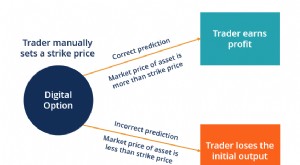 Understanding Digital Options: A Comprehensive Guide for Traders
A digital option is a form of option that allows traders to manually set a strike price. The digital option provides the traders with a fixed payout in the case when the market price of the underlying...
-
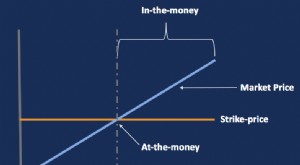 Understanding Exercise Price in Options Trading
The exercise price within an option is the price at which the holder is capable of purchasing the underlying asset. If the market price of the asset is above the exercise price, the holder is capable ...