
Understanding Fiscal Years (FY): Definition & Importance
A Fiscal Year (FY), also known as a budget year, is a period of time used by the government and businesses for accounting purposes to formulate annual financial statementsThree Financial StatementsThe three financial statements are the income statement, the balance sheet, and the statement of cash flows. These three core statements are and reports. A fiscal year consists of 12 months or 52 weeks and might not end on December 31. A period that is set from January 1 to December 31 is called a calendar year.
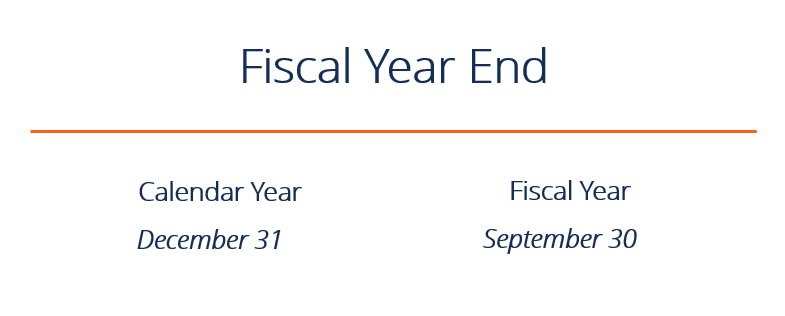
Here is an example of the difference between a calendar year end and a fiscal year end:
Example of Usage
A Fiscal Year (FY) does not necessarily follow the calendar year. It may be a period such as October 1, 2009 – September 30, 2010. Accountants will reference revenue accrued on July 30 as revenue accrued in the fiscal year 2010.
Fiscal years that follow a calendar year would refer to the period between January 1, 2018 and December 31, 2018, for example.
Why Use a Different Fiscal Year?
1. Government fiscal year
The application of a fiscal year is different in different countries. Here are a few examples:
- Australia’s FY starts on July 1 and ends on June 30.
- Austria’s FY is the calendar year, January 1 – December 31.
- The United States Federal Government’s FY starts on October 1 and ends on September 30.
2. Business seasonality
The use of a fiscal year that’s different than the calendar year presents a business opportunity for many companies, such as companies whose business is largely seasonal.
Businesses and organizations may choose their FY based on preference. A good practice of accounting principle suggests closing the FY at the low point of business activity. For example, agriculture companies often end their FY right after harvest season.
Another common example is consumer retail businesses. They have their busiest season in December and January; therefore, they often have their year end as of January 31, so they can capture the entire holiday season in their year-end numbers.
3. Cost savings on accounting and audit fees
Since the majority of businesses have their fiscal year end on December 31, that is when the accounting firms are busiest. Sometimes, businesses will pick a different year end when the accountants are less busy to get a lower rate. This can be particularly true with private businesses who prefer to save money on audit and accounting fees.
Applications in Financial Modeling and Valuation
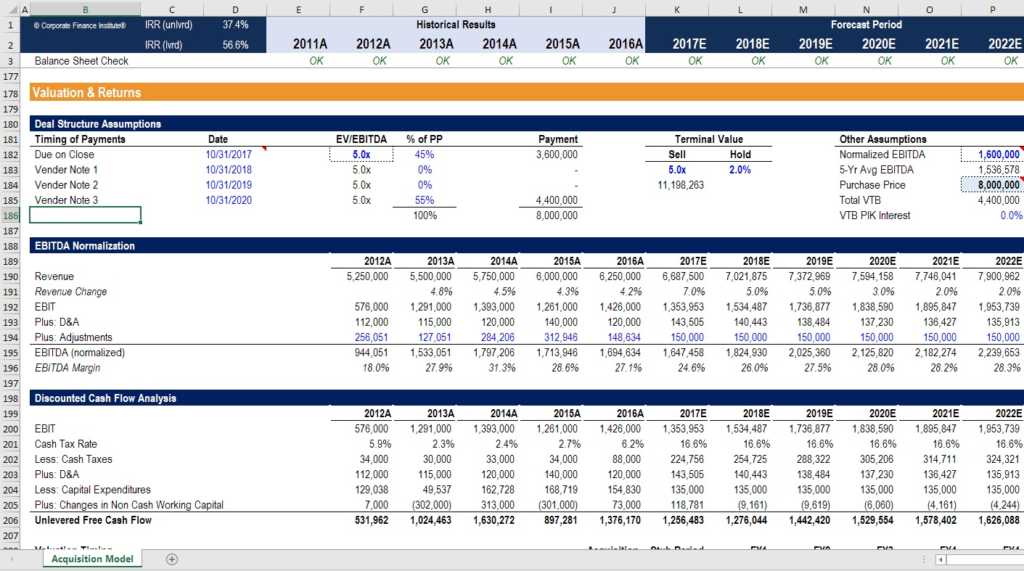
In financial modelingWhat is Financial ModelingFinancial modeling is performed in Excel to forecast a company's financial performance. Overview of what is financial modeling, how & why to build a model. and when performing company valuations,Valuation MethodsWhen valuing a company as a going concern there are three main valuation methods used: DCF analysis, comparable companies, and precedent transactions it’s important to pay close attention to when a company’s fiscal year ends. If comparing two or more companies, adjustments may need to be made to ensure it’s an apples-to-apples comparison.
For this reason, analysts typically use a metric called Last Twelve Months (LTM)LTM (Last Twelve Months)LTM (Last Twelve Months), also known as trailing or rolling twelve months, is a time frame frequently used in connection with financial ratios when comparing companies. LTM removes the issue of different year ends by simply examining the latest 12 months that are available. Read how in our guide to LTM financialsLTM (Last Twelve Months)LTM (Last Twelve Months), also known as trailing or rolling twelve months, is a time frame frequently used in connection with financial ratios.
Additional Resources
CFI is the official provider of the global Financial Modeling & Valuation Analyst (FMVA)®Become a Certified Financial Modeling & Valuation Analyst (FMVA)®CFI's Financial Modeling and Valuation Analyst (FMVA)® certification will help you gain the confidence you need in your finance career. Enroll today! certification program, designed to help anyone become a world-class financial analyst.
Through financial modeling courses, training, and exercises, anyone in the world can become a great analyst. To keep advancing your career, the additional CFI resources below will be useful:
- Analysis of Financial StatementsAnalysis of Financial StatementsHow to perform Analysis of Financial Statements. This guide will teach you to perform financial statement analysis of the income statement,
- Cash Flow GuideValuationFree valuation guides to learn the most important concepts at your own pace. These articles will teach you business valuation best practices and how to value a company using comparable company analysis, discounted cash flow (DCF) modeling, and precedent transactions, as used in investment banking, equity research,
- Finance Interview QuestionsFinance Interview QuestionsFinance interview questions and answers. This list includes the most common and frequent interview questions and answers for finance jobs and
- How To Be a Good Financial AnalystThe Analyst Trifecta® GuideThe ultimate guide on how to be a world-class financial analyst. Do you want to be a world-class financial analyst? Are you looking to follow industry-leading best practices and stand out from the crowd? Our process, called The Analyst Trifecta® consists of analytics, presentation & soft skills
-

Understanding Financial Systems: Institutions & Key Players
A financial system is a network of financial institutions – such as insurance companies, stock exchanges, and investment banksList of Top Investment BanksList of the top 100 investment banks in
-

Understanding Guarantees: Protecting Lenders and Borrowers
A guarantee is a legal promise made by a third party (guarantor) to cover a borrower’s debt or other types of liability in case of the borrower’s defaultDebt DefaultA debt default happens
Accounting
- Understanding Financial Hardship: Causes, Impacts & Relief
- Understanding Auditors: Roles, Responsibilities & Audit Processes
- EBITDARM Explained: A Comprehensive Guide to Financial Analysis
- Eurocurrency Explained: What It Is & How It Works
- Factset: Financial Data & Analytics Solutions for Investment Professionals
- Accounting Explained: Understanding Financial Records & Reporting
- Understanding Financial Audits: A Comprehensive Guide
- Calendarization of Financial Statements: Standardization Explained
- Understanding Finance: A Comprehensive Overview
-
 Understanding Financial Performance: A Comprehensive Overview
Financial performance is a complete evaluation of a company’s overall standing in categories such as assets, liabilities, equity, expenses, revenue, and overall profitability. It is measured thr...
-
 Comprehensive Financial Planning: Your Path to Financial Security
A financial plan is a document that covers an individual’s current financial situation, short-term and long-term economic goals, and an in-depth strategy to achieve the goals. A finan...