
Understanding Financial Systems: Institutions & Key Players
A financial system is a network of financial institutions – such as insurance companies, stock exchanges, and investment banksList of Top Investment BanksList of the top 100 investment banks in the world sorted alphabetically. Top investment banks on the list are Goldman Sachs, Morgan Stanley, BAML, JP Morgan, Blackstone, Rothschild, Scotiabank, RBC, UBS, Wells Fargo, Deutsche Bank, Citi, Macquarie, HSBC, ICBC, Credit Suisse, Bank of America Merril Lynch – that work together to exchange and transfer capital from one place to another. Through the financial system, investors receive capital to fund projects and receive a return on their investments.

Summary
- A financial system can be perceived on a company, regional, or global scale, which facilitates the practice of exchanging funds between one entity to another.
- It involves various players such as insurance companies, stock exchanges, investment banks, and more.
- Financial systems are regulated, as their processes influence and contribute to the growth of many assets.
Understanding Financial Systems
Financial markets involve various players, including borrowers, lenders, and investors that negotiate loans for investment purposes. The borrowers and lenders tend to trade money in exchange for a return on the investment at some future date. Derivative instruments are also traded in the financial markets as well, which are contracts that are determined based on an underlying asset’s performance.
When determining the guidelines of raising capital within a financial system, the project being funded and who funds them are decided upon by the planner, who can be a business manager. Thus, the financial system is typically organized through central planning, a market economyMarket EconomyMarket economy is defined as a system where the production of goods and services are set according to the changing desires and abilities of, or a combination of both.
A centrally planned economy is structured around a central authority, such as a government, which makes economic decisions regarding the manufacturing and distribution of products for a specific country. A market economy is when the pricing of goods and services is dictated by the aggregated decision of citizens and business owners, often resulting in the effects of supply and demand.
Financial markets operate within a government regulatory framework that filters the sort of transactions that can be conducted. Financial systems are heavily regulated due to their influence and facilitation capabilities to contribute to the growth of real assets.
Financial System Components
The financial system is composed of many components depending on the level. From a company’s perspective, its financial system includes procedures that follow its financial activities. It would include aspects such as finances, accounting, revenue, expenses, wages, and more.
From a regional standpoint, the financial system, as mentioned above, facilitates the exchange of funds between borrowers and lenders. Players on a regional level would include banks and other financial institutions such as clearinghouses.
On a global scale, the financial system includes the interactions between financial institutions, investors, central banks, government authorities, the World Bank, and more.
Example
An example of one player within the financial system is the Bank of Canada (BoC). The BoC promotes economic and financial welfare for Canadians by cultivating a financial system whereby banks, credit unions, financial markets, and other factors interact to ensure the economic landscape continues to operate effectively for its citizens. The BoC achieves its objectives through the following:
- Providing central bank services such as liquidity and credit facilities: The Bank of Canada sources liquid funds to the financial system and is often known as the lender of last resort.
- Developing and implementing national policy: The federal government introduces legislation to implement a new retail payments framework. The BoC would oversee the service with operational and financial requirements, ensuring regulations are maintained.
- Oversees financial market infrastructures: The Canadian central bank conducts regulatory oversight and acts as the resolution authority for financial market infrastructures. They include payments systems and clearing and settlement systems.
List of Financial System Banks
Banks
- Public banks
- Commercial banksCommercial BankA commercial bank is a financial institution that grants loans, accepts deposits, and offers basic financial products such as savings accounts.
- Central banks
- Cooperative banks
- State-managed cooperative banks
- State-managed land development banks
Non-Bank Financial Institutions
- Finance and loan companies
- Insurance companies
- Mutual fundsMutual FundsA mutual fund is a pool of money collected from many investors for the purpose of investing in stocks, bonds, or other securities. Mutual funds are owned by a group of investors and managed by professionals. Learn about the various types of fund, how they work, and benefits and tradeoffs of investing in them
More Resources
CFI offers the Capital Markets & Securities Analyst (CMSA)®Program Page - CMSAEnroll in CFI's CMSA® program and become a certified Capital Markets &Securities Analyst. Advance your career with our certification programs and courses. certification program for those looking to take their careers to the next level. To keep learning and developing your knowledge base, please explore the additional relevant resources below:
- Federal Reserve (The Fed)Federal Reserve (The Fed)The Federal Reserve is the central bank of the United States and is the financial authority behind the world’s largest free market economy.
- Life and Health InsurersLife and Health InsurersLife and health (L&H) insurers are companies that provide coverage on the risk of loss of life and medical expenses incurred from illness or injuries. The customer - the purchaser of the insurance policy - pays an insurance premium for the coverage.
- Supply and DemandSupply and DemandThe laws of supply and demand are microeconomic concepts that state that in efficient markets, the quantity supplied of a good and quantity
- World Bank GroupWorld Bank GroupThe World Bank Group is a multilateral development bank that was conceived in 1946 as one of the two Bretton Woods institutions, along with
-

Understanding Financial Hardship: Causes, Impacts & Relief
Different programs make hardship decisions based on different criteria. Financial hardship usually refers to a situation in which a person cannot keep up with debt payments and bills. This pa
-

Defining Financial Success: Goals & Strategies for a Secure Future
Monetary success is difficult to define in concrete terms. Even though everyone has their own definitions, there is plenty of advice on how to plan for a better financial futu
finance
- Understanding Auditors: Roles, Responsibilities & Audit Processes
- EBITDARM Explained: A Comprehensive Guide to Financial Analysis
- Eurocurrency Explained: What It Is & How It Works
- Factset: Financial Data & Analytics Solutions for Investment Professionals
- Understanding Finance: A Comprehensive Overview of Key Concepts
- Understanding Financial Crises: Causes, Impacts, and Examples
- Financial Engineering: Principles, Applications & Career Paths
- Understanding Your Financial Health: A Comprehensive Guide
- Financial Inclusion: Definition, Benefits & Impact
-
 Financial Analysis: A Comprehensive Guide for Professionals
Financial analysis involves using financial dataFinancial DataWhere to find data for financial analysts - Bloomberg, CapitalIQ, PitchBook, EDGAR, SEDAR and more sources of financial data for financial...
-
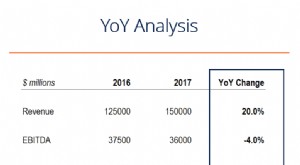 YoY Analysis: Understanding Year-over-Year Growth & Financial Insights
YoY stands for Year over Year and is a type of financial analysisAnalysis of Financial StatementsHow to perform Analysis of Financial Statements. This guide will teach you to perform financial stateme...