
Inventory Valuation: A Comprehensive Guide for Businesses
Inventory valuation refers to the practice of accounting for the value of a business’ inventoryInventoryInventory is a current asset account found on the balance sheet, consisting of all raw materials, work-in-progress, and finished goods that a. Business inventories refer to all the supplies that a business requires to operate, and that are either utilized in the production process or sold off to customers. For example, a bakery would consider inputs such as flour, sugar, or icing as raw materials inventory. Additionally, the bakery could consider fresh baked goods as sales inventory that is awaiting purchase from customers.

Generally speaking, inventory is costly to hold, and operating with as small of an inventory as possible is oftentimes optimally profitable. Inventories require a place to hold them, a practice which may entail businesses to purchase storage facilities.
For example, a major clothing brand may need to rent out additional warehouse space in order to accommodate high inventory levels, which is a cost that might have been avoided if the business was able to operate safely with less inventory on hand.
Inventories also tend to lose value, or depreciateDepreciation MethodsThe most common types of depreciation methods include straight-line, double declining balance, units of production, and sum of years digits., over time. This is particularly true of industries where there are constant changes and advancements in the products offered on the market. For instance, a major electronics store will want to sell off all of its inventory as quickly as possible in order to prevent the items from becoming obsolete in the face of ever-advancing technology.
As obsolescence settles in, the business will then be forced to sell its inventory at a discount in order to clear inventory space for newer items.
How can we value inventories?
Inventory values can be calculated by multiplying the number of items on hand with the unit price of the items. In compliance with GAAPGAAPGAAP, Generally Accepted Accounting Principles, is a recognized set of rules and procedures that govern corporate accounting and financial, inventory values are to be calculated with the lower of the market price or cost to the company.
For example, consider a coffee company with 100 pounds of coffee beans in inventory. The market price of coffee at the date of the inventory valuation was $2/lb., whereas the cost of the coffee to the company at the time of purchase was $1.50/lb. Thus, GAAP would require accounting to use the lower of the two numbers – in this case, the cost price of $1.50/lb. Thus, the inventory would be worth 100 lbs x $1.5/lb = $150.
Given this baseline, there are two main methods that auditors use to calculate the value of business inventories:
1. Item-by-Item Method
The item-by-item method utilizes the principle described above and calculates the inventory value based on the lower of cost price and market price. Below is an example of how this method would apply to a lawnmower producer:

Once we have identified which price is lower, we can calculate the value of each type of item in inventory by multiplying the price by the inventory quantity. Using the Item-by-Item method, we see that the total inventory value is $770,000.
2. Major Category Method
The major category method groups inventories into major categories. For our lawnmower example, we might group inventories by engine size. This method involves calculating the value of the inventories using solely market price and cost price. Using the same numbers as with the item by item method:

Using the major category method, we obtain an inventory value of $810,000.
Additional Resources
CFI offers the Financial Modeling & Valuation Analyst (FMVA)Become a Certified Financial Modeling & Valuation Analyst (FMVA)®CFI's Financial Modeling and Valuation Analyst (FMVA)® certification will help you gain the confidence you need in your finance career. Enroll today!®Become a Certified Financial Modeling & Valuation Analyst (FMVA)®CFI's Financial Modeling and Valuation Analyst (FMVA)® certification will help you gain the confidence you need in your finance career. Enroll today! certification program for those looking to take their careers to the next level. To learn more about related topics, check out the following CFI resources:
- NPV FunctionNPV FunctionThe NPV Function is categorized under Excel Financial functions. It will calculate the Net Present Value (NPV) for periodic cash flows. The NPV will be calculated for an investment by using a discount rate and series of future cash flows. In financial modeling, the NPV function is useful in determining the value of a business
- Internal Rate of Return (IRR)Internal Rate of Return (IRR)The Internal Rate of Return (IRR) is the discount rate that makes the net present value (NPV) of a project zero. In other words, it is the expected compound annual rate of return that will be earned on a project or investment.
- Payback PeriodPayback PeriodThe payback period shows how long it takes for a business to recoup an investment.
- DCF Model TemplateDCF Model TemplateThis DCF model template provides you with a foundation to build your own discounted cash flow model with different assumptions
-

Inventory Auditing: A Comprehensive Guide for Businesses
Auditing inventory is the process of cross-checking financial records with physical inventory and records. It can be completed by auditorsAuditorAn auditor is a person or a firm assigned to perform an
-
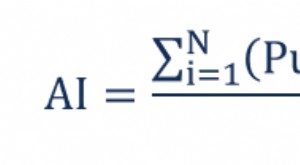
Understanding Average Inventory: Definition & Calculation
The average inventory is the mean value (that can be different from the median value) of an inventory during a determined period of time. The average inventory is thus a mathematical calculation. It e
Accounting
- Inventory Turnover Ratio: Definition & Calculation | AccountingTools
- Understanding Shadow Inventory: What Banks Hold & What It Means for the Market
- Understanding Throughput: A Key Metric for Business Efficiency
- Commodity Valuation: Understanding Intrinsic Value & Market Pricing
- Understanding Divergence in Technical Analysis: A Guide
- Understanding Forward Prices: Definition & How They Work
- Understanding Hedging Strategies: A Comprehensive Guide
- Understanding Inventory: Definition & Importance in Financial Statements
- Inventory Shrinkage: Causes, Impact & Reconciliation
-
 Understanding Clearing Prices in Stock Trading: A Comprehensive Guide
Clearing price is a term that is often used in the stock market. If you plan on trading the market, you need to understand what the clearing price is and how it affects you as an investor. Bid a...
-
Understanding Candlestick Charts: A Cryptocurrency Trading Guide
In our “Cryptocurrency Trading 101” series, we are exploring the basic principles of cryptocurrency trading. Some of the recent topics we covered include the following.Crypto Trading 101: Exchange Ord...