
Inventory Turnover Ratio: Definition & Calculation | AccountingTools
Inventory turnover, or the inventory turnover ratio, is the number of times a business sells and replaces its stock of goods during a given period. It considers the cost of goods soldAccountingOur Accounting guides and resources are self-study guides to learn accounting and finance at your own pace. Browse hundreds of guides and resources., relative to its average inventoryInventoryInventory is a current asset account found on the balance sheet, consisting of all raw materials, work-in-progress, and finished goods that a for a year or in any a set period of time.
A high inventory turnover generally means that goods are sold faster and a low turnover rate indicates weak sales and excess inventories, which may be challenging for a business.
Inventory turnover can be compared to historical turnover ratios, planned ratios, and industry averages to assess competitiveness and intra-industry performance. Inventory turns can vary significantly by industry.

Download the Free Template
Enter your name and email in the form below and download the free template now!
How to Calculate Inventory Turnover Ratio?
Inventory Turnover Ratio = (Cost of Goods Sold)/(Average Inventory)
For example:
Republican Manufacturing Co. has a cost of goods sold of $5M for the current year. The company’s cost of beginning inventory was $600,000 and the cost of ending inventory was $400,000. Given the inventory balances, the average cost of inventory during the year is calculated at $500,000. As a result, inventory turnover is rated at 10 times a year.
What is Cost of Goods Sold?
Cost of goods soldAccountingOur Accounting guides and resources are self-study guides to learn accounting and finance at your own pace. Browse hundreds of guides and resources. is an expense incurred from directly creating a product, including the raw materials and labor costs applied to it. However, in a merchandising business, the cost incurred is usually the actual amount of the finished product (plus shipping cost if any is applicable) paid for by a merchandiser from a manufacturer or supplier.
In both types of businesses, the cost of goods sold is properly determined by using an inventory account or list of raw materials or goods purchased that are maintained by the owner of the company.
What is Average Inventory?
Average inventoryInventoryInventory is a current asset account found on the balance sheet, consisting of all raw materials, work-in-progress, and finished goods that a is the average cost of a set of goods during two or more specified time periods. It takes into account the beginning inventory balance at the start of the fiscal year plus the ending inventory balance of the same year.
These two account balances are then divided in half to obtain the average cost of goods resulting in sales.
Average inventory does not have to be computed on a yearly basis; it may be calculated on a monthly or quarterly basis, depending on the specific analysis required to assess the inventory account.
Turnover Days in financial modeling
Below is an example of calculating the inventory turnover days in a financial model. As you can see in the screenshot, the 2015 inventory turnover days is 73 days, which is equal to inventory divided by cost of goods sold, times 365. You can calculate the inventory turnover ratio by dividing the inventory days ratio by 365 and flipping the ratio. In this example, inventory turnover ratio = 1 / (73/365) = 5. This means the company can sell and replace its stock of goods five times a year.
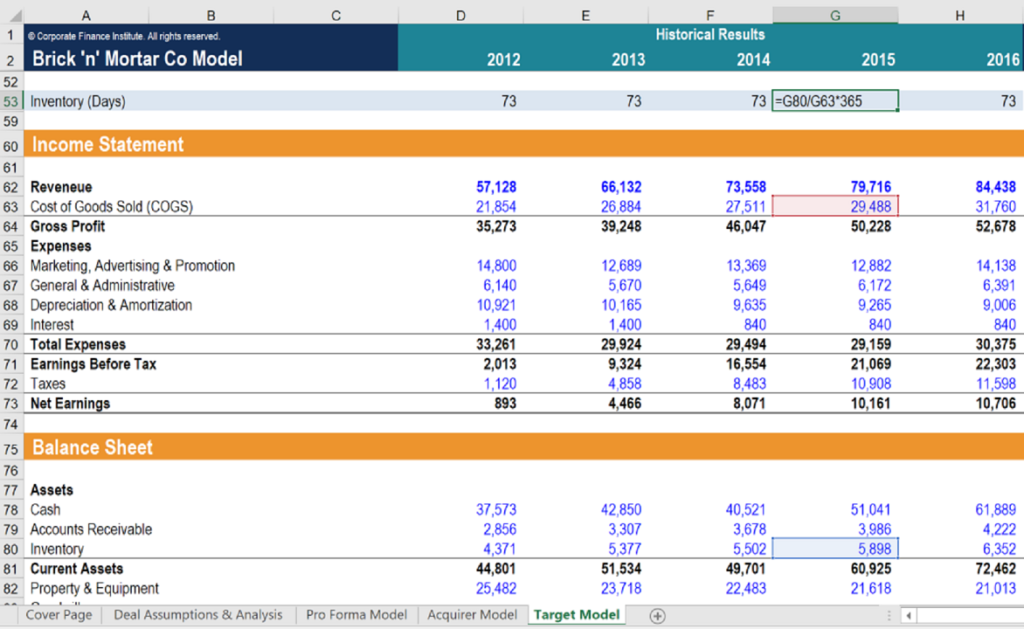
Source: CFI financial modeling courses.
Importance of Inventory Turnover for a Business
One way to assess business performance is to know how fast inventory sells, how effectively it meets the market demand, and how its sales stack up to other products in its class category. Businesses rely on inventory turnover to evaluate product effectiveness, as this is the business’s primary source of revenue.
Higher stock turns are favorable because they imply product marketability and reduced holding costs, such as rent, utilities, insurance, theft, and other costs of maintaining goods in inventory.
Another purpose of examining inventory turnover is to compare a business with other businesses in the same industry. Companies gauge their operational efficiency based upon whether their inventory turnover is at par with, or surpasses, the average benchmark set per industry standards.
Additional resources
Thank you for reading this guide to better evaluating how inventory turns at a company. To keep learning and advancing your career as a financial analyst, these additional CFI resources will help you:
- How to link the 3 financial statementsCFI Webinar - Link the 3 Financial StatementsThis CFI quarterly webinar provides a live demonstration of how to link the 3 financial statements in Excel. Learn the formulas and proper linking procedure
- Understanding free cash flowValuationFree valuation guides to learn the most important concepts at your own pace. These articles will teach you business valuation best practices and how to value a company using comparable company analysis, discounted cash flow (DCF) modeling, and precedent transactions, as used in investment banking, equity research,
- What is financial modelingWhat is Financial ModelingFinancial modeling is performed in Excel to forecast a company's financial performance. Overview of what is financial modeling, how & why to build a model.
- Free financial modeling guidesFinancial ModelingFree financial modeling resources and guides to learn the most important concepts at your own pace. These articles will teach you financial modeling best practices with hundreds of examples, templates, guides, articles, and more. Learn what financial modeling is, how to build a model, Excel skills, tips and tricks
-

MRO Inventory: A Comprehensive Guide for Businesses
Most companies need to maintain a stock of spare parts, supplies and other materials that help keep their busin
-

Activity Ratios: A Comprehensive Guide to Operational Efficiency
Activity ratios are financial metrics used to gauge how efficient a company’s operations are. The term can include several ratios that can apply to how efficiently a company is employing its cap
finance
- Asset Turnover Ratio: Definition & Importance
- Inventory Turnover Ratio: Definition & Calculation
- Understanding Shadow Inventory: What Banks Hold & What It Means for the Market
- Understanding Throughput: A Key Metric for Business Efficiency
- Understanding Annual Turnover: A Key Fund Performance Metric
- Inventory Auditing: A Comprehensive Guide for Businesses
- Understanding Average Inventory: Definition & Calculation
- Understanding Inventory: Definition & Importance in Financial Statements
- Inventory Shrinkage: Causes, Impact & Reconciliation
-
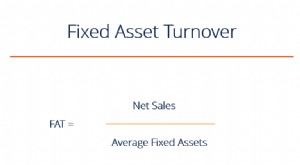 Fixed Asset Turnover Ratio: Calculation & Importance
Fixed Asset Turnover (FAT) is an efficiency ratio that indicates how well or efficiently a business uses fixed assets to generate sales. This ratio divides net sales by net fixed assets, calculated ov...
-
 SKU: Understanding Stock Keeping Units for Inventory Management
SKU (Stock Keeping Unit) is a product code that you can use to search and identify stock on hand from lists, invoices, or order forms. It is a term that is typically used when talking about inventory ...