
Zero-Based Budgeting: A Comprehensive Guide for Businesses
Zero-based budgeting is a type of budgeting that is used by many different companies in the world today. Here are the basics of zero-based budgeting and how it can help you as a company.
Zero-Based Budgeting
With zero-based budgeting, the budget always starts out at zero, for every time period. You start out at zero and then add every expense that you think you might have over the course of a certain time period. For example, you might look at what you expect to spend over the next quarter. Therefore, each individual department in the company has to justify each aspect of their budget for that interval. This requires a much more detailed look at each financial transaction and budget need.
Many companies are turning to this as a way to stay on top of their financial transactions and eliminate wasteful spending. With incremental budgeting, this often leads to employees wasting resources just so they do not lose a significant portion of their budget for the future. With zero-based budgeting, you can be more efficient and come up with the exact figure that you need for each time period. While it is more detailed, it can typically save you substantial amount of money overall.
What is the difference between zero based budgeting and incremental budgeting?
Both incremental and zero-based budgeting are commonly used by companies today. The big difference between these two forms of budgeting is in the starting point. With zero-based budgeting, the company starts at zero every time they make a budget for something. The cost of an item has to be justified every time in order to come up with an exact value to allocate to it. With incremental budgeting, the budget from the previous period is used. The business looks at the previous budget and then adds a certain amount of money to it when creating the new budget.
-
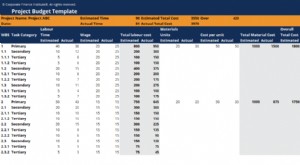
Project Budget: Definition, Template & Cost Estimation
The Project Budget is a tool used by project managers to estimate the total cost of a project. A project budget template includes a detailed estimate of all costs that are likely to be incurred before
-
![Budgeting Software: Types, Features & Comparison - [Year]](https://www.etffin.com/article/uploadfiles/202110/2021100815344465_S.jpeg)
Budgeting Software: Types, Features & Comparison - [Year]
Budgeting software is any computer program that helps an individual or business design, manage, monitor and alter their budgetTypes of BudgetsThere are four common types of budgeting methods that comp
budget
- Bottom-Up Budgeting: A Comprehensive Guide
- Imposed Budgeting: Definition, Pros & Cons | [Your Company Name]
- Negotiated Budgeting: A Collaborative Approach to Financial Planning
- Output/Input Budgeting: A Comprehensive Guide
- Participative Budgeting: Definition, Benefits & Implementation
- Zero-Based Budgeting (ZBB): A Comprehensive Guide
- Incremental Budgeting: Pros, Cons & Why It's Often Problematic
- Zero-Based Budgeting vs. Incremental Budgeting: A Comprehensive Comparison
- Zero-Based Budgeting: A Beginner's Guide to Financial Control
-
 Budget Variance Explained: Causes, Types & Analysis
Budget variance deals with a company’s accounting discrepancies. The term is most often used in conjunction with a negative scenario. An example is when a company fails to accurately budget for ...
-
![Incremental Budgeting: Definition, Pros & Cons | [Your Company Name]](https://www.etffin.com/article/uploadfiles/202110/2021100815150282_S.jpeg) Incremental Budgeting: Definition, Pros & Cons | [Your Company Name]
Incremental Budgeting: Definition, Pros & Cons | [Your Company Name]Incremental budgeting is a type of a budgeting process that is based on the idea that a new budget can best be developed by making only some marginal changes to the current budget. In other words, wit...