
Amazon Seller Fees: A Comprehensive Guide to Costs & Profitability
Selling on Amazon can be an immensely profitable channel for brands.
Yet, like any other channel, it is essential that you understand the fees associated with selling on Amazon to get a clear picture of your full cost – and true Amazon revenue.
Far too many Amazon sellers have played the game to win the buy box or drive an immense amount of sales on a new private label product, reducing the price so much so that no margin exists once it is sold.
Amazon changes fees for FBA, for selling on Amazon to begin with and much more.
This guide will walk you through exactly what Amazon fees are, how much you’ll be charged and how to do the proper math to make sure your Amazon revenue keeps you in the green.
What are Amazon’s Current Selling Fees?
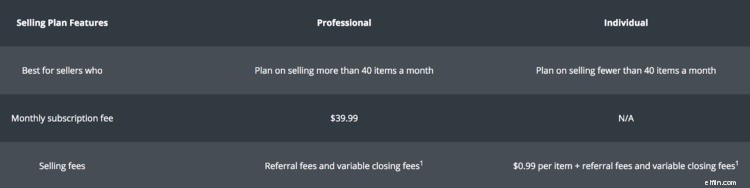
Amazon sellers can choose between a Professional or Individual plan.
- Individual sellers pay $0.99 for each item sold on the marketplace, in addition to variable closing fees ranging from $0.45 to $1.35.
- Professional sellers pay variable closing fees and referral fee percentages ranging from 6% to 25% (an average of 13%). Professional sellers also pay $39.99 per month, but they are exempt from the $0.99 per item fee.
1. Monthly subscription charges.
If you are a professional seller (someone planning to sell more than 40 items per month), merchant fees are $39.99 per month.
If you plan on selling fewer than 40 items per month, your upfront fees are $0, but you pay $0.99 per product sold.
2. The per-item fee.
Non-professional sellers (i.e. individual sellers) pay $0.99 per product sold.
Professional sellers pay $0.
3. Referral fees.
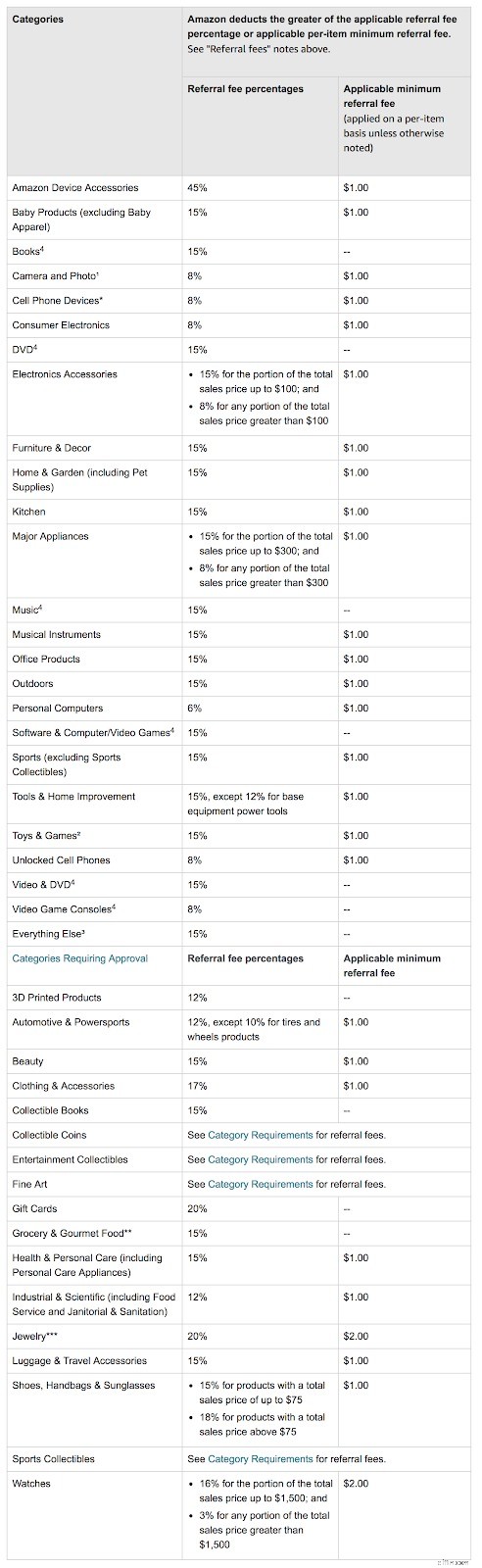
Amazon referral fees are based on product category.
Items in several categories have a per-item minimum referral fee (i.e., sellers pay the greater of the referral fee or the per-item minimum referral fee).
Amazon will charge whichever of these two is higher for each item:
- Referral Fee as a percentage of sale price: It ranges from 6% to 20% (45% for Amazon devices), but it’s usually 15%.
- Minimum Referral Fee of either $0 or $1: Jewelry and watches are the only two categories with a rate of $2.
Here is a chart provided by Amazon to help you determine referral fees for your specific product and category.
4. Variable closing fees.
These apply strictly to books, music, videos, DVDs, video games, consoles and software (BMVD products), and they will vary according to category, shipping destination and the type of shipping service used.
5. Fulfillment fees.
These fees are based on product dimensions and weight.
This charge is typically between $2.41 and $10 for most products, though the price is increasing in 2020.
Use this calculator to determine what your fulfillment fees will be: https://fees.sellerlocker.com/.
Why Amazon Sellers Need This Multidimensional Methodology
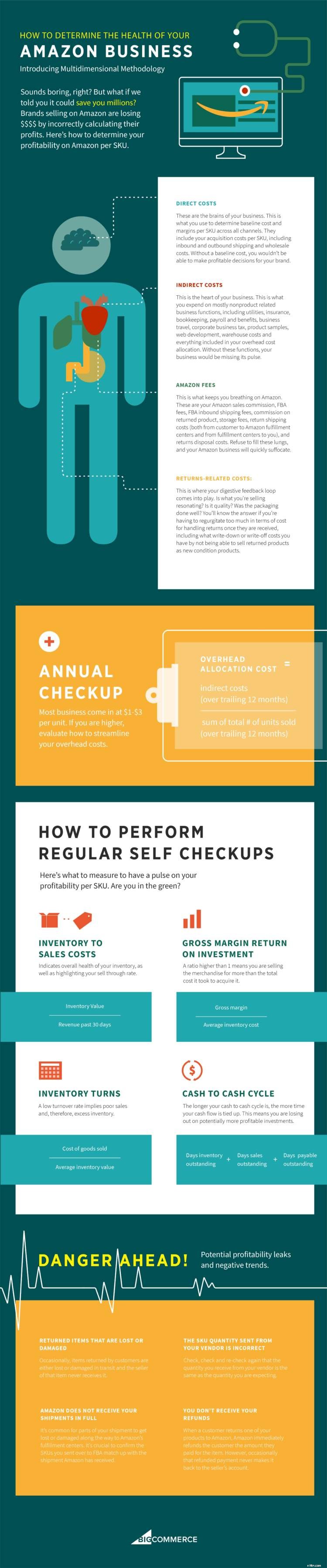
Beyond the fees, however, the biggest reason most businesses lose so much on Amazon is because they’re using one-dimensional metrics to determine profitability.
You can’t tell a person’s health by simply checking their heart rate, so why would you do the same for your Amazon business?
To effectively evaluate your profitability, you must analyze every aspect to determine your overall inventory health.
This is what we call the Multidimensional Methodology.
Check out the infographic below for a visual walk-through, and then read through the methodology and how to do it following the graphic.
-

Chapter 7 Bankruptcy & Asset Protection: What You Need to Know
Chapter 7 bankruptcy helps you start over financially by paying off the creditors that you can and discharging your debts to the ones that you cannot. Before you file for Chapter 7 bankruptcy, i
-
Chapter 13 Bankruptcy & Property Protection: What You Need to Know
Chapter 13 bankruptcy is one of the most commonly filed forms of bankruptcy in the country. Many people wonder what will happen to their property during the filing of Chapter 13 bankruptcy. Here
Business
- Essential Ecommerce Metrics: Formulas, Benchmarks & Insights
- Amazon Seller Account Setup: A Comprehensive Checklist for Success
- Amazon Buy Box: A Comprehensive Guide for Sellers
- Integrating BigCommerce with Amazon: A Step-by-Step Guide
- Amazon Sales Growth: 55 Essential Tips to Boost Your Business
- Amazon Seller Fees: A Comprehensive Guide to Costs & Profitability
- Amazon SEO Mastery: Rank Higher & Boost Sales in 2024
- Maximize Amazon Profits: A Guide to Earning $5,000/Hour
- Amazon Advertising & PPC: A Comprehensive Guide for Beginners
-
 Fixed vs. Variable Costs: A Managerial Accounting Guide
Cost is something that can be classified in several ways, depending on its nature. One of the most popular methods is classification according to fixed costs and variable costs. Fixed costs do not cha...
-
Chapter 13 Bankruptcy Costs: Fees & Expenses Explained
In order to file Chapter 13 bankruptcy, you will be responsible for paying some fees and costs. Here are a few things to consider about the costs of filing a Chapter 13 bankruptcy. Cost of Filin...