
Corporate Actions: Definition, Types & Impact | [Your Company Name]
A corporate action is a move – enacted by a publicly-traded company – that encourages or furthers processes that have a direct impact on whatever assets the company issues. In other words, any actions (conducted by a company) that materially alter or otherwise change the company can be considered corporate actions.
![Corporate Actions: Definition, Types & Impact | [Your Company Name]](https://www.etffin.com/Article/UploadFiles/202110/2021100815410257.jpeg)
Summary:
- A corporate action is any action taken by a company – generally enacted by its board of directors – that has a material impact on the company and its shareholders.
- Corporate actions involve either changing a company’s name/brand, mergers, acquisitions, spinoffs, or issuing dividends.
- Corporate actions fall into one of three categories: (1) Mandatory (shareholders effectively have no choice as to their participation); (2) Mandatory with options (the board of directors carries out an action but provide shareholders with a choice of options); and (3) Voluntary (each shareholder decides if he will participate in the action or not).
How It Works
Publicly-traded companies are frequently overseen by a board of directorsBoard of DirectorsA board of directors is a panel of people elected to represent shareholders. Every public company is required to install a board of directors. – individuals closely tied to the company – who are elected to serve in various positions. The directors approve any corporate actions taken, most commonly through a vote. (In some cases, the company’s shareholders are given the opportunity to vote on some or all corporate actions the company takes).
Corporate actions, however, exert an impact on the individuals that are tied to a company. The concerned parties include:
- Preferred and/or common shareholders
- StakeholdersStakeholderIn business, a stakeholder is any individual, group, or party that has an interest in an organization and the outcomes of its actions. Common examples
- Bondholders
Examples of Corporate Actions
There is a substantial range of actions that can be considered corporate actions. Examples include (but are not limited to):
- Changing a company’s name or the design of the brand
- Handling pertinent financial issues (such as the company needing to liquidate or file for bankruptcyBankruptcyBankruptcy is the legal status of a human or a non-human entity (a firm or a government agency) that is unable to repay its outstanding debts)
- Merging with or acquiring another company
- Forming spin-off companies
Types of Corporate Actions
The three basic types of corporate actions include:
1. Mandatory
Mandatory corporate actions are enacted by a company’s board of directors. A mandatory action – such as the issuance of a cash dividend – affects all of the company’s shareholders. It is performed by the governing body of the company. Shareholders need to do nothing aside from collecting the cash dividend on their shares.
In addition to dividends, other actions classified as mandatory include spin-offsSpin-OffA corporate spin-off is an operational strategy used by a company to create a new business subsidiary from its parent company. , stock splits, and mergers. “Mandatory,” in this context, means that shareholders have no choice but to accede to the action being taken.
2. Mandatory (with several options)
Mandatory corporate actions with options offer shareholders a choice between different options. Using the example of dividends again, with this type of action, the company offers dividends in the form of stock shares or cash dividends, with the former being the default option. The shareholder may choose the form of a dividend payout. In the event that the shareholder doesn’t submit a choice, the default option (shares of company stock) is the form that the dividend will be provided in.
3. Voluntary
Voluntary corporate actions involve an activity in which shareholders opt to be participants. In order for the company to move forward with the corporate action, the shareholders must respond.
A prime example of a voluntary action is a tender offer. Because it is voluntary, shareholders may participate in the tender offer or refuse. Each shareholder must submit a response regarding his or her participation. Any shareholder who chooses to tender shares at the predetermined price will then receive a payout from the sale.
Additional Resources
CFI offers the Financial Modeling & Valuation Analyst (FMVA)™Become a Certified Financial Modeling & Valuation Analyst (FMVA)®CFI's Financial Modeling and Valuation Analyst (FMVA)® certification will help you gain the confidence you need in your finance career. Enroll today! certification program for those looking to take their careers to the next level. To keep learning and advancing your career, the following CFI resources will be helpful:
- Dividend PolicyDividend PolicyA company’s dividend policy dictates the amount of dividends paid out by the company to its shareholders and the frequency with which the dividends are paid
- M&A ProcessMergers Acquisitions M&A ProcessThis guide takes you through all the steps in the M&A process. Learn how mergers and acquisitions and deals are completed. In this guide, we'll outline the acquisition process from start to finish, the various types of acquirers (strategic vs. financial buys), the importance of synergies, and transaction costs
- Private vs Public CompanyPrivate vs Public CompanyThe main difference between a private vs public company is that the shares of a public company are traded on a stock exchange, while a private company's shares are not.
- Strategic AlliancesStrategic AlliancesStrategic alliances are agreements between independent companies to cooperate in the manufacturing, development, or sale of products and services.
-
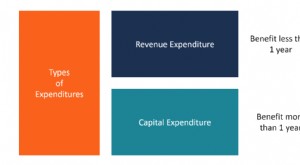
Understanding Expenditures: Definition and Types
An expenditure represents a payment with either cash or credit to purchase goods or services. An expenditure is recorded at a single point in time (the time of purchase), compared to an expenseAccrued
-
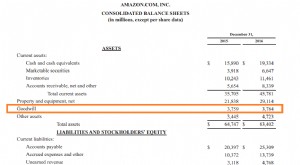
Goodwill in Accounting: Definition & Value
In accounting, goodwill is an intangible assetIntangible AssetsAccording to the IFRS, intangible assets are identifiable, non-monetary assets without physical substance. Like all assets, intangible as
Business strategy
- Acquirer Definition: Understanding Corporate Acquisitions
- Understanding Clawbacks: Protecting Stakeholders from Failed Performance
- Understanding Corporate Reorganization Clauses: A Comprehensive Guide
- Holding Companies: Definition, Purpose & How They Work
- Kaizen: Understanding Continuous Improvement for Business
- Outsourcing: A Comprehensive Guide to Benefits & Strategy
- Ramp-Up: Definition, Benefits & How to Achieve It
- Streamlining Processes: Definition, Benefits & Techniques
- Understanding Corporate Actions: A Beginner's Guide
-
 Understanding Net-Net: A Financial Health Indicator
Net-net is a term used for a company with a market capitalization that is less than the difference between the company’s current assets and total liabilities. The equation does not consider long...
-
 EBITA Explained: Understanding Earnings Before Interest, Taxes, and Amortization
EBITA is an acronym that refers to the earnings of a company before interest, tax, and amortization expenses are deducted. Investors use EBITA as an indicator to measure the profitability and efficien...