
Streamlining Processes: Definition, Benefits & Techniques
Streamlining refers to the improvement of the efficiency of a certain process within an organization. It can be done by automationExcel vs Automation in Financial ModelingBefore we discuss Excel vs automation in financial modeling, let's take a look first at building financial models. Financial modeling involves creating an, simplification of tasks, or elimination of unnecessary steps using modern techniques and technology.
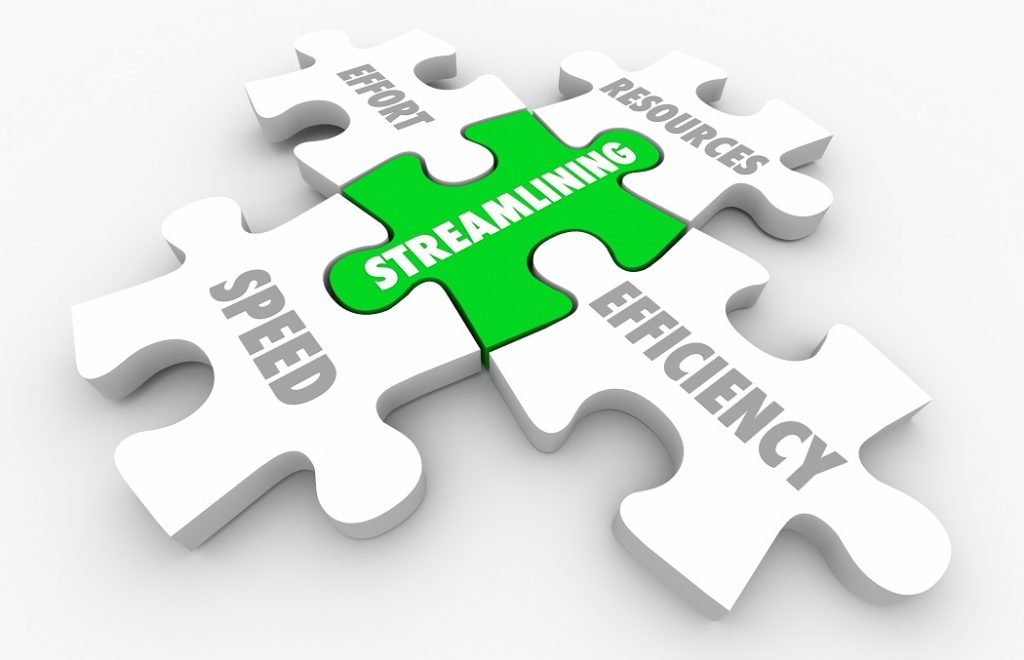
Streamlining means optimization. Companies strive for more efficient and automated operations to minimize costsFixed and Variable CostsCost is something that can be classified in several ways depending on its nature. One of the most popular methods is classification according and maximize profits.
Quick Summary
- Streamlining is the optimization of business processes within an organization. Fully optimized and automated operations help businesses achieve their highest potential, saving time, and minimizing risks.
- Companies should think of working capital processes to be automated and streamlined.
- Implementing an information system to help employees easily access needed databases from other departments can significantly improve inter-departmental efficiency.
Streamlining Financial Processes for Growth
Finance departments are responsible for an organization’s entire cash flow. They monitor all cash inflows and outflows, making sure that money is paid and received properly.
When a company grows at a very fast rate, the quantity of documentation and invoices increases as well. Suppose project managers regularly request the finance team to provide reports about their budgets. This puts pressure on the finance team to keep up with the rapid growth, increasing operational riskRiskIn finance, risk is the probability that actual results will differ from expected results. In the Capital Asset Pricing Model (CAPM), risk is defined as the volatility of returns. The concept of “risk and return” is that riskier assets should have higher expected returns to compensate investors for the higher volatility and increased risk.. To address the issue, the company can opt to hire more employees; however, that does not address the root of the problem.
If hiring is not the solution, how will the company streamline financial processes so that risks are minimized?
The company can transfer more responsibility and accountability to budget managers outside of the finance department. One solution is to automate the budgeting processBudgetingBudgeting is the tactical implementation of a business plan. To achieve the goals in a business’s strategic plan, we need some type of budget that finances the business plan and sets measures and indicators of performance.. The company can provide an online dashboard of budget allocations for each project manager.
By doing so, project managers will gain instant, automated access to their budget reports. They will also be able to see the impact of their project decisions on cash inflows and outflows. This helps solve the scalability problem of the finance team.
Streamlining Efficiency with Working Capital
Streamlining efficiency with working capital is very important for a business. Let us look at some strategies that organizations utilize to streamline efficiency.
A company can eliminate errors by automating the processes of collecting account receivables and paying account payables. The manual work of preparing invoices and settling payables can lead to mistakes that will slow things down in the long term. It is worth it to invest in technical systems to automate the accounts receivable and accounts payable processes.
Another strategy can be using non-cash options. Vendors and customers can receive and send payments online through a payment platform, bank (wire) transfers, or credit cards so that everything is streamlined in one place.
One other strategy is to centralize supplier and customer information, so everyone in the company who needs access to the database is aware of where to go and how to find it. For example, information systems are extensively used by business entities and are becoming more and more popular. They speed up the communication process between the departments. This is especially critical in relation to requesting information from other departments.
Finally, one can standardize the terms for collections and payments, which means saving time for team members. They will not need to spend significant amounts of time managing complicated systems with various terms relevant to customers and suppliers.
The main point is that all the options above aim to significantly improve efficiency for the company.
Additional Resources
CFI offers the Commercial Banking & Credit Analyst (CBCA)™Program Page - CBCAGet CFI's CBCA™ certification and become a Commercial Banking & Credit Analyst. Enroll and advance your career with our certification programs and courses. certification program for those looking to take their careers to the next level. To keep learning and developing your knowledge base, please explore the additional relevant CFI resources below:
- Dashboard Creation in ExcelDashboard Creation in ExcelThis guide to dashboard creation in Excel will teach you how to build a beautiful dashboard in Excel using data visualization techniques from the pros. In
- Online Payment CompaniesOnline Payment CompaniesOnline payment companies are responsible for handling online or internet-based methods of payment. Examples include PayPal, Alipay, and Google Pay.
- Operations ManagementOperations ManagementOperations management is a field of business concerned with the administration of business practices to maximize efficiency within the organization. It
- Research & Development (R&D)Research and Development (R&D)Research and Development (R&D) is a process by which a company obtains new knowledge and uses it to improve existing products and introduce
-
![Corporate Actions: Definition, Types & Impact | [Your Company Name]](https://www.etffin.com/article/uploadfiles/202110/2021100815410257_S.jpeg)
Corporate Actions: Definition, Types & Impact | [Your Company Name]
A corporate action is a move – enacted by a publicly-traded company – that encourages or furthers processes that have a direct impact on whatever assets the company issues. In other words,
-

Understanding Cross-Holding: Risks & Implications
Cross holding, also referred to as cross shareholding, describes a situation where one publicly-traded company holds a significant number of shares of another publicly-traded company. The shares owned
Business strategy
- Acquirer Definition: Understanding Corporate Acquisitions
- Understanding Clawbacks: Protecting Stakeholders from Failed Performance
- Understanding Financial Gearing: Debt & Leverage Explained
- Leverage in Finance: Strategies, Types & Risks
- Parent Company Explained: Definition, Control & Examples
- Holding Companies: Definition, Purpose & How They Work
- Kaizen: Understanding Continuous Improvement for Business
- Outsourcing: A Comprehensive Guide to Benefits & Strategy
- Ramp-Up: Definition, Benefits & How to Achieve It
-
 Understanding Associate Companies: Definition & Ownership
An associate company, also known as an affiliate company, is a company in which a notable portion of shares is owned by a parent company. The portion usually lies between 20% and 50%. Ownership of hig...
-
 Competitive Advantage: Definition & Key Metrics for Business Success
A competitive advantage is an attribute that enables a company to outperform its competitors. This allows a company to achieve superior marginsOperating MarginOperating margin is equal to operating in...