
Colombian Peso (COP): Currency Overview & Key Facts
The Colombian Peso is the official currency of the Republic of Colombia. The peso is sometimes designated with a standard dollar sign – $ – and at other times denoted as COL$. The forex market symbol for the Colombian peso is COP.
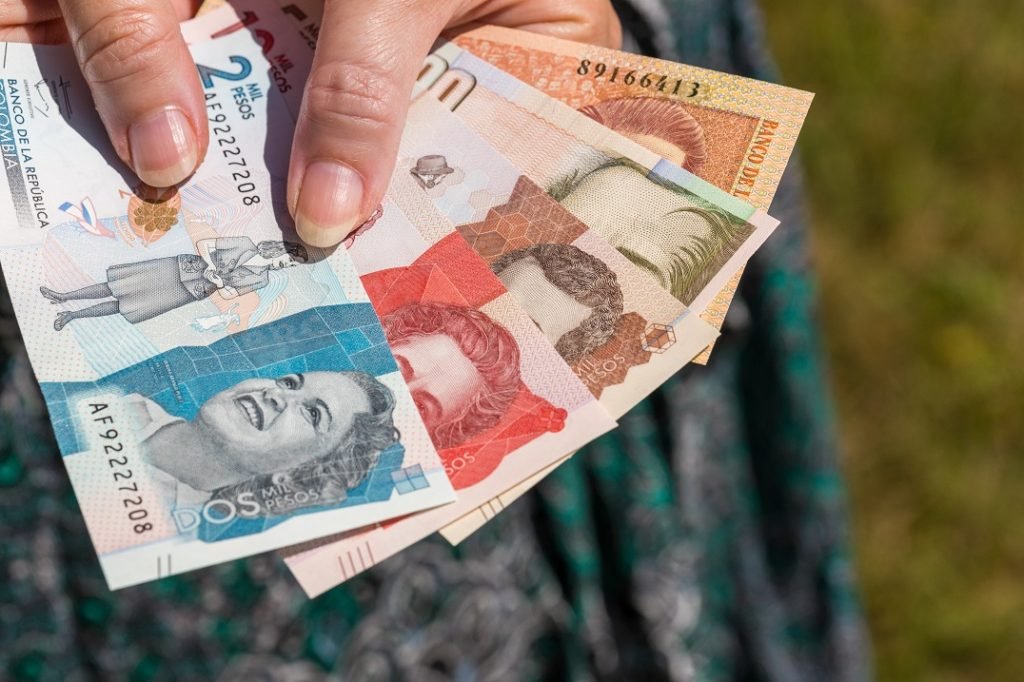
The peso is divided into 100 centavos. However, because the value of Colombia’s currency is extremely low, although 1 centavo and 5 centavo coins still exist, the lowest denomination of the Colombian peso that is commonly used is the 50 pesos coin.
The central bank of Colombia – Banco de la República – is the entity tasked with issuing Colombian currency and with monitoring and controlling the foreign exchange rateExchange RateAn exchange rate is the rate at which one currency can be exchanged for another between nations or economic zones. It is used to determine the for the peso.
Summary
- The Colombian peso is the official currency of the Republic of Colombia.
- Colombian banknotes are printed in denominations of 2,000, 5,000, 10,000, 20,000, 50,000, and 100,000 pesos. Coins are also minted in denominations of 100, 200, 500, and 1,000 pesos.
- The central bank of Colombia – Banco de la República – is the entity tasked with issuing Colombian currency and monitoring and controlling the peso’s foreign exchange rate.
Colombian Peso Currency
The peso was first produced in 1810, when it replaced the Spanish real. At that time, the peso was pegged to the real at an exchange rate of 8 reals to 1 peso. During the rest of the 19th century, Colombian currency included gold and silver coins in varying denominations, up to a 10 peso gold coin. Modern Colombian coins are minted, like those of other currencies, using primarily copper and nickel alloys.
In the early 20th century, the Colombian peso was pegged to the British pound sterling. Still, the government transferred the peg to the US dollarUnited States Dollar (USD)The United States Dollar refers to the national currency of the U.S and is represented by the ISO code USD and is often abbreviated as US$. in 1931 at an exchange rate of 1.05 pesos to 1 US dollar, when Britain abandoned the gold standard. The peg to the US dollar remained until 1949, when continuing inflation in Colombia forced the central bank to abandon the US dollar peg.
Colombia ceased minting all centavos coins – those with a value of less than 1 peso – in 1984. In the most recently minted coin series in Colombia – the 2012 series – the lowest denominationDenominationA denomination is a classification for the face value of a financial instrument. This includes financial instruments such as bonds, currency coin minted and in circulation is the 50 pesos coin. Coins are also minted in denominations of 100, 200, 500, and 1,000 pesos.
Colombian banknotes are printed in denominations of 2,000, 5,000, 10,000, 20,000, 50,000, and 100,000 pesos. The 50,000 peso banknote is distinguished by the fact that, unlike most banknotes of any currency, its image is printed vertically instead of horizontally.
The Colombian Economy
Despite its inflation problems, Colombia’s economy continues to thrive and grow remarkably, with the country’s GDP growth rate reaching as high as nearly 7% in recent years.
Over the past century, the Colombian economy’s undergone a dramatic transition, changing from an almost entire agrarian economy to an economy where the services sector accounts for more than half of the country’s GDP.
Key Colombian exports include oil, coal, cut flowers, bananas, textiles, and emeralds. The country’s mines produce 80%-90% of the world’s total supply of emeralds. Colombia conducts substantial import-export trade worldwide. Its principal trading partners include both China and the United States.
However, despite its overall strong economic performance, Colombia faces consistently high poverty and unemployment rates. Just over 25% of the country’s population lives below the poverty line, with unemployment rates fluctuating between 9% and 12% in recent years.
Related Readings
CFI is the official provider of the Commercial Banking & Credit Analyst (CBCA)™Program Page - CBCAGet CFI's CBCA™ certification and become a Commercial Banking & Credit Analyst. Enroll and advance your career with our certification programs and courses. certification program, designed to transform anyone into a world-class financial analyst.
To keep learning and developing your knowledge of financial analysis, we highly recommend the additional resources below:
- Brazilian RealBrazilian Real (BRL)The Brazilian Real is the official currency of the Federative Republic of Brazil and is represented by the ISO code BRL. Brazil is the
- Currency RiskCurrency RiskCurrency risk, or exchange rate risk, refers to the exposure faced by investors or companies that operate across different countries, in regard to unpredictable gains or losses due to changes in the value of one currency in relation to another currency.
- Fixed vs. Pegged Exchange RatesFixed vs. Pegged Exchange RatesForeign currency exchange rates measure one currency's strength relative to another. The strength of a currency depends on a number of factors such as its inflation rate, prevailing interest rates in its home country, or the stability of the government, to name a few.
- Imports and ExportsImports and ExportsImports are the goods and services that are purchased from the rest of the world by a country’s residents, rather than buying domestically
-
Dow 30 Explained: Understanding the Dow Jones Industrial Average
The Dow 30, or Dow Jones Industrial Average, is a stock index that tracks the performance of the 30 biggest companies listed on the stock indices in the United States. Despite being used by analysts t
-
![Rule of 72: Calculate Investment Doubling Time | [Your Brand Name]](https://www.etffin.com/article/uploadfiles/202110/2021100815281678_S.png)
Rule of 72: Calculate Investment Doubling Time | [Your Brand Name]
In finance, the Rule of 72 is a formula that estimates the amount of time it takes for an investment to double in value, earning a fixed annual rate of returnRate of ReturnThe Rate of Return (ROR) is
finance
- Argentine Peso (ARS): A Comprehensive Overview - History & Current Value
- Current Ratio: Definition, Calculation & Financial Health
- Understanding Forward Rates: A Comprehensive Guide
- Hope Credit: Understanding Your Post-Secondary Education Tax Credit
- Libra Cryptocurrency: A Comprehensive Overview
- Modigliani-Miller Theorem: Understanding Capital Structure & Firm Value
- Mexican Peso (MXN): Currency Overview, Exchange & Market Data
- Understanding NCREIF: Real Estate Investment Performance Data
- Philippine Peso (PHP): Your Comprehensive Guide
-
 Tone at the Top: Defining Leadership & Ethical Corporate Culture
Tone at the top, commonly referred to in auditing, is used to define a company’s management and board of director’s leadershipLeadership TraitsLeadership traits refer to personal qualities...
-
 Understanding the Yield Curve: Definition & Significance
The Yield Curve is a graphicalTypes of GraphsTop 10 types of graphs for data presentation you must use - examples, tips, formatting, how to use them for effective communication and in presentations. r...