
Understanding the Yield Curve: Definition & Significance
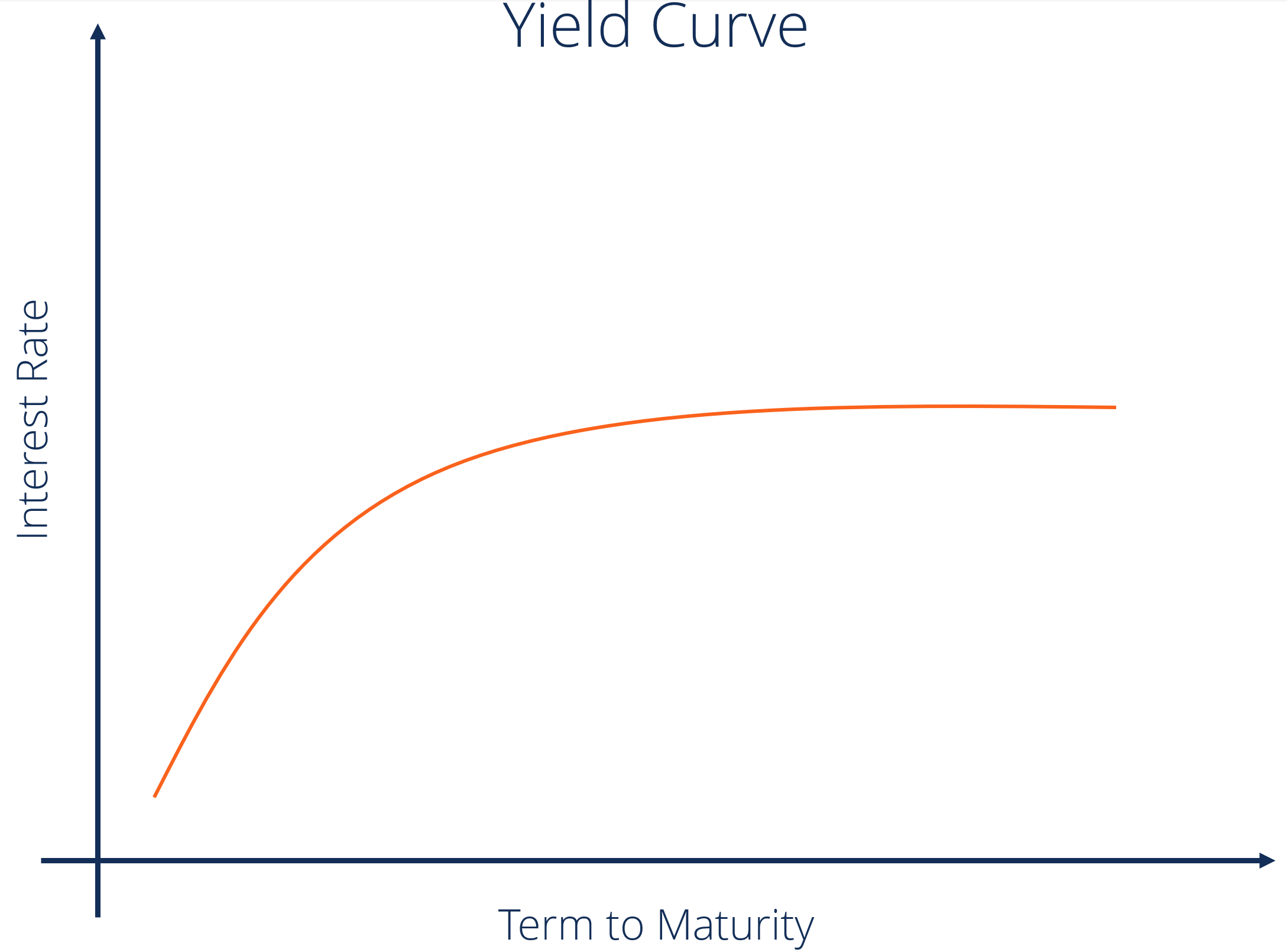
The Yield Curve is a graphicalTypes of GraphsTop 10 types of graphs for data presentation you must use - examples, tips, formatting, how to use them for effective communication and in presentations. representation of the interest rates on debt for a range of maturities. It shows the yield an investor is expecting to earn if he lends his money for a given period of time. The graph displays a bond’s yieldYieldYield is defined as an income-only return on investment (it excludes capital gains) calculated by taking dividends, coupons, or net income and dividing them by the value of the investment. Expressed as an annual percentage, the yield tells investors how much income they will earn each year relative to the cost of their investment. on the vertical axis and the time to maturity across the horizontal axis. The curve may take different shapes at different points in the economic cycleBusiness CycleA business cycle is a cycle of fluctuations in the Gross Domestic Product (GDP) around its long-term natural growth rate. It explains the, but it is typically upward sloping.
A fixed incomeFixed Income TradingFixed income trading involves investing in bonds or other debt security instruments. Fixed income securities have several unique attributes and factors that Analyst may use the yield curve as a leading economic indicatorEconomic IndicatorsAn economic indicator is a metric used to assess, measure, and evaluate the overall state of health of the macroeconomy. Economic indicators, especially when it shifts to an inverted shape, which signals an economic downturnThe Great DepressionThe Great Depression was a worldwide economic depression that took place from the late 1920s through the 1930s. For decades, debates went on about what caused the economic catastrophe, and economists remain split over a number of different schools of thought., as long-term returns are lower than short-term returns.
Learn more about bonds in CFI’s Fixed Income Fundamentals Course!
Types of Yield Curves
1. Normal
This is the most common shape for the curve and, therefore, is referred to as the normal curve. The normal yield curve reflects higher interest rates for 30-year bonds as opposed to 10-year bonds. If you think about it intuitively, if you are lending your money for a longer period of time, you expect to earn a higher compensation for that.
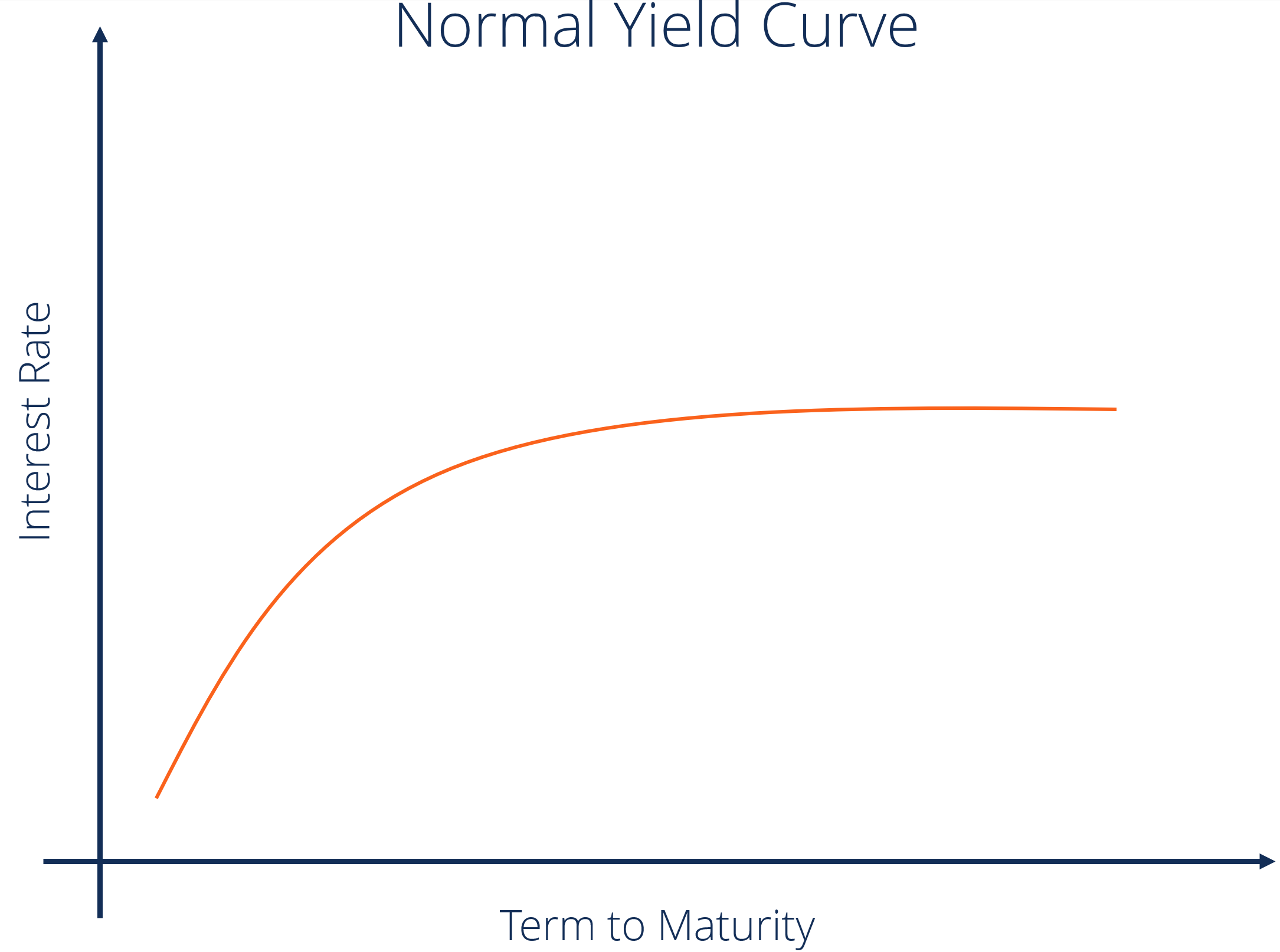
The positively sloped yield curve is called normal because a rational marketPrimary MarketThe primary market is the financial market where new securities are issued and become available for trading by individuals and institutions. The trading activities of the capital markets are separated into the primary market and secondary market. will generally want more compensation for greater risk. Thus, as long-term securities are exposed to greater risk,Systematic RiskSystematic risk is that part of the total risk that is caused by factors beyond the control of a specific company or individual. Systematic risk is caused by factors that are external to the organization. All investments or securities are subject to systematic risk and therefore, it is a non-diversifiable risk. the yield on such securities will be greater than that offered for lower-risk short-term securities.
A longer period of time increases the probability of unexpected negative events taking place. Therefore, a long-term maturity will typically offer higher interest rates and have higher volatility.VIXThe Chicago Board Options Exchange (CBOE) created the VIX (CBOE Volatility Index) to measure the 30-day expected volatility of the US stock market, sometimes called the "fear index". The VIX is based on the prices of options on the S&P 500 Index
2. Inverted
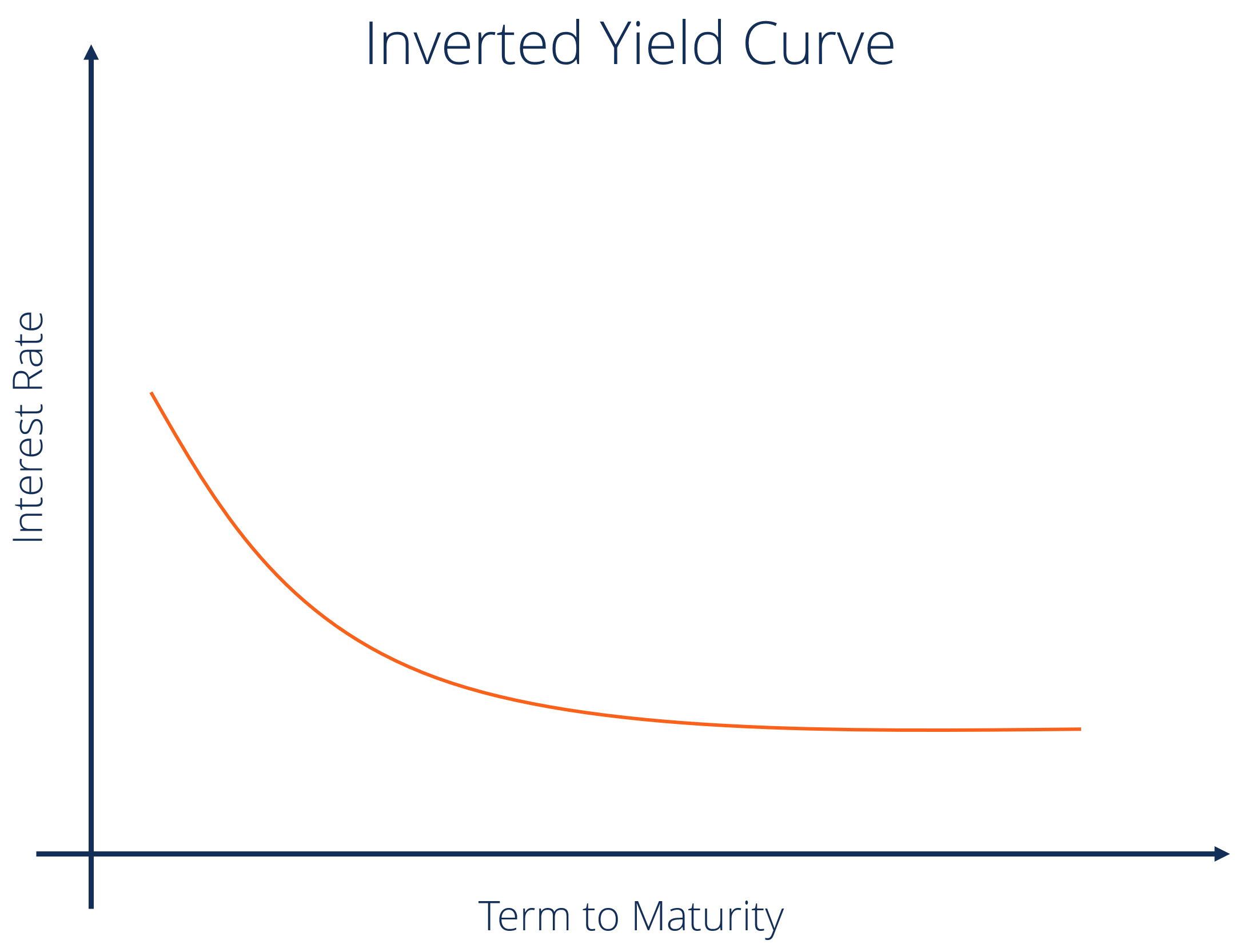
An inverted curve appears when long-term yields fall below short-term yields.Calculating Yield on DebtDebt yield refers to the rate of return an investor can expect to earn if he/she holds a debt instrument until maturity. Such instruments include government-backed T-bills, corporate bonds, private debt agreements, and other fixed income securities. An inverted yield curve occurs due to the perception of long-term investors that interest rates will decline in the future. This can happen for a number of reasons, but one of the main reasons is the expectation of a decline in inflation.InflationInflation is an economic concept that refers to increases in the price level of goods over a set period of time. The rise in the price level signifies that the currency in a given economy loses purchasing power (i.e., less can be bought with the same amount of money).
When the yield curve starts to shift toward an inverted shape, it is perceived as a leading indicator of an economic downturn. Such interest rate changes have historically reflected the market sentiment and expectations of the economy.
3. Steep
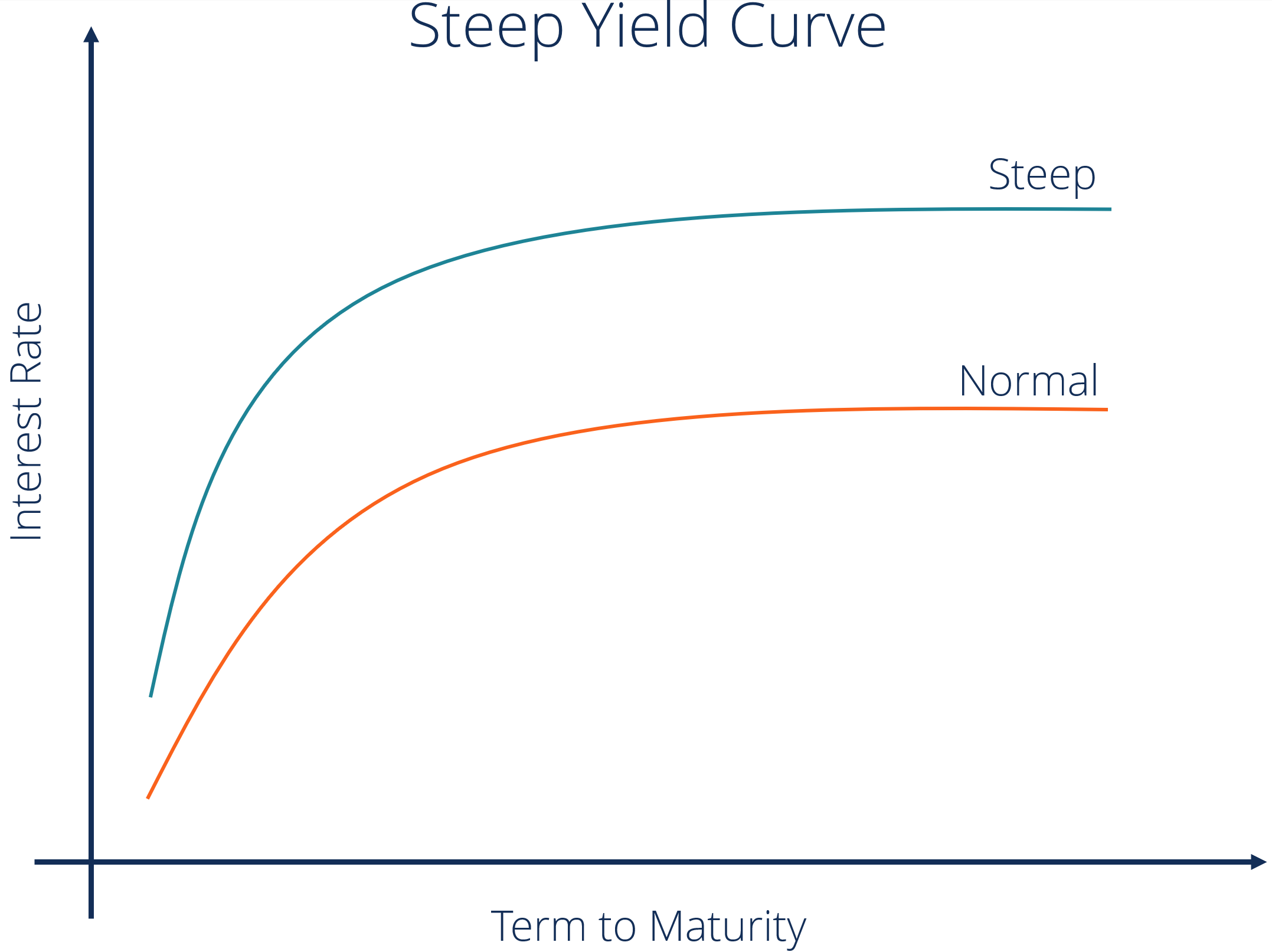
A steep curve indicates that long-term yields are rising at a faster rate than short-term yields. Steep yield curves have historically indicated the start of an expansionary economic period. Both the normal and steep curves are based on the same general market conditions. The only difference is that a steeper curve reflects a larger difference between short-term and long-term return expectations.
Learn more in CFI’s Fixed Income Fundamentals Course!
4. Flat
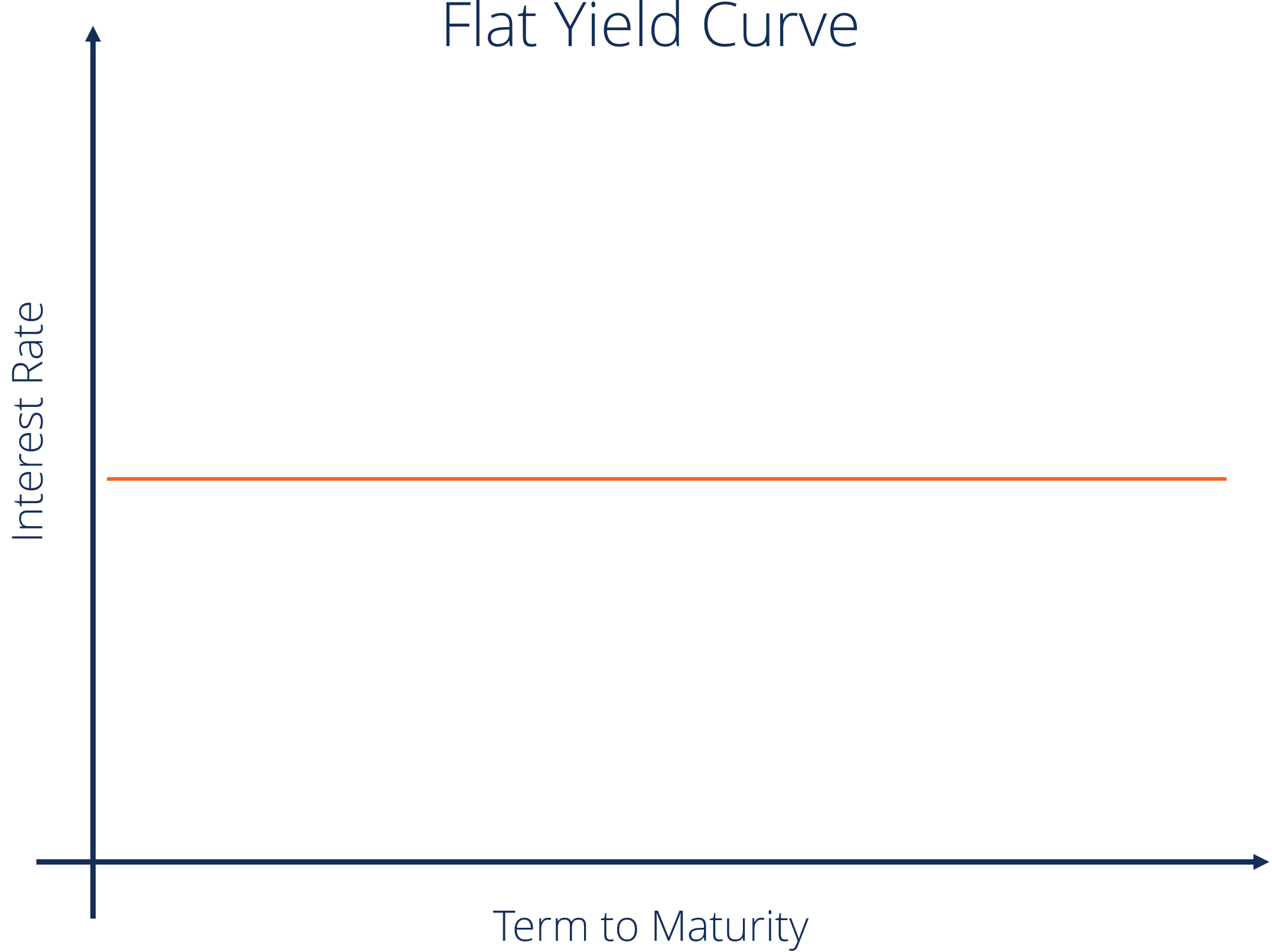
A flat curve happens when all maturities have similar yields. This means that the yield of a 10-year bond is essentially the same as that of a 30-year bond. A flattening of the yield curve usually occurs when there is a transition between the normal yield curve and the inverted yield curve.
5. Humped
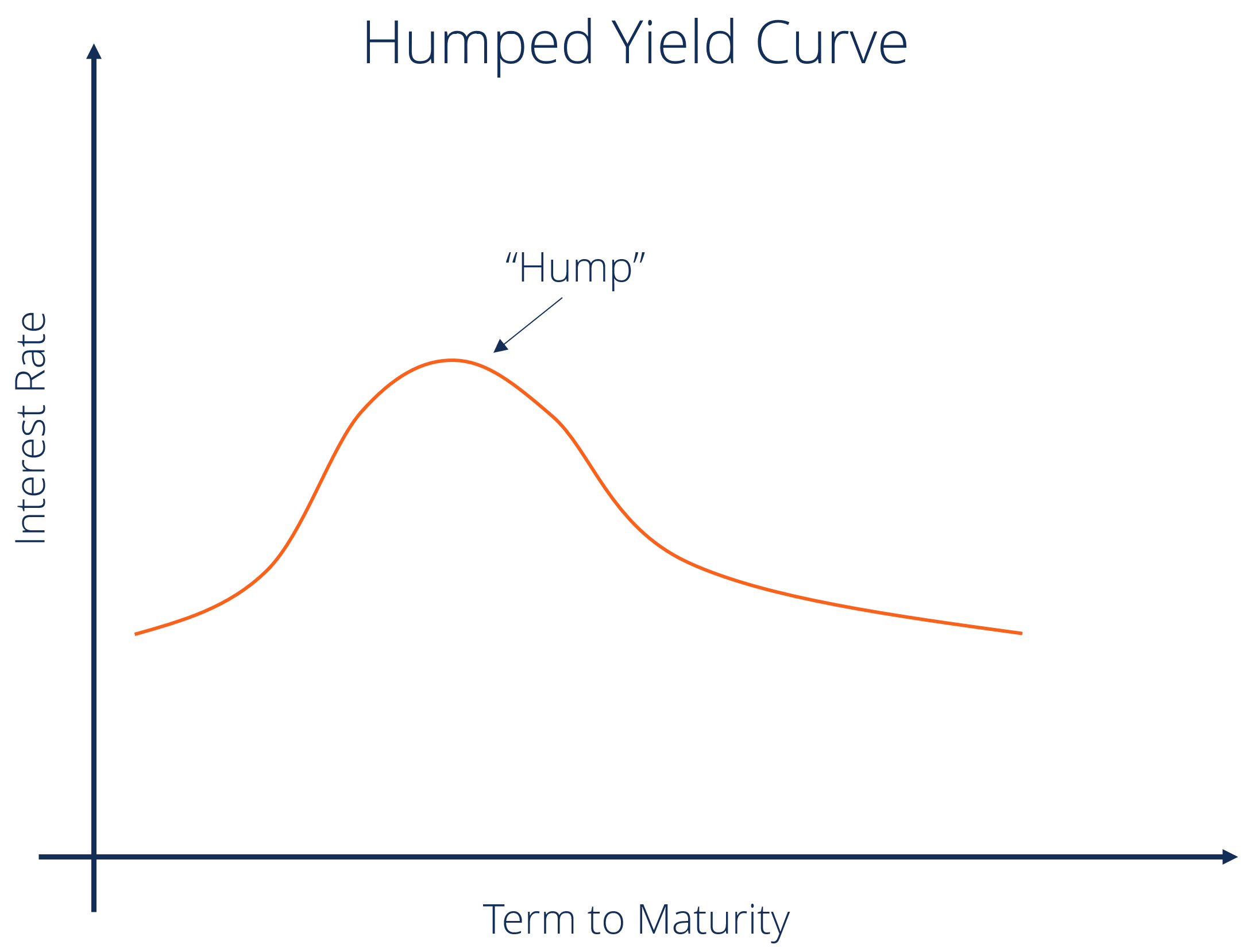
A humped yield curve occurs when medium-term yields are greater than both short-term yields and long-term yields. A humped curve is rare and typically indicates a slowing of economic growth.
Influencing Factors
1. Inflation
Central banksEuropean Central Bank (ECB)The European Central Bank (ECB) is one of the seven institutions of the EU and the central bank for the entire Eurozone. tend to respond to a rise in expected inflation with an increase in interest rates. A rise in inflation leads to a decrease in purchasing power and, therefore, investors expect an increase in the short-term interest rate.
2. Economic Growth
Strong economic growth may lead to an increase in inflationInflationInflation is an economic concept that refers to increases in the price level of goods over a set period of time. The rise in the price level signifies that the currency in a given economy loses purchasing power (i.e., less can be bought with the same amount of money). due to a rise in aggregate demandAggregate Supply and DemandAggregate supply and demand refers to the concept of supply and demand but applied at a macroeconomic scale. Aggregate supply and aggregate. Strong economic growth also means that there is a competition for capital, with more options to invest available for investors. Thus, strong economic growth leads to an increase in yields and a steeper curve.
3. Interest Rates
If the central bank raises the interest rate on Treasuries, this increase will result in higher demand for treasuries and, thus, eventually lead to a decrease in interest ratesInterest RateAn interest rate refers to the amount charged by a lender to a borrower for any form of debt given, generally expressed as a percentage of the principal..
Importance of the Yield Curve
1. Forecasting Interest Rates
The shape of the curve helps investors get a sense of the likely future course of interest rates. A normal upward sloping curve means that long-term securities have a higher yield, whereas an inverted curve shows short-term securitiesTrading SecuritiesTrading securities are securities purchased by a company for the purpose of realizing a short-term profit. The securities are issued within the company's industry, have a higher yield.
2. Financial Intermediary
Banks and other financial intermediaries borrow most of their funds by selling short-term deposits and lend by using long-term loans. The steeper the upward sloping curve is, the wider the difference between lending and borrowing rates, and the higher is their profit.Profit MarginIn accounting and finance, profit margin is a measure of a company's earnings relative to its revenue. The three main profit margin metrics A flat or downward sloping curve, on the other hand, typically translates to a decrease in the profits of financial intermediaries.
3. The Tradeoff between Maturity and Yield
The yield curve helps indicate the tradeoff between maturity and yieldRisk and ReturnIn investing, risk and return are highly correlated. Increased potential returns on investment usually go hand-in-hand with increased risk. Different types of risks include project-specific risk, industry-specific risk, competitive risk, international risk, and market risk.. If the yield curve is upward sloping, then to increase his yield, the investor must invest in longer-term securities, which will mean more risk.
4. Overpriced or Underpriced Securities
The curve can indicate for investors whether a security is temporarily overpriced or underpriced. If a security’s rate of returnRate of ReturnThe Rate of Return (ROR) is the gain or loss of an investment over a period of time copmared to the initial cost of the investment expressed as a percentage. This guide teaches the most common formulas lies above the yield curve, this indicates that the security is underpriced; if the rate of return lies below the yield curve, then it means that the security is overpriced.
Learn more in CFI’s Fixed Income Fundamentals Course!
Yield Curve Theories
1. Pure Expectation Theory
This theory assumes that the various maturities are substitutes and the shape of the yield curve depends on the market’s expectation of future interest rates. According to this theory, yields tend to change over time, but the theory fails to define the details of yield curve shapes. This theory ignores interest rate risk and reinvestment riskMarket Risk PremiumThe market risk premium is the additional return an investor expects from holding a risky market portfolio instead of risk-free assets..
2. Liquidity Preference Theory
This theory is an extension of the Pure Expectation Theory. It adds a premium called liquidity premiumLiquidity PremiumA liquidity premium compensates investors for investing in securities with low liquidity. Liquidity refers to how easily an investment can be sold for cash. T-bills and stocks are considered to be highly liquid since they can usually be sold at any time at the prevailing market price. On the other hand, investments such as real estate or debt instruments or term premium. This theory considers the greater risk involved in holding long-term debts over short-term debts.
3. Segmented Market Theory
The segmented market theorySegmented Markets TheoryThe segmented markets theory states that the market for bonds is “segmented” on the basis of the bonds’ term structure, and that they operate independently. is based on the separate demand and supply relationship between short-term securities and long-term securities. It is based on the fact that different maturities of securities cannot be substituted for one another.
Since investors will generally prefer short-term maturity securities over long-term maturity securitiesHeld to Maturity SecuritiesHeld to maturity securities are securities that companies purchase and intend to hold until they mature. They are unlike trading securities or available for sale securities because the former offers lower risk, then the price of short-term securities will be higher, and thus, the yield will be correspondingly lower.
4. Preference Habitat Theory
This is an extension of the Market SegmentationBusiness SegmentA business segment is a subsection of a company’s overall operations in which there is an established separate product line. A business segment can be Theory. According to this theory, investors prefer a certain investment horizon. To invest outside this horizon, they will require some premium. This theory explains the reason behind long-term yields being greater than short-term yields.
Additional Resources
If you want to learn more about how to Price Bonds, check out CFI’s Fixed Income Fundamentals Course, a prerequisite for the FMVA™ Certification!Become a Certified Financial Modeling & Valuation Analyst (FMVA)®CFI's Financial Modeling and Valuation Analyst (FMVA)® certification will help you gain the confidence you need in your finance career. Enroll today!
Here are some other CFI resources that you might find interesting:
- Economic IndicatorsEconomic IndicatorsAn economic indicator is a metric used to assess, measure, and evaluate the overall state of health of the macroeconomy. Economic indicators
- BloombergBloomberg Functions SpreadsheetThis Bloomberg functions spreadsheet contains a list of some of the most common and important functions, keystrokes and shortcuts to know on the Bloomberg Terminal. These Bloomberg functions will help you navigate the Bloomberg Terminal more efficiently for grabbing historical financial information about a company, sha
- Big Mac IndexBig Mac IndexThe Big Mac Index is a tool devised by economists in the 1980s to examine whether the currencies of various countries offer roughly equal levels of basic affordability. The Big Mac Index is based on the theory of Purchasing Power Parity (PPP).
- Interest RateInterest RateAn interest rate refers to the amount charged by a lender to a borrower for any form of debt given, generally expressed as a percentage of the principal.
-

Nifty 50: History, Significance & Key Stocks - A Comprehensive Guide
The Nifty 50 refers to the fifty most popular large-cap stocks that traded at high valuations in the 1960s and 1970s. They included household names such as Xerox (XRX), IBM, Polaroid and Coca-Cola (
-
Curve Finance: Stablecoin Swaps & DeFi Rewards | [Your Brand]
Curve Finance is a widely used decentralized finance (DeFi) protocol that provides an easy way to trade fixed-price tokens, or stablecoins, without suffering slippage and losing money. Like other prot
finance
- Understanding Annual Percentage Yield (APY): A Comprehensive Guide
- Understanding Inverted Yield Curves: Recession Indicator?
- Understanding Yield Curve Rollover: A Fixed Income Strategy
- Understanding Swap Rate Curves: A Comprehensive Guide
- Understanding the Credit Curve: A Guide for Investors
- Understanding the Flat Yield Curve: Causes & Implications
- Understanding the Forward Curve: A Comprehensive Guide
- Understanding the Par Yield Curve: A Guide for Investors
- Understanding the Experience Curve: Cost Reduction & Efficiency
-
![Rule of 72: Calculate Investment Doubling Time | [Your Brand Name]](https://www.etffin.com/article/uploadfiles/202110/2021100815281678_S.png) Rule of 72: Calculate Investment Doubling Time | [Your Brand Name]
Rule of 72: Calculate Investment Doubling Time | [Your Brand Name]In finance, the Rule of 72 is a formula that estimates the amount of time it takes for an investment to double in value, earning a fixed annual rate of returnRate of ReturnThe Rate of Return (ROR) is ...
-
 Understanding SEC Yield: A Guide for Bond Investors
The SEC yield, also referred to as the standardized yield, is a computation that allows comparison of bond funds that fall under the jurisdiction of the Securities and Exchange Commission (SEC). It as...