
Rule of 72: Calculate Investment Doubling Time | [Your Brand Name]
In finance, the Rule of 72 is a formula that estimates the amount of time it takes for an investment to double in value, earning a fixed annual rate of returnRate of ReturnThe Rate of Return (ROR) is the gain or loss of an investment over a period of time copmared to the initial cost of the investment expressed as a percentage. This guide teaches the most common formulas. The rule is a shortcut, or back-of-the-envelope, calculation to determine the amount of time for an investment to double in value. The simple calculation is dividing 72 by the annual interest rate.
Time (Years) to Double an Investment
The Rule of 72 gives an estimation of the doubling time for an investment. It is a fairly accurate measurement, and more so when using lower interest ratesInterest RateAn interest rate refers to the amount charged by a lender to a borrower for any form of debt given, generally expressed as a percentage of the principal. rather than higher ones. It is used for situations involving compound interest. A simple interest rateSimple InterestSimple interest formula, definition and example. Simple interest is a calculation of interest that doesn't take into account the effect of compounding. In many cases, interest compounds with each designated period of a loan, but in the case of simple interest, it does not. The calculation of simple interest is equal to the principal amount multiplied by the interest rate, multiplied by the number of periods. does not work very well with the Rule of 72.
Below is a table showing the difference between the Rule of 72 calculation and the actual number of years required for an investment to double in value:
![Rule of 72: Calculate Investment Doubling Time | [Your Brand Name]](https://www.etffin.com/Article/UploadFiles/202110/2021100815281678.png)
Rule of 72 Formula
The Rule of 72 formula is as follows:
![Rule of 72: Calculate Investment Doubling Time | [Your Brand Name]](https://www.etffin.com/Article/UploadFiles/202110/2021100815281644.png)
Example of the Rule of 72
You are the owner of a coffee machine manufacturing company. Due to the large capital needed to establish a factory and warehouse for coffee machines, you have turned to private investorsPrivate Equity FundsPrivate equity funds are pools of capital to be invested in companies that represent an opportunity for a high rate of return. They come with a fixed to fund the expenditure. You meet with John, who is a high net-worth individual willing to contribute $1,000,000 to your company.
However, John is only willing to contribute the said amount on the presumption that he will get a 12% annual rate of return on his investment, compounded yearly. He wants to know how long it will take for his investment in your company to double in value.
Using the Rule of 72:
![Rule of 72: Calculate Investment Doubling Time | [Your Brand Name]](https://www.etffin.com/Article/UploadFiles/202110/2021100815281661.png)
It will take approximately six years for John’s investment to double in value.
Deriving the Rule of 72
Let us derive the Rule of 72 by starting with a beginning arbitrary value: $1. Our goal is to determine how long it will take for our money ($1) to double at a certain interest rate.
Suppose we have a yearly interest rate of “r”. After one year, we will get:
$1 x (1+r)
At the end of two years, we will get:
$1 x (1+r) x (1+r)
Extending this year after year, we get:
$1 x (1+r)^n, where n = number of years
If we want to determine how long it takes to double our money, turning $1 into $2:
$1 x (1+r)^n = $2
Solving for years (n):
Step 1: $1 x (1+r)^n = $2
Step 2: (1+r)^n = $2
Step 3: ln((1+R)^n) = ln(2) (Taking the natural log of both sides)
Step 4: n x ln(1+r) = .693
Step 5: n x r = 0.693 (Approximation that ln(1+r) = r)
Step 6: n = .693 / r
Step 7: n = 69.3 / r (Turning r into an integer rather than a decimal)
Notice that after deriving the formula, we end up with 69.3, not 72. Although 69.3 is more accurate, it is not easily divisible. Therefore, the Rule of 72 is used for the sake of simplicity. The number 72 also provides more factors (2, 3, 4, 6, 12, 24…).
Rules of 72, 69.3, and 69
Rules of 69.3 and of 69 are also methods of estimating an investment’s doubling time. The rule of 69.3 is considered more accurate than the Rule of 72, but can be much more troublesome to calculate. Therefore, investors typically prefer to use a rule of 69 or 72 rather than the rule of 69.3.
Comparing the doubling time for rules of 69, 69.3, and 72 to actual years:
![Rule of 72: Calculate Investment Doubling Time | [Your Brand Name]](https://www.etffin.com/Article/UploadFiles/202110/2021100815281635.png)
As you can see from the table above, the rule of 69.3 yields more accurate results at lower interest rates. However, as the interest rate increases, the rule of 69.3 loses some of its predictive accuracy.
The Rule of 72 is a simple, helpful tool that investors can use to estimate how long a specific compound interest investment will take to double their money.
More Resources
Thank you for reading CFI’s explanation of the Rule of 72. Our mission is to help you advance your career. Below are additional free resources from CFI, the global provider of the Financial Modeling & Valuation Analyst (FMVA)Become a Certified Financial Modeling & Valuation Analyst (FMVA)®CFI's Financial Modeling and Valuation Analyst (FMVA)® certification will help you gain the confidence you need in your finance career. Enroll today! certification program:
- Investing: A Beginner’s GuideInvesting: A Beginner's GuideCFI's Investing for Beginners guide will teach you the basics of investing and how to get started. Learn about different strategies and techniques for trading
- Hurdle RateHurdle Rate DefinitionA hurdle rate, which is also known as minimum acceptable rate of return (MARR), is the minimum required rate of return or target rate that investors are expecting to receive on an investment. The rate is determined by assessing the cost of capital, risks involved, current opportunities in business expansion, rates of return for similar investments, and other factors
- Return on Investment (ROI) FormulaROI Formula (Return on Investment)Return on investment (ROI) is a financial ratio used to calculate the benefit an investor will receive in relation to their investment cost. It is most commonly measured as net income divided by the original capital cost of the investment. The higher the ratio, the greater the benefit earned.
- Financial Modeling Courses Collection
-

Understanding the January Effect: Stock Market Trends & Causes
The January Effect is known to be a seasonal increase in stock prices throughout the month of January. The increase in demand for stocks is often preceded by a decrease in price during the month of De
-

Understanding the Joseph Effect: Trends vs. Randomness
The Joseph Effect, which derives its name from a Biblical reference, is a phrase created by Benoit Mandelbrot, a Polish-born French-American mathematician. The phrase asserts that variations over time
invest
- Rule of 85 Retirement: Early Retirement Eligibility Explained
- The 80/20 Inventory Rule: Optimize Your Product Portfolio for Profitability
- Volcker Rule Explained: Understanding Banking Restrictions
- Understanding the Investment Accumulation Phase: Building Wealth Over Time
- Dow 30 Explained: Understanding the Dow Jones Industrial Average
- Understanding the De Minimis Tax Rule: A Comprehensive Guide
- The 4% Rule: A Comprehensive Guide to Retirement Withdrawals
- Roth IRA 5-Year Rule: Understanding Tax-Free Retirement Income
- Nifty 50: History, Significance & Key Stocks - A Comprehensive Guide
-
 Understanding Implied Rates: A Comprehensive Guide
The implied rate is an interest rate that expresses the difference between the forward/future rate and the spot rate. It serves as a useful tool for comparing returns across different assets and can b...
-
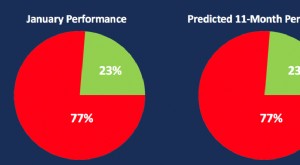 January Barometer: Predicting Market Performance - Explained
The January Barometer is the idea that the investment performance of the S&P 500S&P 500 IndexThe Standard and Poor’s 500 Index, abbreviated as S&P 500 index, is an index comprising t...