
Understanding the Federal Reserve: The Central Bank of the U.S.
The Federal Reserve, more commonly referred to as “The Fed,” is the central bank of the United States of America and is the supreme financial authority behind the world’s largest free-market economyMarket EconomyMarket economy is defined as a system where the production of goods and services are set according to the changing desires and abilities of. Because of the magnitude of the US’ influence on the global economyBusiness CycleA business cycle is a cycle of fluctuations in the Gross Domestic Product (GDP) around its long-term natural growth rate. It explains the, ‘the Fed’ is considered one of the most influential financial institutionsList of Top Investment BanksList of the top 100 investment banks in the world sorted alphabetically. Top investment banks on the list are Goldman Sachs, Morgan Stanley, BAML, JP Morgan, Blackstone, Rothschild, Scotiabank, RBC, UBS, Wells Fargo, Deutsche Bank, Citi, Macquarie, HSBC, ICBC, Credit Suisse, Bank of America Merril Lynch in the world.
The Federal Reserve handles the monetary policiesMonetary AssetsMonetary assets carry a fixed value in terms of currency units (e.g., dollars, euros, yen). They are stated as a fixed value in dollar terms. of the government independently and without legislative intervention. In addition to that, it performs all other functions of a central bank – regulating bank activities, conducting surveys about the US and global economy – all under the common objective of maintaining financial stability.
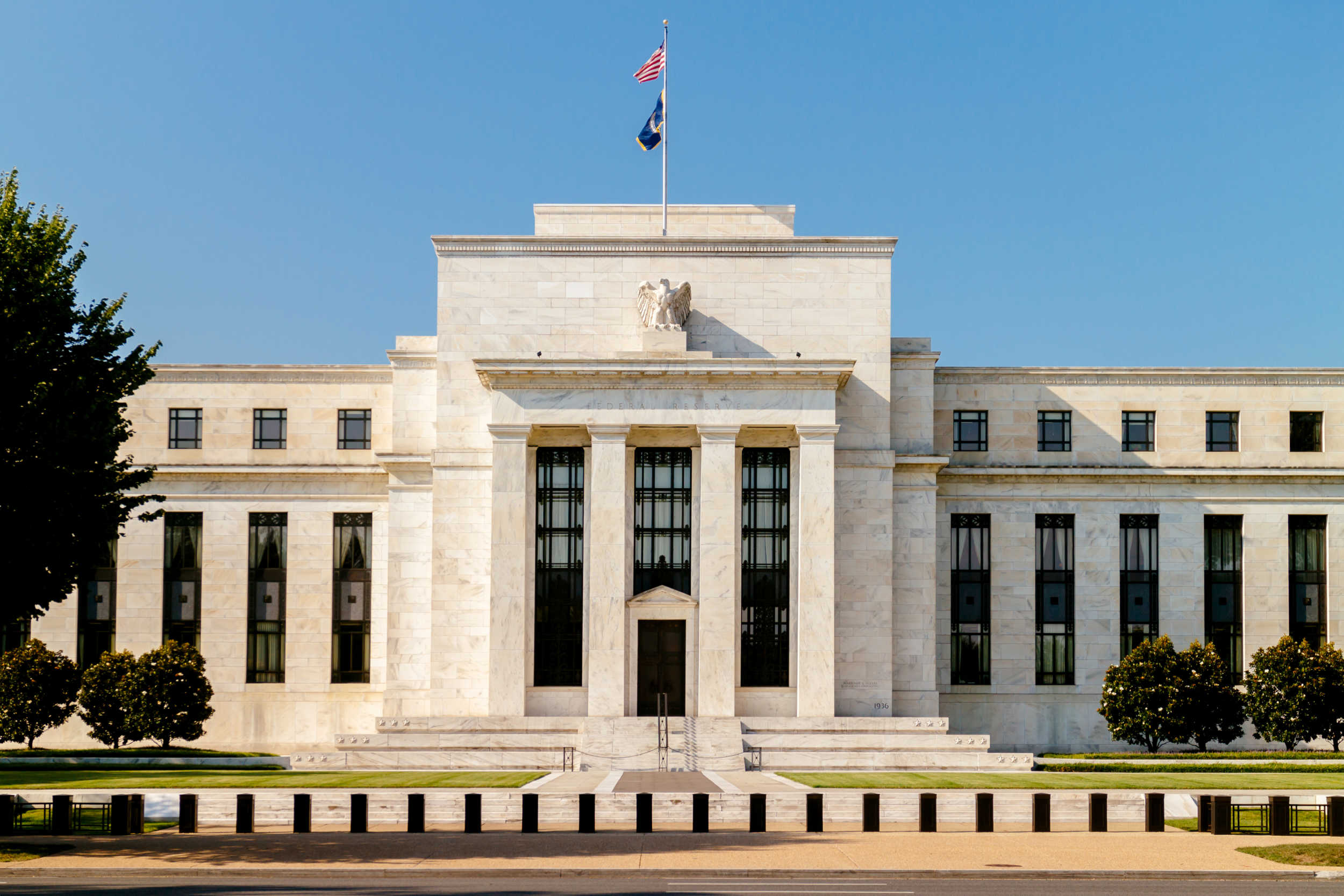
The Federal Reserve is headquartered in Washington D.C.
History of the Fed
The Fed was born indirectly out of the “Panic of 1907,” and the overall economic situation during that time. The last quarter of the 19th century and the beginning of the 20th century were characterized by recessions in the US economy. A series of financial panics forced eminent bankers like J.P. Morgan and John D. Rockefeller Jr. to call for a new central banking system.
The country’s dire financial situation then prompted Republican Senator Nelson Aldrich to set up two separate commissions to study the American monetary system and the European central banking institutions. Aldrich was highly influenced by the model of the Bank of England and the German monetary system. Although his initial proposals were repeatedly rejected by Congress, a reformatted bill was finally passed on December 22, 1913.
Functions of the Federal Reserve
The Federal Reserve is the central bank of the United States and thus, is responsible for maintaining the overall stability of the country’s economy.
- Conducting monetary policy – The Federal Reserve, through its monetary policy, strives to achieve three major objectives as laid down by Congress – maximum employment, stable prices, and low long-term interest rates. The Federal Reserve controls inflation, investment, and other economic parameters by controlling the availability of credit in the economy.
- Promoting financial system stability – The Federal Reserve ensures the stability of the US financial system, monitoring internal and external influences, and preventing any future crisis.
- Regulating financial institutions and their activities – The Federal Reserve supervises the activities of financial institutions and controls their impact on the economy as a whole.
- Fostering payment and settlement system safety – The Federal Reserve works to ensure a glitch-free secure system for payment gateways for the benefit of the American citizens.
- Promoting consumer protection – Consumer rights are an integral component of the financial services sector, and the Federal Reserve works continuously to ensure these rights for all consumers.
Structure of the Fed
The Federal Reserve central bank is a multi-layered financial body, deriving its authority and spirit from the Federal Reserve Law of 1913. Despite being an executive agency, the financial body is largely independent of the control of the President or Congress and is described as being “independent within the government.” The Federal Reserve’s four main axes of power include the following:
- Board of Governors
- Federal Open Market Committee
- Twelve regional Federal Reserve banks, and
- Other member banks
Board of Governors of the Central Bank
A seven-member Board of Governors oversees the overall responsibilities of the monetary body as a central bank – managing the activities of 12 regional banks, framing monetary policies, and supervising the economy in general. Each member of the Board is appointed by the President for 14-year terms, while the Chair and the Vice-Chair are appointed by the Board for four-year terms. At present, three of the seven places on the Board are vacant.
Federal Open Market Committee
The Federal Open Market Committee (FOMC) is the committee in charge of handling open market operations, which is an important component of monetary policy. It is a 12-member committee, consisting of all seven members of the Board of Governors, and the Presidents of any five of the regional banks. The representatives of the regional banks are chosen for two to three-year terms, while the President of the Federal Reserve Bank of New York is a permanent member.
Regional Federal Reserve Banks
The regional Federal Reserve Banks, 12 in number, are tasked with carrying out the monetary policies as prescribed by the Board. A nine-member board sits on each bank, with an internal President. Each of these banks carries on its own operations besides its regulatory role, holding securities and giving out loans.
Other Member Banks
A member bank is a private financial institution that owns stock in its regional Federal Reserve Bank, earning profits from the stock. From the profit that the stock earns, the banks receive a 6% dividend, while the rest of the profit goes to the US Treasury.
Related Reading
Thank you for reading this guide to the Federal Reserve Central Bank. CFI is the global provider of the Financial Modeling and Valuation Analyst (FMVA)TM designationBecome a Certified Financial Modeling & Valuation Analyst (FMVA)®CFI's Financial Modeling and Valuation Analyst (FMVA)® certification will help you gain the confidence you need in your finance career. Enroll today!, created to help anyone become a world-class financial analyst. To help you on your way, these additional CFI guides will be helpful:
- Market EconomyMarket EconomyMarket economy is defined as a system where the production of goods and services are set according to the changing desires and abilities of
- Debt Capital MarketsDebt Capital Markets (DCM)Debt Capital Markets (DCM) groups are responsible for providing advice directly to corporate issuers on the raising of debt for acquisitions, refinancing of existing debt, or restructuring of existing debt. These teams operate in a rapidly moving environment and work closely with an advisory partner
- Treasury StockTreasury StockTreasury stock, or reacquired stock, is a portion of previously issued, outstanding shares of stock that a company repurchased from shareholders.
- Quantitative EasingQuantitative EasingQuantitative easing (QE) is a monetary policy of printing money, that is implemented by the Central Bank to energize the economy. The Central Bank creates
-

Understanding Bank Deposit Slips: Purpose & Usage
Banks use deposit slips to keep track of transactions. A bank deposit slip tells your bank what you want to be done with the money you're handing them and provides you with a record of yo
-

Federal Reserve Digital Dollar: What You Need to Know
Many or all of the products here are from our partners that pay us a commission. It’s how we make money. But our editorial integrity ensures our experts’ opi
finance
- BIS: Understanding the Bank for International Settlements - Role & Impact
- Understanding the Federal Reserve Balance Sheet: Assets & Liabilities
- Federal Discount Rate: Definition & Importance
- Federal Funds Rate: Understanding Interest Rates & Its Impact
- Understanding the Federal Reserve: The Central Bank of the U.S.
- Federal Reserve Board (FRB): Role & Responsibilities Explained
- Fractional Banking Explained: How It Works & Its Role in Finance
- Reserve Ratio Explained: Understanding Bank Reserves
- Central Banks: Functions, Role & Impact on the Economy
-
 Protecting Central Bank Independence: Risks of Political Interference
Central bank independence is increasingly at risk around the world. In the U.S., President Donald Trump reportedly still plans to nominate political allies to...
-
 2020 Federal Income Tax Brackets: Rates & Ranges | Credit Karma Tax
This article was fact-checked by our editors and Christina Taylor, MBA, senior manager of tax operations for Credit Karma Tax®. It has been updated for the 2020 tax year. Tax brack...