
Reserve Ratio Explained: Understanding Bank Reserves
The reserve ratio – also known as bank reserve ratio, bank reserve requirement, or cash reserve ratio – is the percentage of deposits a financial institution must hold in reserve as cash. The central bank is the institution that determines the required amount of reserve ratio. A bank’s reserve usually consists of money it has and is held in its vault. Banks also have cash kept in their account at the central bank.

Breaking Down the Reserve Ratio
Generally, the reserve ratio is used in monetary policy planning in order to regulate the amount of cash banks can convert to loans. In addition, central monetary authorities use the ratio to protect banks from a sudden decline in liquidity, which can result in a financial crisis2008-2009 Global Financial CrisisThe Global Financial Crisis of 2008-2009 refers to the massive financial crisis the world faced from 2008 to 2009. The financial crisis took its toll on individuals and institutions around the globe, with millions of American being deeply impacted. Financial institutions started to sink, many were absorbed by larger entities, and the US Government was forced to offer bailouts.
Although some countries like Australia and the U.K have no reserve ratios, others, such as Lebanon and Brazil, have a reserve ratio of 30% and 20%, respectively. The figures are important because they ensure that each country is able to regulate and protect its economy.
Impact of the Reserve Ratio on Bonds and Stocks
A higher interest rate hurts bond owners, as interest rates have an inverse relationship with the value of bonds. The stock market also tends to behave negatively when interest rates surge since it’s more expensive for companies to acquire the desired level of financing. Consequently, raising the reserve requirement hurts bonds and stocks. A higher ratio appears when the economy is experiencing inflation, while a lower ratio is experienced during a deflationDeflationDeflation is a decrease in the general price level of goods and services. Put another way, deflation is negative inflation. When it occurs,.
In particular, banks have a hard time when the central bank adjusts the reserve ratio upward because there is a limit to the amount of money banks can lend and, therefore, to the amount of interest they can earn. The reverse is true when the central bank lowers the reserve ratio. Banks have more money to lend, and more interest is generated.
In certain countries, some amount of money is paid to banks as interest on their reserves. The practice is usually beneficial to banks, but it depends on prevailing rates. For example, the U.S. Federal ReserveFederal Reserve (The Fed)The Federal Reserve is the central bank of the United States and is the financial authority behind the world’s largest free market economy. pays about 0.5% on reserve ratios as compensation to banks for income lost when the reserve requirement is increased.
Investor Considerations
International investors need to keep a close eye on reserve ratios, especially in markets that rely on reserve requirements to manage monetary policies. In many cases, stockholders are able to tell when variations in reserve ratios will take place by scrutinizing macroeconomic patterns.
A country whose inflation is rising will typically experience a rise in its reserve ratio. An investor can hedge such risks by investing in multiple regions and countries. An investor can also shift his investments into areas that are not influenced by changes in the ratio.
Impact on Monetary Policy
Most central banks, like the Bank of EnglandBank of EnglandThe Bank of England (BoE) is the central bank of the United Kingdom and a model on which most central banks around the world are built. Since, the U.S. Federal Reserve System, and the European Central BankEuropean Central Bank (ECB)The European Central Bank (ECB) is one of the seven institutions of the EU and the central bank for the entire Eurozone., tend not to change reserve rates often because it can cause liquidity problems. Instead, they utilize open market operations such as quantitative easing.
For example, the reserve ratio in the U.S. is limited to 10% for deposits and 0% for time deposits spanning many years. The figures are discussed and set by a board of governors. Like time deposits, savings accounts are not affected by reserve requirements.
Increasing the percentage of deposits that banks must keep in the form of vault cash causes a decrease in the amount of lending that they are able to do. While the effectiveness of reserve requirements as a policy tool is highly debatable, there’s little doubt that it influences the money market. Their use is becoming less relevant in countries such as the U.S., where regulators preferring quantitative easing instead.
More Resources
CFI is the official provider of the global Financial Modeling & Valuation Analyst (FMVA)™Become a Certified Financial Modeling & Valuation Analyst (FMVA)®CFI's Financial Modeling and Valuation Analyst (FMVA)® certification will help you gain the confidence you need in your finance career. Enroll today! certification program, designed to help anyone become a world-class financial analyst. To keep advancing your career, the additional CFI resources below will be useful:
- Foreign Exchange ReservesForeign Exchange ReservesForeign exchange reserves refer to foreign assets held by the central bank of a country. Foreign assets comprise assets that are not denominated in the domestic currency of the country. For example, US government bonds held by the Bank of Japan are foreign assets for Japan.
- Restricted CashRestricted CashRestricted cash refers to cash that is held onto by a company for specific reasons and is, therefore, not available for immediate ordinary business use. It can be contrasted with unrestricted cash, which refers to cash that can be used for any purpose.
- Statement of Cash FlowsStatement of Cash FlowsThe Statement of Cash Flows (also referred to as the cash flow statement) is one of the three key financial statements that report the cash
- Quantitative EasingQuantitative EasingQuantitative easing (QE) is a monetary policy of printing money, that is implemented by the Central Bank to energize the economy. The Central Bank creates
-

Calmar Ratio: Measuring Risk-Adjusted Investment Performance
The Calmar ratio is a formula that measures the performance of an investment fund – such as a hedge fundHedge FundA hedge fund, an alternative investment vehicle, is a partnership where investor
-

Portfolio Turnover Ratio: Definition, Calculation & Significance
The portfolio turnover ratio is the rate of which assets in a fund are bought and sold by the portfolio managers. In other words, the portfolio turnover ratio refers to the percentage change of the as
finance
- Acid-Test Ratio: Understanding Your Company's Short-Term Liquidity
- Advertising to Sales Ratio: Measuring Ad Effectiveness & ROI
- Understanding the CAPE Ratio: A Guide to Cyclically Adjusted P/E
- Current Ratio: Definition, Calculation & Financial Health
- Debt-to-Assets Ratio: Definition, Calculation & Risk Assessment
- Operating Ratio: Definition, Calculation & Importance
- Quick Ratio: Understanding Your Business's Short-Term Liquidity
- Understanding the Retention Ratio: Reinvesting for Growth
- Sharpe Ratio: Calculate & Interpret Investment Performance
-
![Shareholder Equity Ratio: Definition & Calculation | [Your Company Name]](https://www.etffin.com/article/uploadfiles/202110/2021100815180064_S.png) Shareholder Equity Ratio: Definition & Calculation | [Your Company Name]
Shareholder Equity Ratio: Definition & Calculation | [Your Company Name]The shareholder equity ratio is a ratio that shows the amount of a company’s assets that have been financed using the owner’s equity instead of debt. It shows the portion of shareholders&r...
-
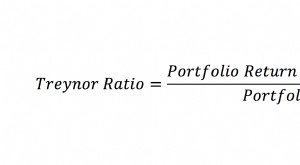 Treynor Ratio: Understanding Risk-Adjusted Portfolio Performance
The Treynor Ratio is a portfolio performance measure that adjusts for systematic riskSystematic RiskSystematic risk is that part of the total risk that is caused by factors beyond the control of a spe...